

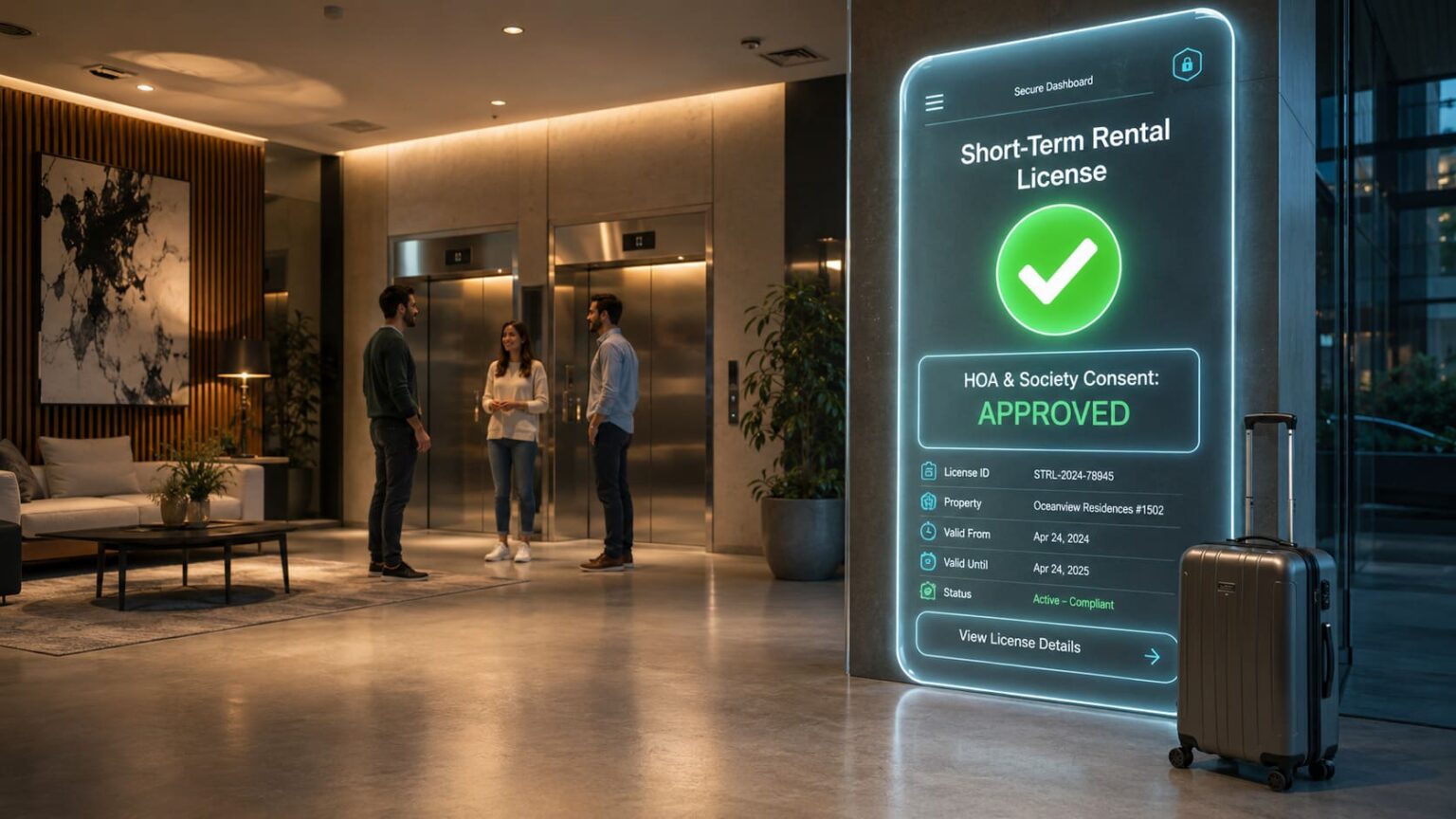
Short-Term Guest Stays Are Not Always Treated Like PG Arrangements
Many property owners assume that listing a flat on Airbnb is the same as allowing a paying guest. But legally and practically, both may not be viewed in the same way.
A paying guest arrangement usually looks more like residential occupation, especially when the stay is longer, stable, and properly documented. Airbnb-style short-term rentals, on the other hand, often involve frequent guest turnover, online bookings, tourist stays, and hotel-like use of a residential flat.
That is where the risk begins.
What the Recent Mumbai Dispute Shows
A recent Mumbai cooperative housing society dispute has brought this issue into focus. The case involved a flat owner who wanted to keep paying guests through agencies and online portals such as Airbnb, while the housing society objected to such use. The Bombay High Court noted that the housing society was not willing to permit the activity and that the dispute was already before the Cooperative Court. The High Court also observed that a writ petition against the cooperative housing society was not maintainable because the society was a private entity.
Reports on the Cooperative Court ruling state that Airbnb-style short-term rentals in residential flats were treated as commercial activity when they resembled lodging or hotel-style use. The court reportedly upheld the society’s objection, especially where approval and compliance were absent.
The important point is this: the issue is not simply whether a flat is rented out. The issue is how the flat is being used.
Why Short-Term-Rentals May Be Seen Differently from PG Use
A PG arrangement usually involves a person staying in the property for a longer period, often for work, study, or residential convenience. The occupant may use the home like a resident.
Short-term-rental stays are different when they involve short bookings, frequent check-ins and check-outs, tourist guests, online platform pricing, cleaning between stays, and hotel-like guest handling. These factors can make the activity look less like residential use and more like a lodging business.
That difference matters because most residential societies are formed for residential living, not for running hospitality operations from individual flats.
Society Rules Can Make or Break the Listing
Housing societies usually rely on bye-laws, general body resolutions, security concerns, and residential-use restrictions when objecting to short-term rentals. If the society has passed a resolution restricting commercial use or requiring prior permission for paying guests, the owner may face a serious obstacle.
In the Mumbai matter, the High Court noted that the petitioner wanted to keep paying guests in his apartment on commercial terms through agencies and portals such as Airbnb, while the society’s members were not agreeable to the same.
This means a property owner should not look only at ownership rights. They must also check society rules, municipal permissions, building-use classification, and local licensing requirements.
BMC’s View on Short-Term Rentals
The Brihanmumbai Municipal Corporation’s short-term rental policy note also shows why authorities are looking more closely at this sector. The note recognises that platforms like Airbnb, Oyo, MakeMyTrip, and StayVista are used for short-term stays in residential premises. It also states that short-term rental use in residential premises is treated as a commercial activity requiring regulation under municipal law.
This does not mean every Airbnb listing is automatically illegal. But it does mean hosts cannot assume that residential ownership alone is enough.
What Hosts Should Be Careful About
If you are planning to operate a short-term rental from a residential flat, avoid treating it like a hotel. Terms like “deluxe suite,” “room service,” “front desk,” “hotel room,” or “premium lodging” can strengthen the impression that the flat is being commercially operated.
Instead, keep the positioning residential and accurate. Use terms such as “private room,” “guest bedroom,” “home stay,” or “family stay” only if they truly reflect the actual use.
More importantly, check whether the housing society allows such activity. A written society NOC, proper leave and licence documentation, police intimation where applicable, municipal compliance, and tax clarity can reduce future disputes.
The Real Estate Risk for Buyers and Investors
This issue is not limited to existing hosts. It also matters for investors buying flats mainly for Airbnb income.
Before purchasing a residential flat for short-term rental income, buyers should check whether:
- Society permits short-term rental use
- The building has past objections against paying guests
- The flat is in a purely residential zone,
- Local municipal rules require licensing
- The apartment has security and visitor restrictions
- The sale deed, bye-laws or association rules restrict commercial activity.
A property that looks profitable on Airbnb may become difficult to operate if the society later objects.
How Verified.RealEstate Can Help
Before buying or using a property for rental income, Verified.RealEstate can help buyers and investors review key property risks through document checks, ownership checks, approval checks, zoning review, road access, neighbourhood suitability, and other due diligence layers.
For Airbnb, PG, serviced apartment, or homestay-style plans, this early verification is important because the risk is not only about title.
It is also about permitted use, society restrictions, local compliance, and future dispute exposure.
Conclusion
Airbnb-style short-term rental is not the same as ordinary residential occupation in every situation. When a flat starts functioning like a hotel, the housing society may have stronger grounds to object, especially if there is no prior permission or compliance.
The safer approach is simple: do not assume that ownership gives unlimited usage rights. Check society rules, municipal requirements, building permissions, and documentation before turning a residential flat into a short-term rental business.