

Chennai’s Property Value Is Now Linked to Civic Readiness
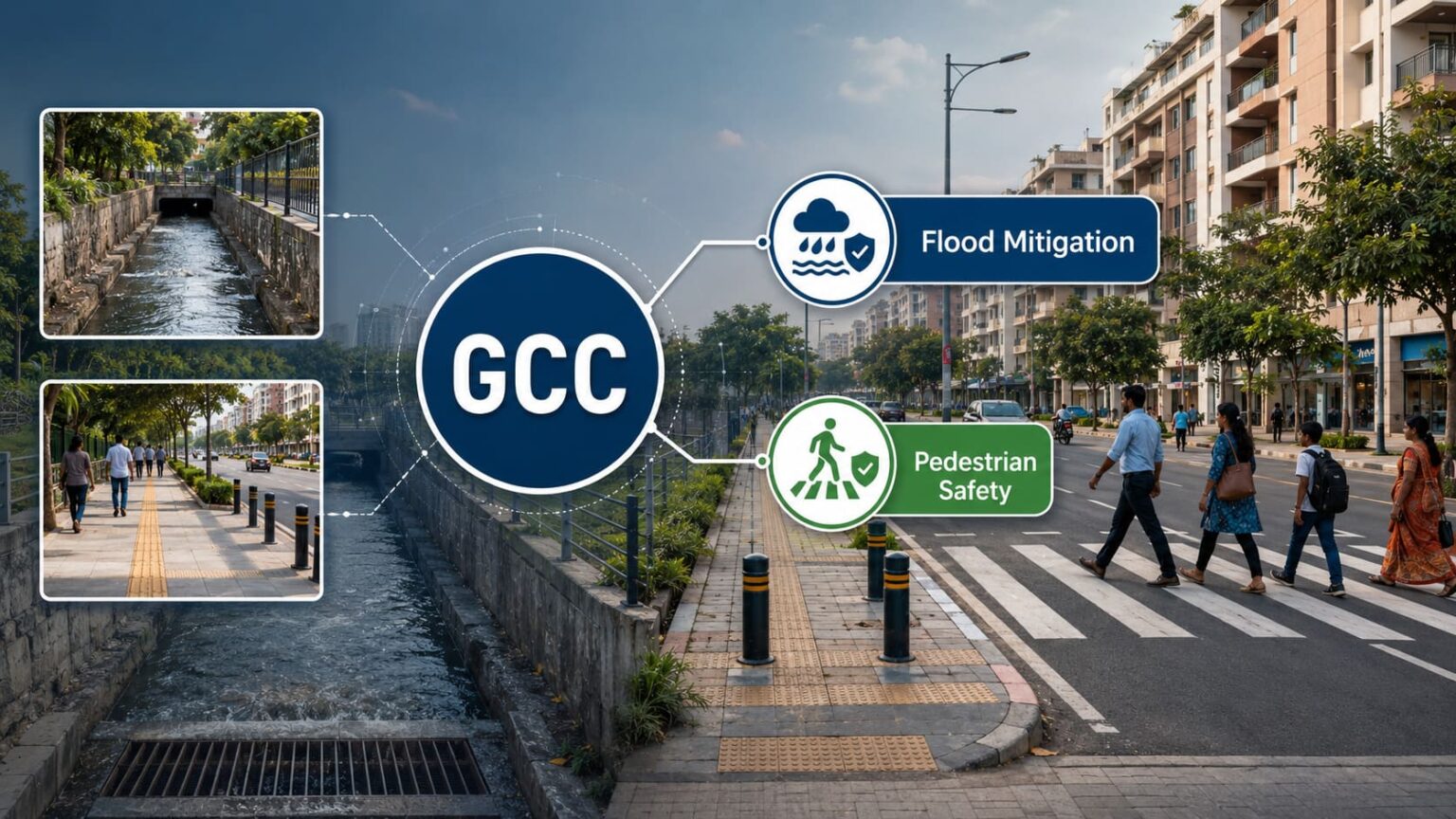
After taking charge as the new Greater Chennai Corporation Commissioner, Dr. G. S. Sameeran IAS, placed clear emphasis on flood mitigation, disaster resilience, pedestrian infrastructure, road works, green cover and better public spaces.
Among these, flood mitigation has been identified as an immediate priority, while livability improvements remain a long-term focus for the city.
The Commissioner’s focus, shows that the city’s future planning is moving beyond basic infrastructure and looking more closely at urban resilience and everyday livability. For buyers, developers and investors, these civic priorities should now become part of property evaluation.
A good property in Chennai should not be judged only by the building or the sale deed. It should also be assessed by asking practical questions: Does the area flood during heavy rain? Are the roads maintained? Is pedestrian access safe? Are there usable public spaces nearby? Is the neighbourhood being improved under civic planning?
In that sense, the new civic direction from GCC gives property buyers a useful reminder: real estate due diligence must include both legal verification and civic-readiness checks.
Flood Mitigation Is a Practical Real Estate Factor
Flooding is not just a seasonal inconvenience in Chennai. It affects access, mobility, parking, building maintenance, health conditions and resident comfort.
Greater Chennai Corporation’s stormwater drain department notes that Chennai’s flat terrain and tidal effects make flooding and water stagnation recurring challenges during the monsoon. Stormwater drain networks are necessary to reduce flooding in low-lying and flood-prone areas of the city.
This is why property buyers should look beyond the apartment brochure or land document. They should also understand whether the surrounding area has a history of waterlogging, whether the road level is higher than the property entrance, whether drains exist nearby, and whether the access road remains usable during heavy rain.
For residents, better flood management can mean fewer disruptions during monsoon, better road access, reduced water stagnation, safer movement and improved neighbourhood confidence.
Walkability Is Becoming Part of Neighbourhood Quality
Pedestrian safety is also a practical part of real estate value. A neighbourhood becomes more useful when residents can safely walk to bus stops, metro stations, schools, shops, parks, clinics and workplaces.
Chennai has already had a policy-level focus on walking and cycling. In 2014, Chennai Corporation adopted a Non-Motorised Transport policy to prioritise walking and cycling by creating safer footpaths, cycle tracks, greenways and related facilities.
This matters because walkability affects daily convenience. A property may be close to a main road or metro station, but if the walking route is unsafe, broken, encroached or poorly lit, the actual benefit is reduced.
For families, senior citizens, school-going children and public transport users, safe pedestrian access is not a luxury. It is part of everyday usability.
Why This Matters for Chennai Residents
The Commissioner’s priorities are not only administrative points. They directly connect with how residents experience the city.
If flood mitigation improves, residents may face fewer waterlogging-related access issues during monsoon. If road works and pedestrian infrastructure improve, daily movement can become smoother. If public spaces and green cover improve, neighbourhoods can become more livable.
These changes may not increase property value overnight, but they influence long-term buyer confidence. Areas with better drainage, safer roads, usable footpaths and reliable access are likely to remain more attractive than areas where residents repeatedly face civic inconvenience.
What Buyers Should Check Before Buying Property in Chennai
Before buying a flat, house or plot in Chennai, buyers should include basic civic checks along with legal and approval verification.
They should check whether the street has faced repeated waterlogging, whether the property is lower than the road, whether stormwater drains are present nearby, whether the road is wide enough for regular access, whether footpaths are usable, whether nearby junctions are safe, and whether ongoing civic or infrastructure works may affect access.
Legal clarity is important, but livability also matters. A property may have a clear title and proper approvals, but if the surrounding civic infrastructure is weak, residents may still face regular inconvenience.
This is where platforms like Verified.RealEstate can support buyers by encouraging a more complete view of property due diligence — road access, zoning, flood-prone surroundings and neighbourhood-level risks.
Why Developers Should Also Pay Attention
For builders and developers, civic readiness is becoming a selling point.
Buyers are no longer looking only at floor plans, amenities and price per square foot. They are also asking whether the project entrance floods, whether the approach road is reliable, whether the neighbourhood has safe walking access, whether the area is well connected, and whether the project is suitable for long-term family living.
Developers who can clearly explain these factors will have a stronger trust advantage. Projects that ignore drainage, road access and pedestrian infrastructure may face more questions from informed buyers.
When purchasing land for constructing apartments, villas or commercial buildings, developers can use LandLens by Verified.RealEstate to get an early-stage verification of the site before moving deeper into acquisition or planning.
LandLens helps assess key factors such as road width, zoning, flood-zone risk, access conditions, neighbourhood facilities, approval indicators and other land-related checks, giving developers a clearer picture of whether the land is practically suitable for development.
The Real Estate Takeaway
The new GCC Commissioner’s focus on flood mitigation and pedestrian safety reflects a larger shift in Chennai’s urban priorities. The city is not only planning for expansion, but also for better everyday functionality.
For property buyers, the lesson is simple: do not evaluate a property only by location, price and documents. Also check whether the neighbourhood is prepared for rain, access, walking and daily movement.
In Chennai, a good property should be legally clear, well located and supported by reliable civic infrastructure.