

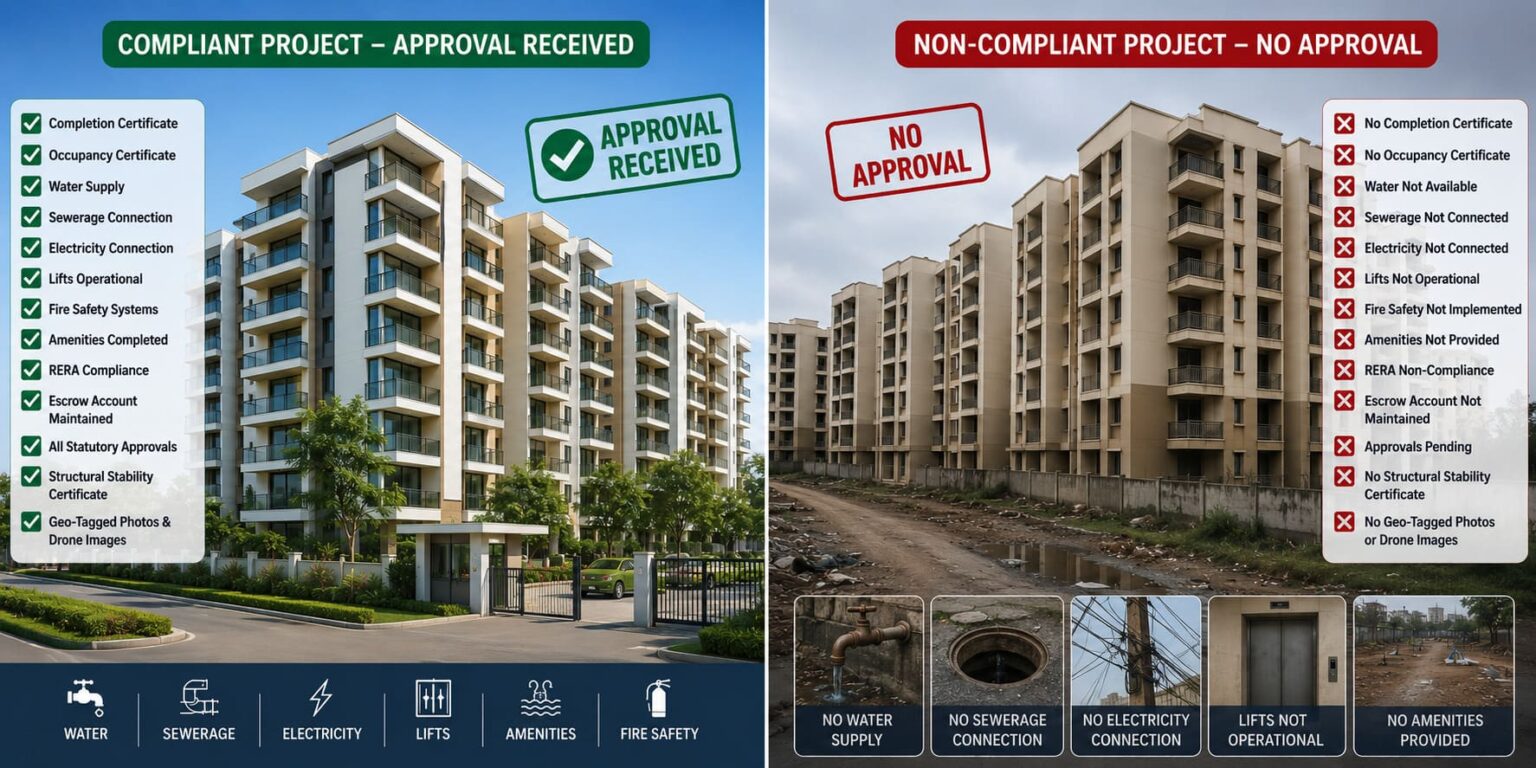
In a major move aimed at safeguarding homebuyers, the Tamil Nadu Real Estate Regulatory Authority (TNRERA) has tightened the rules governing the completion of real estate projects. Under the new norms, developers can no longer declare a project complete merely because the construction work has ended.
Instead, builders must prove that all essential services and promised amenities are fully operational and submit a comprehensive set of compliance documents before a project is officially treated as complete by TNRERA.
Developers Must Notify TNRERA Within Three Months
TNRERA has directed developers to intimate the authority within three months of the completion of their project and furnish all prescribed documents for closure of the project registration.
A project will be recognised as completed only after TNRERA verifies the documents and confirms that the project complies with all regulatory requirements.
Builders Must Prove Amenities Are Functional
Under the new framework, developers will have to establish that all basic infrastructure and amenities promised to homebuyers are fully functional, including:
- Water supply systems;
- Sewerage and drainage facilities;
- Electricity connections;
- Lifts and common area equipment;
- Fire safety installations;
- Clubhouse, swimming pool and other amenities promised in the project brochure.
This means that developers cannot market or hand over projects as “completed” if buyers are still waiting for basic infrastructure to become operational.
Stringent Documentation Requirements
Developers seeking project closure will also have to submit several documents, including:
- Completion Certificate;
- Occupancy Certificate, wherever applicable;
- Structural Stability Certificate;
- Approved plans and planning permission documents;
- Audited bank statements;
- Details of unsold inventory;
- Information regarding pending complaints or litigation;
- Certificates confirming the completion of all promised amenities.
The new requirements are intended to ensure greater transparency and accountability in the real estate sector.
Layout Developers Must Provide Drone Images
For plotted developments and layouts, TNRERA has introduced additional compliance measures.
🎇Developers will now have to submit geo-tagged photographs and drone images proving that roads, street lights, parks, stormwater drains and other promised infrastructure have been completed.
The move seeks to prevent partially developed layouts from being portrayed as fully completed projects.
Additional Safeguards for Delayed Projects
Developers seeking an extension of project registration beyond one year will face stricter financial conditions.
🚨 TNRERA has directed such developers to deposit an additional 20 per cent of the amount collected from homebuyers into the RERA escrow account.
The requirement is aimed at ensuring that sufficient funds remain available for completing delayed projects and protecting the interests of homebuyers.
Developers Must Maintain Three Bank Accounts
Under new TNRERA rules in effect from Jan 2026, developers are required to maintain three mandatory bank accounts to ensure stricter financial discipline and prevent misuse of homebuyer funds.
These include:
- a collection account where all buyer payments are first deposited,
- a separate RERA escrow account where a significant portion of the funds is transferred and used only for construction and land costs, and
- a third account for operational expenses.
The framework is designed to create a clear audit trail of funds, minimise diversion of money to other projects, and ensure that sufficient funds remain available to complete the project on time, thereby strengthening protection for homebuyers.
Compliance Support for Developers Under New TNRERA Norms
For developers navigating these increasingly stringent compliance requirements, platforms such as Verified.RealEstate offer end-to-end support, including land and title verification, due diligence, approval mapping, encumbrance checks and RERA readiness services.
By helping developers organise documentation, verify project compliance and prepare for all the TNRERA requirements mentioned above, the Verified.Realestate team aims to ensure that projects are launched and completed on a legally sound and compliant foundation.
Why These Rules Matter for Homebuyers and Developers
The new norms tackle a key concern—projects being declared complete without essential services or promised amenities. By requiring proof of operational infrastructure and stronger financial safeguards, TNRERA aims to ensure homes are truly ready for occupation.
For homebuyers, these measures provide greater assurance that the property they invest in will be delivered with all promised facilities in place, reducing the risk of delays, incomplete infrastructure and post-possession issues.
For developers, these rules emphasise stricter compliance, better financial discipline and timely execution. Adhering to these standards can help build credibility, reduce regulatory risks and improve buyer confidence in their projects.