

The New Reality for Short-Term Rentals in India
Renting out homes, homestays, serviced apartments, and guest houses on websites like Airbnb or Booking.com is booming in Indian cities.
However, running these businesses is no longer just about getting good reviews and filling rooms. In 2026, GST (Goods and Services Tax) has become a major factor that can make or break your profits.
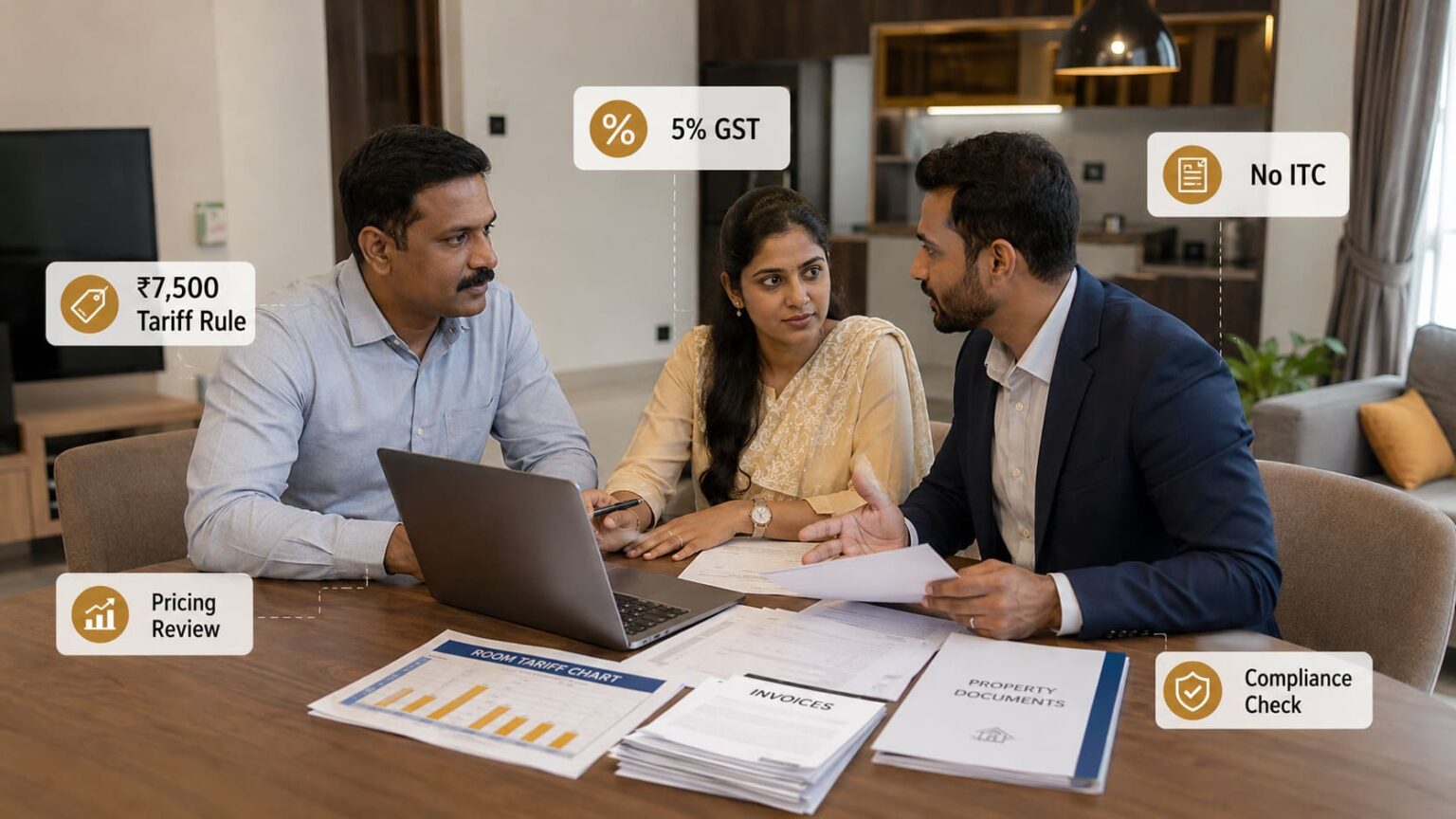
What is the ₹7,500 GST Rule?
The government has introduced a specific rule based on how much you charge per room, per day:
- If your room price is ₹7,500 or less: Your guests pay a low 5% GST. However, you (the owner) cannot claim Input Tax Credit (ITC).
- If your room price is above ₹7,500: The GST rate changes, and you might be allowed to claim ITC.
What is Input Tax Credit (ITC)?
Think of ITC as a cashback or discount on the tax you owe. When you run a rental business, you spend a lot of money on things like:
- New furniture and TVs
- Interior decoration and painting
- Facebook or Google ads to get guests
- Cleaning and repair services
All these services and items charge you GST when you buy them. If you have ITC, you can use that tax you already paid to lower the GST bill you owe to the government.
The Catch: If you price your room under ₹7,500, the government says you cannot use this “cashback.” All the GST you paid on furniture, repairs, and ads becomes an extra expense out of your own pocket.
Pricing is No Longer Just About Demand
Many hosts used to set prices based purely on the season or what neighbors were charging. Now, you have to do some math.
The Big Question: Are you saving more money by attracting guests with a lower 5% GST rate, or are you losing more money because you can’t claim back the tax on your heavy business expenses?
- For Small Hosts: If you rarely spend money on renovations or ads, staying under ₹7,500 with 5% GST is great and simple.
- For Premium Hosts: If you run a luxury villa and spend lakhs on maintenance and marketing, capping your price below ₹7,500 just to keep GST low might actually hurt your total profit.
Food and Extra Services Make Things Complicated
The idea of “Specified Premises” becomes important when a property also offers food, restaurant service, catering, banquet use or other hospitality services
.If you only provide a bed to sleep in, the room tariff is the main point to check, the tax is simple. But things get tricky if you offer:
- Free or paid breakfast/meals
- Event hosting or party spaces
- Pick-up and drop services
How you bundle these services changes how you are taxed. You cannot assume your business gets simple tax treatment just because you call it a “homestay.”
This is important for homestays and serviced apartments because many operators bundle food, cleaning, breakfast or guest services along with the stay.
GST depends on how the property is actually used and what services are provided.
Common Mistakes That Can Get You into Trouble
Tax officials are looking closely at home rentals because they operate like hotels. Avoid these major risks:
- Hiding your true room rates.
- Mixing personal money with business money.
- Not keeping proper bills from your vendors (plumbers, decorators, painters).
- Claiming tax benefits without the right paperwork.
If your bookkeeping is messy, you could face heavy fines, penalties, and legal notices.
Best Steps for Success in 2026
If you want to run a successful rental business today, treat it professionally:
- Get proper bills: Ensure the vendors you buy furniture or services from have proper GST numbers.
- Separate your money: Use a separate bank account for your rental business.
- Keep digital records: Store all receipts for repairs, ads, and property upgrades.
- Talk to an expert: Hire a tax consultant who understands the hospitality industry.
Don’t Forget Property Rules
Tax is only half the battle. Before you turn a residential home into a commercial rental, you must ensure it is legally allowed.
Websites like Verified.RealEstate can help you check for hidden risks before you invest, such as housing society restrictions, local zoning laws, land use permits, and ownership document gaps. A property might look profitable on paper, but local authorities can shut it down if the paperwork isn’t right.
Summary
A lower GST rate looks attractive to your guests, but it might reduce your actual take-home profit if your business expenses are high. In 2026, the most successful hosts are the ones who balance their room prices, business expenses, and tax rules together.