

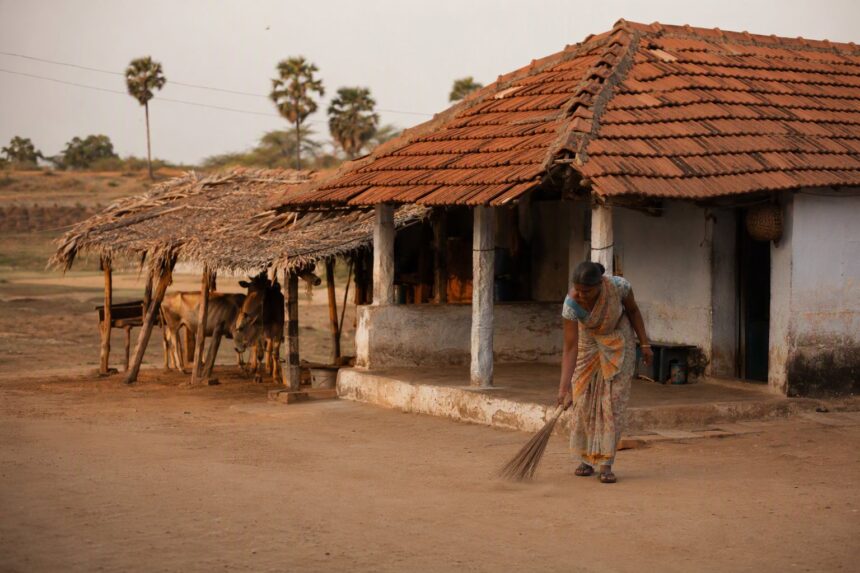
“Poramboke” is one of the most misunderstood terms in Tamil Nadu real estate. In simple terms, it refers to government-owned, non-revenue land reserved for public or community use. While many families cultivate or even live on poramboke land, the big question remains: Can you get a patta for it?
To answer this, you need to understand what poramboke land is, the different types, and how the law treats them.
What is Poramboke Land?
The word “poramboke” (புறம்போக்கு) literally means “outside the revenue account.” These lands:
- Belong to the government
- Are not assessed for individual ownership or tax
- Are reserved for public, environmental, or community purposes
While some poramboke lands can be regularised under special schemes, most cannot be allotted or sold.
Types of Poramboke Land
Poramboke land covers many categories, each with a public purpose:
- Roads & Pathways – village roads and tracks connecting hamlets, kept open for public use.
- Water Bodies (Thanni Poramboke) – ponds, lakes, canals; vital for irrigation and protected by law.
- Grazing Lands (Gochar) – open fields for livestock.
- Burial/Cremation Grounds – community-managed sites for last rites.
- Community Commons (Grama Natham) – temple lands, festival grounds, gathering spaces.
- Government Waste Land – unused or barren plots, sometimes allotted under schemes.
Subtypes in Tamil Nadu
- Natham – village house sites.
- Kaani – waste/fallow land.
- Vayal – fallow agricultural fields.
- Cheri – settlement/hamlet commons.
- Kudikadu – encroached land for housing.
Regional Names Across India
Known differently across states: Gochar (Rajasthan, Gujarat), Gair Mumkin (North India), Gram Sabha (U.P.), Shamlat Deh (Punjab, Haryana).
👉 Common thread: all are state-owned lands reserved for public or environmental use.
Can You Get a Patta for Poramboke Land?
1. If it is truly Poramboke land
- By definition, Poramboke = government land not meant for private ownership (roads, water bodies, burial grounds, grazing land, etc.).
- Even if someone manages to “get a patta” for such land (through mistake, influence, or clerical error), the government has the legal right to cancel it anytime, because:
- A patta issued wrongly does not override the classification.
- Courts in Tamil Nadu have repeatedly ruled that pattas granted on poramboke land are invalid if the land is reserved for public purpose.
- Encroachments — government can evict at any time under the Tamil Nadu Land Encroachment Act, 1905.
2. If it is Natham Poramboke (village house sites)
- This is the only exception.
- Natham poramboke is traditionally village common land used for housing.
- Long-term residents can be granted pattas legally (called “Natham Pattas”), and once properly assigned, these pattas are valid.
- But still, if the land was wrongly classified as water body / road / temple land, then no patta can legally stand.
3. Cultivated Agricultural Poramboke:
- In rare cases, long-term cultivation may be regularised through government assignment schemes.
Why Buyers Should Be Careful
- Sale deeds on poramboke land = worthless. Registration doesn’t override classification.
- EC (Encumbrance Certificate) won’t help. It only tracks registered deeds, not classification.
- High risk of eviction. Even long-term residents may be removed if land is needed for public purposes.
Common Mistakes & How to Avoid Them
- Believing that paying stamp duty and registering makes poramboke land yours.
- Assuming cultivation or construction automatically grants ownership.
- Skipping classification checks in the A-Register and FMB sketch.
Practical Tips for Buyers & Heirs
- Always check land classification through revenue records.
- Verify with the Patta & Chitta Verification Tool before purchase.
- For long-term residence on Natham poramboke, consult the Tahsildar about patta eligibility.
- Never buy land classified as water body, road, or burial ground.
Conclusion
Poramboke land in Tamil Nadu is government property meant for public good. While certain types like Natham poramboke may be regularised, most cannot be allotted or sold. Buyers must treat sale deeds on poramboke land with extreme caution.
With digitisation errors, encroachments, and frauds still common, always verify classification before investing. A few minutes of due diligence can save you from losing both money and land.
❓ Q&A on Poramboke Land Use in Tamil Nadu
Q: My family has been farming for 20+ years on unregistered riverside land and paying yearly fees. Can we register it legally?
A:
- Normally, poramboke land (like riverside land) belongs to the government.
- If your name has been in revenue records for over 30 years, you may request the District Collector for patta assignment.
- Approval depends on:
- Classification of land (must not be water body/objectionable land)
- Applicable government assignment rules
- Your economic status and caste (priority is often given to weaker sections under assignment schemes).
- If sanctioned, the land may be assigned with patta; otherwise, it remains government property.
Q: My family has used poramboke land as a pathway for generations. Can I legally secure it as my access road?
A:
- Yes, but only with government permission.
- You must:
- Apply to the District Collector / local authority (panchayat, municipality, or corporation).
- The land will be checked if it is “objectionable” (water body, burial ground, etc.) or “unobjectionable.”
- If unobjectionable, government may grant “enter upon permission” or transfer rights for pathway use.
- You may need to pay development charges.
- Even after approval, the land remains government-owned; authorities can reclaim it if conditions are violated.