

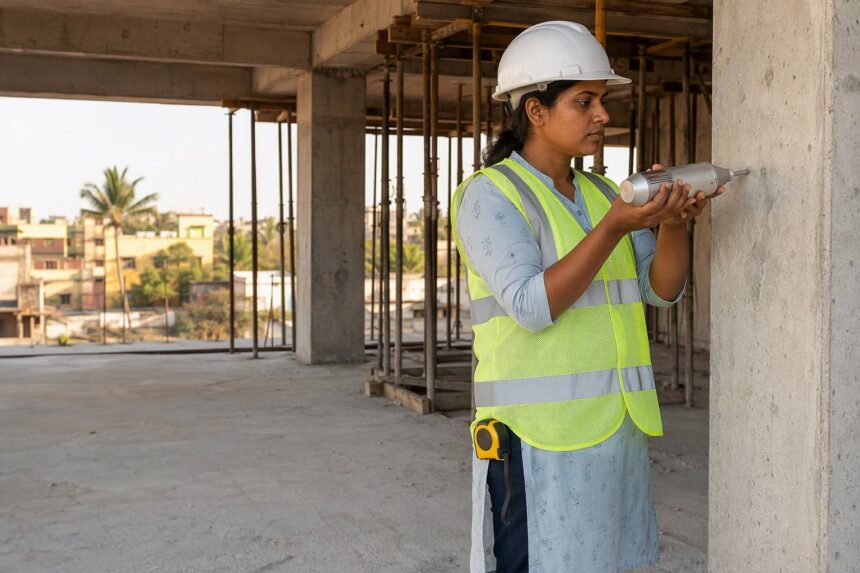
A construction audit is the health check-up of a project, conducted to ensure every stage—from planning to handover—runs with accuracy, transparency, and accountability.
When crores are invested into building homes, apartments, villas, commercial buildings or infrastructure, even a tiny mistake can snowball into costly overruns, delays, or compliance issues.
A construction audit prevents these risks by actively monitoring:
- Total project cost
- Timeline & milestones
- Material quality
- Contractor & vendor performance
- Safety, labour laws & statutory compliance
In India, where real estate regulations, RERA norms, labour laws, and environmental approvals are strict, an audit acts as a necessary control system that keeps investors and builders confident throughout the lifecycle of the project.
Why Construction Auditing Matters in India
With rising land prices, fluctuating material costs, and multi-layered contractor systems, Indian construction projects face unique challenges. A structured construction audit helps overcome them through:
Cost Control & Prevention of Budget Leakages
Audits track every rupee spent—material purchase, subcontractor bills, labour deployment, variations and change orders—ensuring the budget stays intact.
Material theft, wastage, inflated invoices, or double billing are caught early.
Timeline Monitoring & Delay Prevention
Delays are the biggest profit-killers in Indian construction. Audits verify if physical progress matches planned milestones and help identify lagging vendors, poor planning, or resource mismanagement.
Quality Assurance & Material Verification
Auditors verify if materials used meet approved specifications.
This protects investors from:
- Low-grade steel/cement
- Poor workmanship
- Structural risks
- Rework costs
Compliance With Indian Laws & Building Approvals
From RERA compliance to labour welfare, building permits, safety rules, and environmental clearances—missing even one approval can stall a project.
Audit ensures every document, licence and certificate is in place.
Investor Confidence & Transparency
Both homebuyers and investors gain clarity through: transparent accounting, clear documentation, verified vendor bills, authentic progress tracking.
This transparency builds trust—and trust sells projects faster.
Key Components of a Construction Audit
A comprehensive construction audit in India typically includes:
A. Financial & Contract Audit
- Vendor invoice verification
- Contract validation
- Change-order review
- Budget vs actual comparison
- Cash-flow monitoring
- RERA escrow account review (for developers)
B. Material & Inventory Audit
- Material procurement log
- Storage & wastage tracking
- Quality testing reports
- Reconciliation of material used vs material billed
C. Compliance & Safety Audit
Ensures adherence to:
- RERA
- Building Bye-Laws
- Environmental clearances
- Labour laws (BOCW Act)
- Safety norms (scaffolding, PPE, on-site safety standards)
D. Technical & Workmanship Audit
- Verification of structural drawings
- Footing, column, slab inspections
- Plumbing, electrical & finishing quality checks
- Monitoring against approved specifications
E. IT, Documentation & Process Audit (New Trend)
Indian builders increasingly use digital tools. Audits now check:
- Accuracy of digital records
- Project tracking dashboards
- Cybersecurity of data
- Automated material logs
- Drone-based progress mapping
New Internal Audit Areas for Indian Real Estate
In addition to traditional checks, modern Indian real-estate projects require deeper audit coverage across several critical new areas.
A. Asset Verification & Land Legal Due-Diligence
- Title verification
- Encumbrance checks
- Boundary validation
- Landowner agreements
- Development rights audits
B. AML & KYC Compliance for High-Value Transactions
Ensures all buyers, partners, and JV stakeholders meet KYC norms—crucial for avoiding money-laundering risks in real estate.
AML -Anti-Money Laundering
JV -Joint Venture
KYC -Know Your Customers
C. Project-Wise Segregated Accounting
Each RERA project must have separate books for accurate fund utilisation. Auditing ensures clean segregation of:
- Customer advances
- Land cost
- Construction cost
- Administrative overheads
D. ESG & Sustainability Audit
Modern buyers prefer green-certified buildings.
Audits verify:
- Energy efficiency
- Water management
- Environmental responsibility
- Social & governance checks
ESG = Environmental, Social, and GovernanceE. HR & Payroll Audit
Ensures compliance with:
- EPF / ESI
- Labour welfare
- Attendance systems
- Minimum wage rules
This is crucial for large construction sites with hundreds of workers.
HR - Human Resources
EPF = Employees’ Provident Fund
ESI = Employees’ State Insurance
Construction Audit Is Not Mistrust — But a Mandatory Control
Auditing doesn’t question the capability of builders or contractors.
Instead, it provides:
- Control over spending
- Clarity over progress
- Confidence in quality
- Compliance with law
- Certainty of timely delivery
In a market where real-estate buyers are increasingly informed, audited projects sell faster and earn better credibility.
Verified Services
Contact the Verified Real estators for any assistance regarding purchase, sales, construction, joint ventures, property management for NRI’s , rental services etc. to sum up it is a one stop solution for complete property related matters.