

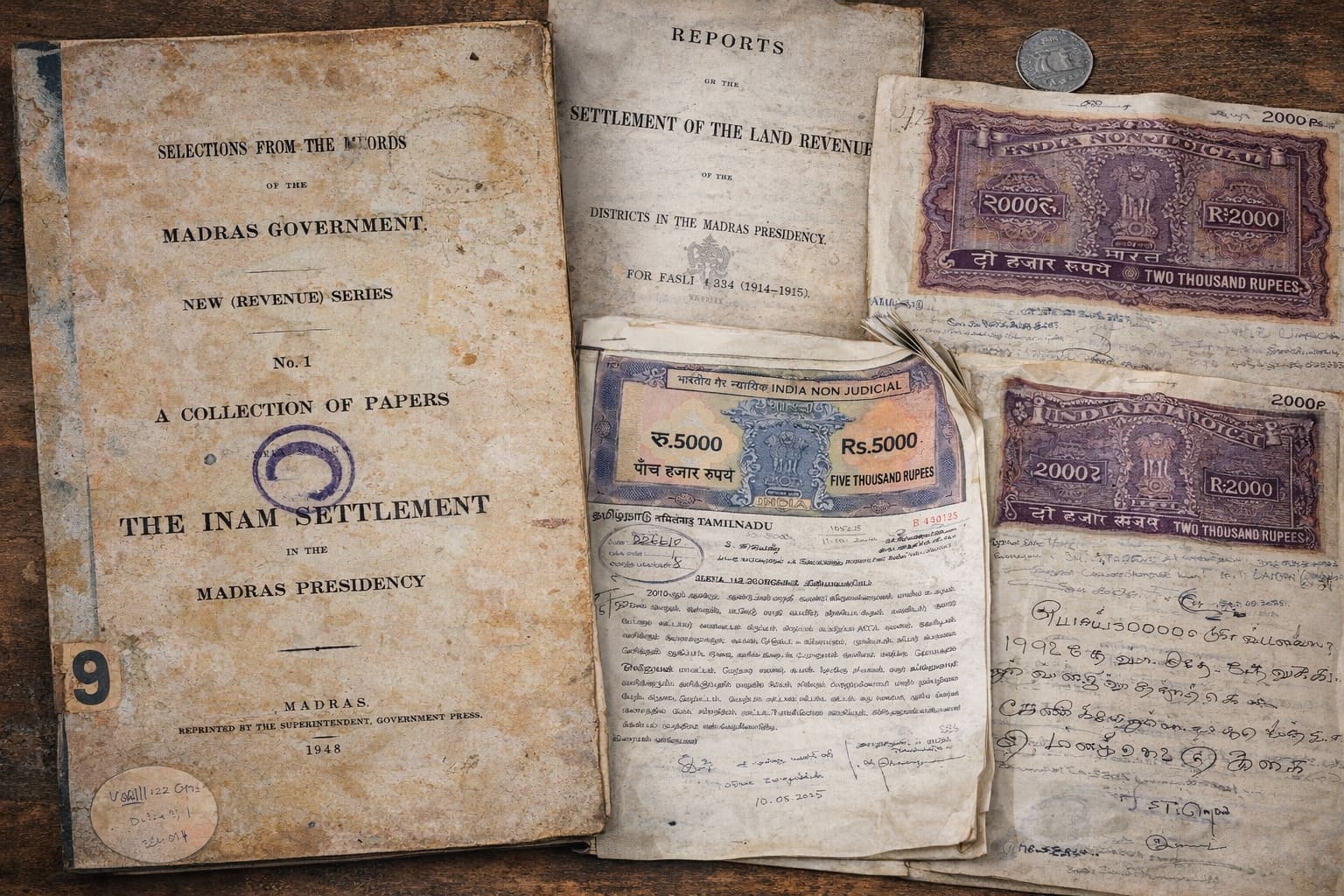
Why 1960s Settlement Still Causes Property Disputes in Tamil Nadu
Across Tamil Nadu, many land disputes today originate from 1960s resurvey and settlement operations. During that period:
- Survey numbers were revised
- Subdivisions were created
- Pattas were updated
- Land classifications were altered
- Village and district jurisdictions changed
As a result, landowners now face:
- Survey number mismatches
- Patta inconsistencies
- Temple or government ownership claims
- Classification changes (wet/dry/poramboke/natham)
- Breaks in title chain before 1970
To solve this properly, you must go beyond modern revenue extracts and trace back to pre-Independence village records, especially the Old Settlement Register (OSR) and the Inam Fair Register (IFR).
Understanding the Root Records: OSR and IFR
Old Settlement Register (OSR)

The Old Settlement Register was created during British-era revenue settlement under the Ryotwari system.
It contains:
- Original survey numbers
- Land extent
- Land classification
- Pattadar name at settlement time
- Revenue assessment
- Official remarks
OSR is effectively the ancestor of today’s A-Register.
If ownership history breaks before 1960, OSR becomes essential.
Inam Fair Register (IFR)
“Inam” refers to land granted tax-free or at concessional rates to:
- Temples
- Mutts
- Service holders
- Individuals
The Inam Fair Register documents:
- Nature of grant
- Name of inamdar
- Extent and boundaries
- Confirmation or resumption status
- Conditions attached
If someone claims land is temple land or government land, IFR verification is mandatory.
Where Should the Search Be Done?
Many people search randomly online. That does not work.
Tracing pre-Independence land records requires visiting specific offices in the correct order.
1️⃣ First Layer: Current Revenue Records
📍 Where to Search
- Village Administrative Officer (VAO)
- Taluk Office (Revenue Section)
- Taluk Survey Department
📄 Collect:
- Patta
- A-Register Extract
- Chitta
- Adangal
- FMB (Field Measurement Book)
- Mutation history
This establishes the present identity of the land.
2️⃣ Second Layer: 1960s Resurvey & Settlement Records
📍 Where to Search
- Taluk Survey Office
- District Survey & Settlement Office
- Collectorate Record Room
📄 Ask for:
- Old-to-new survey number linkage
- Resurvey proceedings
- UDR (Updating Registry) records
- Subdivision history
Most 1960s confusion can be resolved at this level.
3️⃣ Third Layer: Pre-Independence Records (OSR & IFR)
📍 Primary Location:
Tamil Nadu Archives and Historical Research, Egmore, Chennai
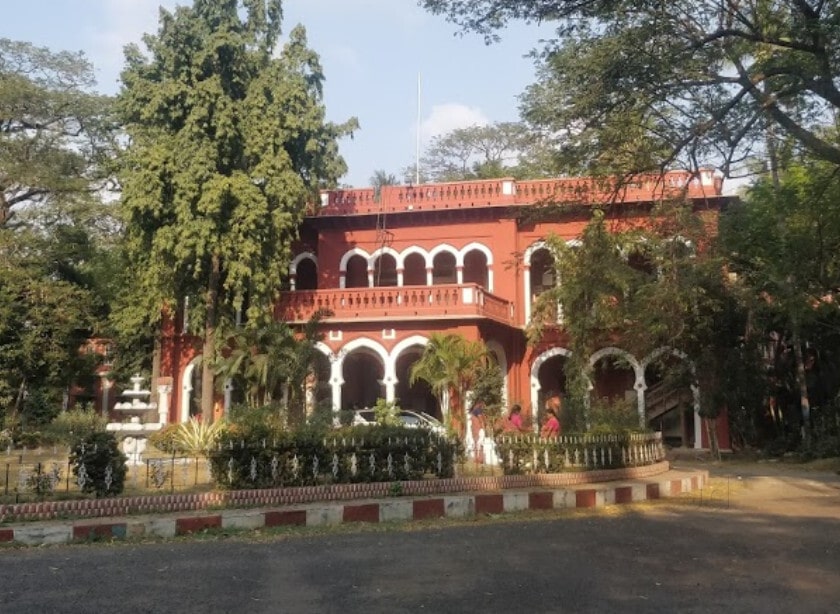
This is where you search for:
- Old Settlement Register (OSR)
- Inam Fair Register (IFR)
- Initial Survey Registers
- Estate / Inam investigation files
Important:
Search using historic district names.
Example:
Areas now in Dindigul district were historically under “Madura District” before 1985. If you search only using modern district names, you may miss records.
4️⃣ District Record Centres (Alternative Route)
Some older records (30+ years old) are transferred to:
- District Record Centres
- Collectorate old record rooms
In some cases, district-level access may be faster than Egmore.
5️⃣ Parallel Search: Sub-Registrar Office
📍 Where to Search
- Jurisdictional Sub-Registrar Office (SRO)
📄 Collect:
- Parent documents
- Pre-1960 sale deeds
- Partition deeds
- Inam abolition or estate conversion documents
Revenue history must match registration history.
If they contradict, the dispute begins.
The Correct Order of Investigation
- VAO / Taluk Office (current records)
- Taluk Survey Office (1960s linkage)
- Sub-Registrar Office (document chain)
- Tamil Nadu Archives (OSR & IFR)
- District Record Centre (if required)
Skipping steps leads to incomplete tracing.
Why Historic District Names Matter
Pre-Independence records may use:
- Madura instead of Madurai
- Composite districts that were later bifurcated
- Old taluk structures
Before visiting Archives, verify historic jurisdiction using old gazetteers or archival indexes.
Searching with only modern spellings can result in “record not found,” even when records exist.
Common Situations That Require OSR + IFR
- Survey number mismatch after resurvey
- Patta cancellation disputes
- Temple land claims
- Poramboke classification disputes
- Estate / Inam abolition confusion
- Title break before 1970
If your document chain does not smoothly move backward beyond the 1960s, OSR and IFR investigation becomes necessary.
Verified.RealEstate Can Help
For complex cases involving:
- Survey mismatch
- Patta inconsistency
- Historic district change
- Inam-related disputes
- Classification errors
Verified.RealEstate structures your document chain and identifies exactly where the break occurred — whether at the mutation level, survey linkage level, or settlement root.
Because land tracing requires technical mapping — not assumptions.
Final Takeaway
Modern patta is only the latest layer of history.
To resolve land ownership confusion caused by 1960s settlement:
- Start with current revenue records
- Trace survey linkage
- Verify registered document chain
- Investigate OSR
- Confirm IFR (if applicable)
- Use historic district names during archival search
Only then can ownership be legally and historically defended.