

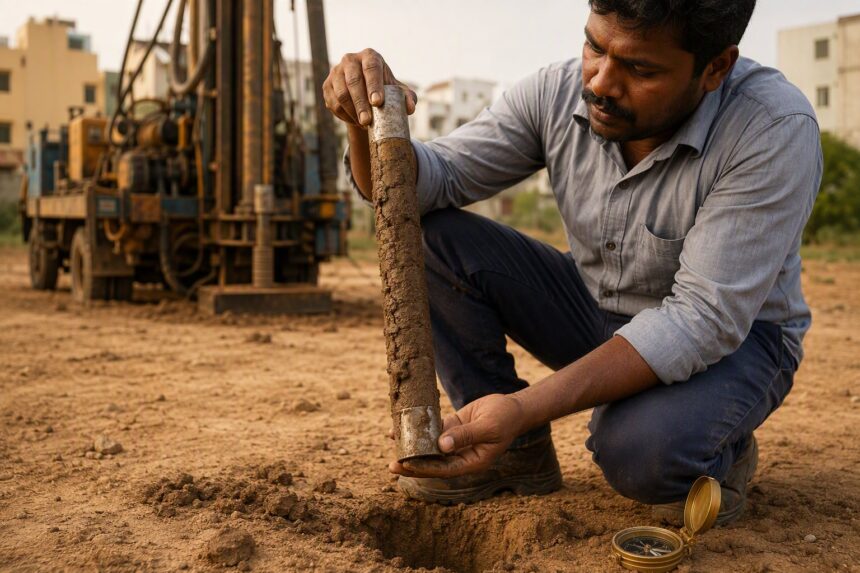
Why Soil and Vastu Matter Before You Build
Before laying the first brick, both traditional wisdom and modern engineering insist on one thing—test the land beneath your feet. Soil quality and natural energies not only influence the strength of your foundation but also affect long-term prosperity and well-being. Vastu Shastra, an ancient Indian architectural science, aligns surprisingly well with modern geotechnical practices, proving that our ancestors were not only spiritual but also practical engineers.
Traditional Vastu Soil Tests: Lessons from the Past
Ancient texts describe fascinating soil tests that combine symbolic meaning with logical reasoning:
- Water Absorption Test
Dig a 2’x2’x2’ pit, fill it with water, and observe absorption.- If water takes over an hour to drain → Good soil (firm and strong).
- If water drains too fast → Sandy soil, weak foundation.
- If cracks form → Clayey soil, prone to dampness.
- Refill Test
Refill the pit with the same soil.- If extra soil remains → Land is considered excellent.
- If soil fills exactly → Average.
- If soil falls short → Poor density, not suitable for construction.
- Moisture Test
A moderate level of moisture indicates fertility and prosperity. Completely dry soil is considered inauspicious and structurally weak. - Fertility Test
Sprouting seeds (wheat, paddy, beans) within 3–5 days signifies highly fertile, prosperous land.
While not all these tests are practical today, they symbolically highlight what modern engineers confirm: soil density, drainage, and fertility directly impact construction quality.
Science Meets Tradition: The Engineering Connection
Modern soil testing methods—Standard Penetration Test (SPT), Plate Load Test, and core sampling—validate many Vastu principles. Loose sandy soil requires deeper foundations, while clayey soil demands strong waterproofing.
Even builders today recommend checking soil density, water retention, and stability before construction. If you’re planning to buy or build, services like Verified.RealEstate’s Vaasthu Check help assess not only the scientific soil suitability but also Vastu compliance of your plot—giving you clarity before investing lakhs in construction.
Trees, Land Vibration, and Energy
Vastu also emphasizes the surroundings:
- Good signs: Banyan (West), Pipal (East), Pakar (North), and Gular (South) around the land symbolize prosperity.
- Bad signs: Termite hills, anthills, or foul-smelling soil indicate trouble.
- Energy check: Simply standing on the land and observing your comfort level is considered a practical test—if you feel unease, it might not be the right site.
Plot Selection Guidelines as per Vastu
When evaluating land, keep in mind:
- Shape Matters: Square and rectangular plots bring balance, while triangular, circular, or irregular shapes invite instability.
- Direction Counts:
- East-facing → Good for knowledge, learning, and leadership.
- North-facing → Favorable for law, policy, and government professionals.
- South-facing → Beneficial for entrepreneurs and businesses.
- West-facing → Supportive of service-oriented professions.
- Avoid T-Junction or Dead-End Plots: These are believed to cause energy imbalance and stress.
- Corner Plots: Northeast is considered auspicious, while Southwest may bring health and financial challenges.
Vastu and Soil Color, Smell, and Taste
Ancient texts classified soil based on sensory qualities:
- Auspicious: Red, yellow, white, or brown soil with pleasant smells (oil or ghee).
- Inauspicious: Black clayey soil, bitter or foul-tasting soil, or land full of worms.
From a scientific lens, these classifications align with aeration, fertility, and drainage capacity.
Why Soil Testing is Non-Negotiable Today
Even in 2025, no construction project begins without a soil test. Whether guided by Vastu or engineering, the truth is clear: strong soil = strong foundation. Investing a small amount in soil and land testing today saves lakhs in repair costs tomorrow.