


1. Introduction
When it comes to land or property purchase in Tamil Nadu, two terms often cause confusion: Title Deed and Possession Certificate. Although they sound similar, they serve entirely different purposes in a legal and practical context.
This article explains the difference between the two, when each is needed, and how they affect your ownership rights and ability to sell or build on land.
2. What is a Title Deed?

A Title Deed (commonly known as the Sale Deed) is the primary legal document that establishes ownership of a property. It is executed at the Sub-Registrar Office after a sale transaction is completed.
Key Features:
- Contains names of the buyer and seller
- Mentions the survey number, location, and land extent
- Records the transaction amount and stamp duty paid
- Legally registered under the Indian Registration Act, 1908
- Considered as conclusive proof of ownership
A registered Title Deed is the foundation of the “chain of title”, and without it, no legal transfer of ownership can be recognized by the government.
3. What is a Possession Certificate?
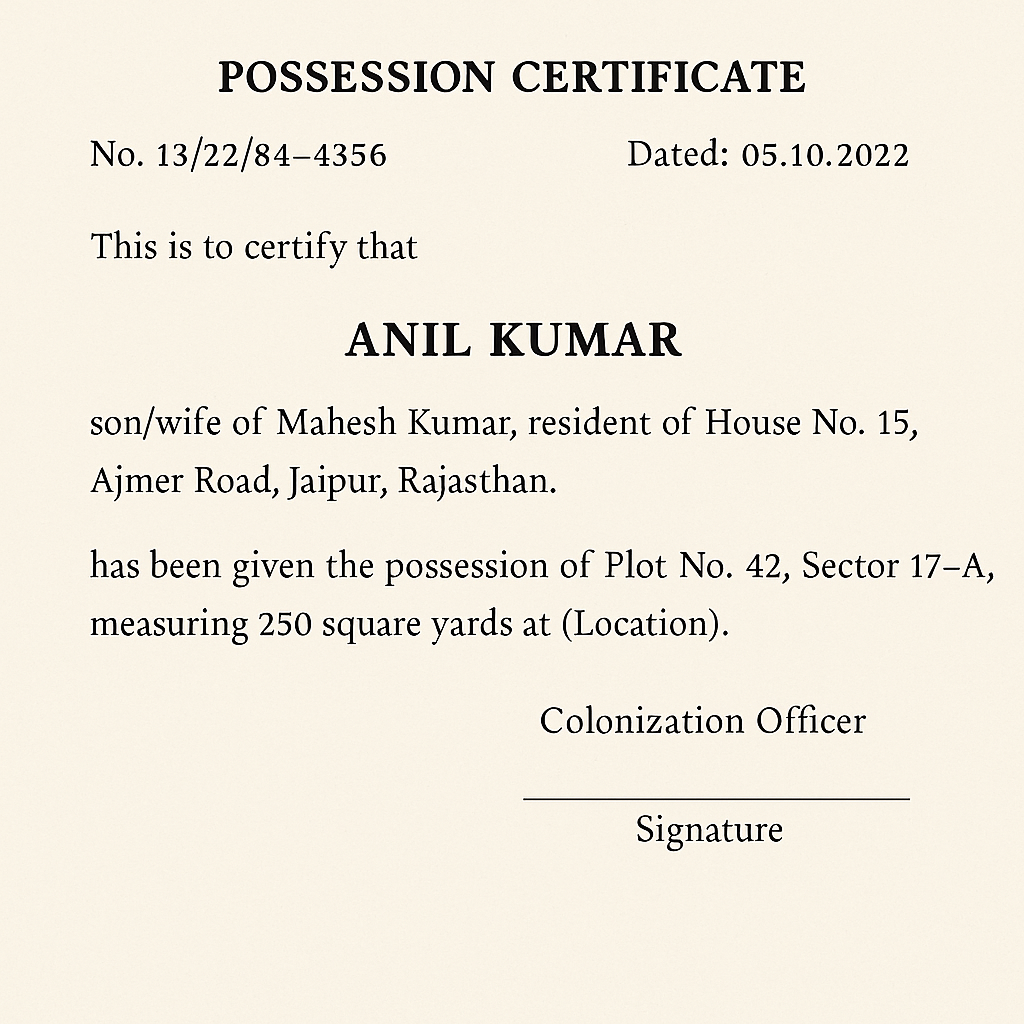
A Possession Certificate is a document issued by local authorities (like a Tahsildar or Municipality) confirming that the owner has physical possession of the property.
In rural areas, it may be issued post-registration by the Revenue Department.
In urban areas, especially for apartments or builder layouts, it may also indicate readiness for occupation.
Key Features:
- Confirms physical control over the land/building
- Typically issued after property transfer or legal allotment
- May be required for applying utility connections
- Does not by itself prove ownership
Possession Certificate is important for practical usability—it shows that no one else is occupying or using the property.
4. Key Differences at a Glance
| Criteria | Title Deed | Possession Certificate |
|---|---|---|
| Purpose | Legal ownership record | Confirms physical control |
| Issued By | Sub-Registrar (Registration Dept) | Revenue/Municipal Authority |
| Based On | Sale transaction and registration | Site inspection or mutation record |
| Legal Weight | Strong (court-admissible) | Secondary (supportive evidence only) |
| Use Case | Resale, loan, mutation, tax update | Electricity, water, construction |
5. Which One is More Important?
In legal terms, the Title Deed always holds more weight.
A buyer must never rely on possession alone without verifying the sale deed. Even if someone has a Possession Certificate, they cannot sell or mortgage the land unless they also have the registered title.
On the other hand, possession without title may suggest encroachment or an informal agreement. Conversely, title without possession might indicate a dispute, tenancy, or delayed handover.
6. Practical Example in Tamil Nadu
Imagine this scenario:
- A buyer has a registered Sale Deed for a 1-ground plot in Chengalpattu
- However, a local family occupies the land and has a Possession Certificate from 1990 due to a government housing grant
In such a case:
- The Title Deed shows legal ownership
- The Possession Certificate shows practical usage
- The buyer must either resolve the conflict through legal eviction or settle the dispute via compensation
This is why both documents must be checked during due diligence.
7. How to Verify the Documents
| Document | Where to Verify |
|---|---|
| Title Deed | TNREGINET → EC history → Copy from SRO |
| Possession Certificate | Taluk office, Municipal Office, or Housing Board |
| Cross-Check | Mutation entry, Patta update, and physical inspection |
If the title holder’s name is not mutated in Patta, it means possession or ownership hasn’t been officially recorded by the Revenue Department.
Title may show your name, but possession determines your control.
Our platform helps you: CLICK HERE
- Validate EC and registered deed trail
- Verify if the Possession Certificate is authentic or expired
- Check if the Patta reflects both legal and physical transfer
- Identify conflicts between paper title and ground reality
Conclusion
Understanding the difference between a Title Deed and Possession Certificate is not optional—it’s essential.
Before you buy land or a flat:
- Ask for the registered sale deed and cross-check EC
- Confirm mutation and physical possession
- Check if someone else has a possession document or pending claim
Only when both legal title and possession align can you safely invest.