

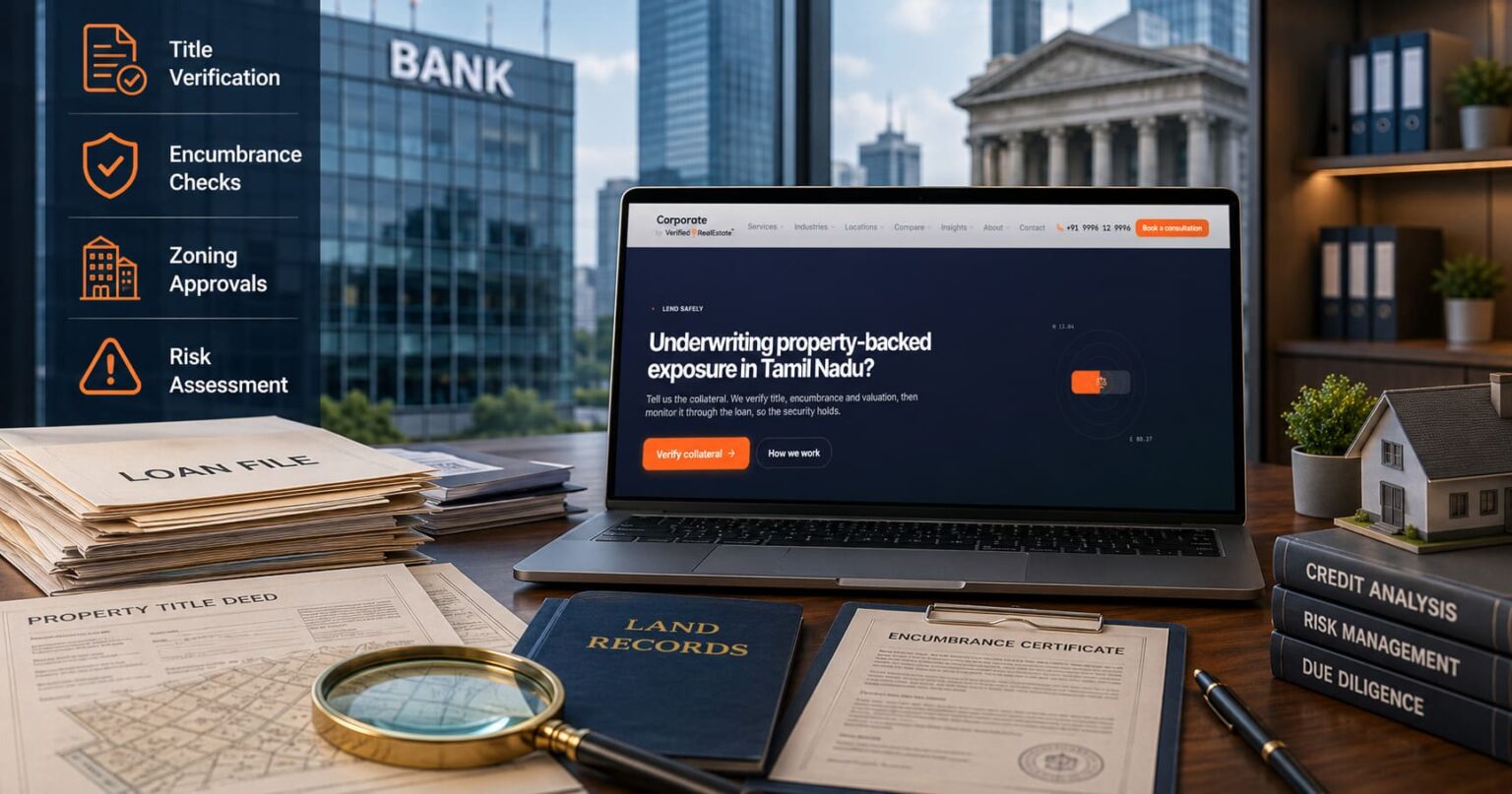
Real estate-backed lending remains one of the most significant segments of the Indian financial system. However, defective titles, unapproved developments, ownership disputes, and hidden encumbrances continue to expose banks and Non-Banking Financial Companies (NBFCs) to substantial financial and legal risks. As lending institutions increasingly seek stronger risk management mechanisms, comprehensive property due diligence has become a critical part of the credit appraisal process.
The Growing Importance of Property Due Diligence in Lending
When financial institutions lend against land or property, the asset itself becomes the security for the loan. Any defect in the collateral can significantly affect the lender’s ability to recover its dues in the event of a default.
Some of the most common risks faced by lenders include:
- Defective or incomplete title chains
- Undisclosed mortgages or encumbrances
- Pending litigation involving the property
- Illegal constructions and planning violations
- Incorrect land classifications
- Forged or manipulated documents
- Boundary and survey discrepancies
- Invalid powers of attorney and succession disputes
A comprehensive due diligence process helps lenders identify these issues before disbursing loans.
Collateral and Title Verification and Matters
Collateral verification goes beyond merely collecting property documents from borrowers. It involves an in-depth examination of the asset’s legal, regulatory and physical status.
So, before approving a loan against real estate, lenders must ensure that the property has a clear and marketable title and is free from legal or financial complications.
This involves :
- verifying ownership records,
- checking for encumbrances and existing charges,
- reviewing the chain of title,
- examining registration and revenue records,
- identifying litigation or succession issues, and
- confirming survey boundaries and access rights.
A thorough verification process helps financial institutions avoid lending against disputed, defective, or legally unenforceable assets.
Regulatory and Zoning Due Diligence Cannot Be Ignored
Even when a property’s title is clear, regulatory violations can create major risks for lenders.
Due diligence should therefore include:
- Land use verification
- CMDA and DTCP compliance checks
- Building approval verification
- Layout approval review
- Planning permissions
- Development restrictions
- Floor Space Index (FSI) compliance
Properties that violate planning regulations often face difficulties in financing, redevelopment, and enforcement proceedings.
Continuous Monitoring of Collateral is Equally Important
The legal status of a property can change after loan disbursement. New encumbrances, litigation or government actions may arise during the loan tenure.
Therefore, lenders increasingly require:
- Periodic property reviews
- Monitoring of government records
- Tracking new litigations
- Identification of fresh encumbrances
- Portfolio-level risk assessment
Continuous monitoring helps institutions proactively manage their exposure and identify emerging risks.
Recovery Support During Enforcement Proceedings
When borrowers default, lenders must ensure that the collateral remains legally enforceable.
Property due diligence can support:
- Verification before initiating enforcement proceedings
- Documentation review
- Identification of legal impediments
- Assessment of title issues
- Due diligence during SARFAESI proceedings
- Decision-making during recovery actions
Early identification of risks can significantly improve recovery outcomes.
Corporate By Verified RealEstate: Turns Property Data into Lending Intelligence
Real estate-backed lending involves risks that often go beyond the documents submitted by borrowers. Hidden encumbrances, title defects, regulatory violations and ownership disputes can significantly impact the value and enforceability of a lender’s collateral.
To address these challenges, Verified Real Estate offers specialised solutions for the BFSI sector, including Banks and NBFCs, combining technology, data intelligence and legal expertise to deliver comprehensive property due diligence and collateral risk management services for financial institutions.
The platform helps lenders by:
- Verifying ownership and title records.
- Examining Encumbrance Certificates, Patta and revenue records.
- Reviewing planning and building approvals.
- Analysing historical transaction data and litigation indicators.
- Identifying regulatory and zoning risks.
- Generating structured, evidence-based due diligence reports.
The ecosystem is backed by:
- 30-point verification framework
- 40 million+ land parcels analysed
- 9+ live government portals integrated
- 50 years of transaction history reviewed
- 35+ specialised diligence tools
- 15+ years of Tamil Nadu real estate expertise
The outcome for banks and NBFCs:
- Better underwriting and credit decisions.
- Early identification of legal and title risks.
- Stronger collateral risk management.
- Continuous portfolio monitoring.
- Improved recovery and enforcement strategies.
By transforming fragmented property information into actionable intelligence, Verified Real Estate enables banks and NBFCs to lend with greater confidence while reducing the risks associated with real estate-backed financing.
Conclusion
In an environment where property-related disputes and documentation issues remain prevalent, comprehensive due diligence is no longer optional for banks and NBFCs. Effective collateral verification, title assessment, regulatory checks and continuous monitoring can significantly reduce lending risks and improve recovery prospects. Institutions that adopt a robust property verification framework are better equipped to protect their portfolios and make informed credit decisions.