


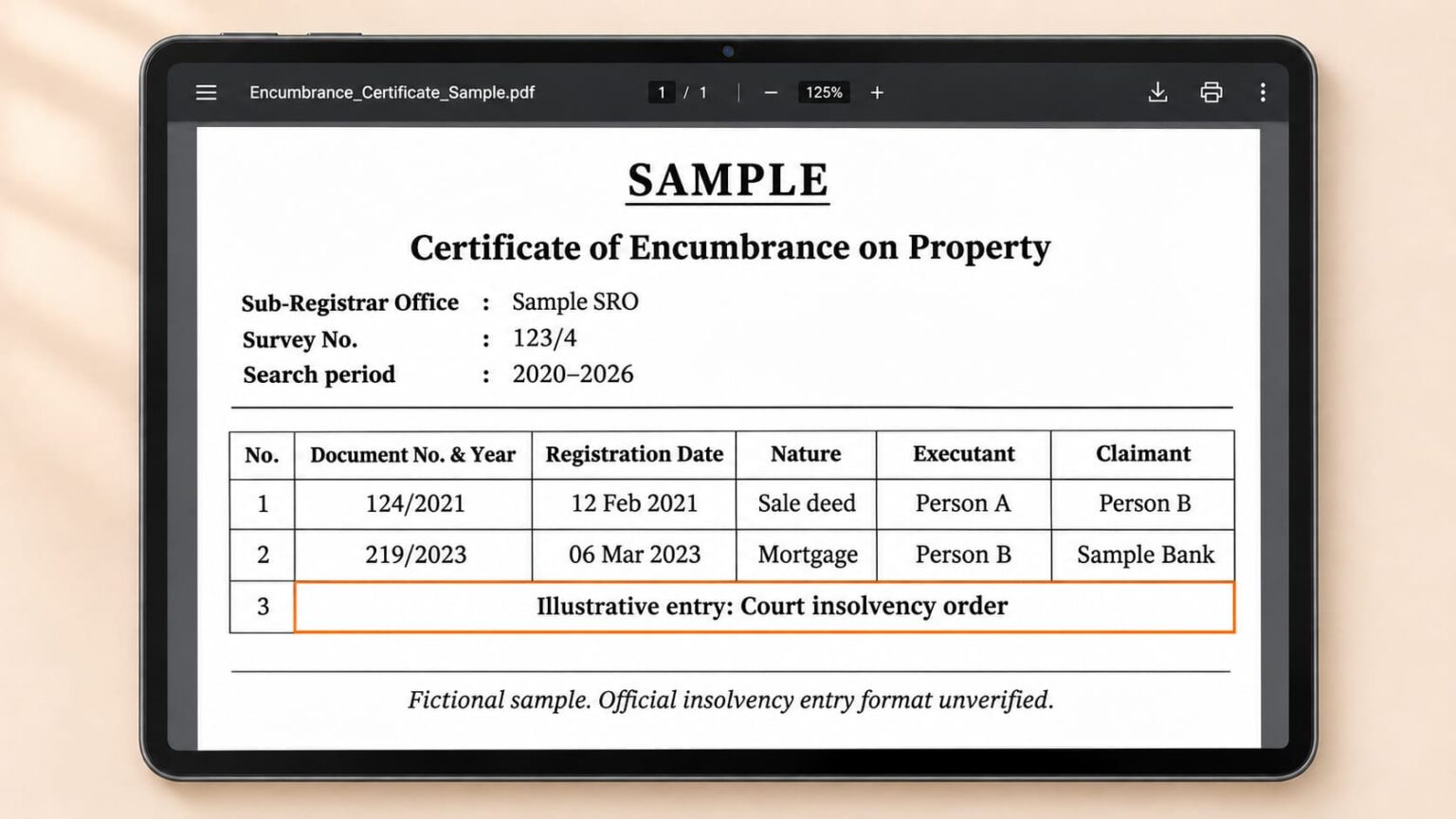
Imagine you’re buying a plot in Tamil Nadu. The seller’s name appears on the patta, and the previous sale deed shows how they acquired the land. But if a court has declared the seller insolvent, they may no longer have the legal right to sell the plot. The documents may still show the seller’s name even though their legal authority to sell has changed.
Tamil Nadu’s Registration Department has told sub-registrars to record these court orders in the affected property’s Encumbrance Certificate (EC) as soon as they receive official notice. That gives buyers another way to spot a problem before paying an advance.
What does an insolvency order mean for the property?
It means a court has formally declared that the person cannot pay their debts. A late EMI or an unpaid loan alone does not trigger this EC entry.
After the court order, the property may come under the legal control of an official called the Official Assignee or Official Receiver. Their job is to manage the affected assets for the people or institutions owed money. If the plot is among those assets, the seller may no longer be able to sell it on their own, even if their name still appears on the patta.
What has the Registration Department asked offices to do?
The department first issued instructions in April 2018 to file and index notices about insolvency orders. The latest directive reinforces those instructions and tells sub-registrars to do the following.
- File and index the communication. The sub-registrar records it in the office’s memo volume and assigns it an “L” number so the record can be traced.
- Update the property’s EC immediately. Once the office receives the official communication, it must enter the insolvency details in the EC.
- Send a free copy within three days of making the entry. The copy goes to the Official Assignee or Official Receiver, as applicable.
The department has also directed sub-registrars to enforce Section 22-B of the Registration Act. If a proposed transfer is prohibited by law, the sub-registrar must refuse to register the document.
What should you check before paying an advance?
If you see an insolvency entry in the EC, pause before paying. Get a copy of the court order and check whether it applies to the exact plot or flat you want to buy. For a plot, match the survey number and subdivision. Then confirm whether the order still affects the property and who can legally sign the sale deed.
Timing matters even if the EC looks clear. The registration office can update the EC only after it receives the official communication. If you already know about an insolvency proceeding involving the seller, check the court records and the status of the property before relying on the EC or paying an advance.
How can LandLens One help?
Use LandLens in ChatGPT or Claude to check a Tamil Nadu property’s Encumbrance Certificate (EC). Enter the property details like property address or its survey number in your CHATGPT and CLAUDE accounts, to review recorded sales, mortgages and other entries, including any insolvency order listed in the EC. This helps you spot entries that need a closer look before paying an advance.