


1. Introduction
When purchasing property in Tamil Nadu, the price you pay the seller is only part of the total cost. The actual legal transfer of ownership happens only after you pay Stamp Duty and Registration Charges to the Government of Tamil Nadu.
Many buyers are unaware of how these charges are calculated, what influences them, and how undervaluation can result in penalties or legal complications. This article explains the full process in a clear, structured manner.
2. What is Stamp Duty?
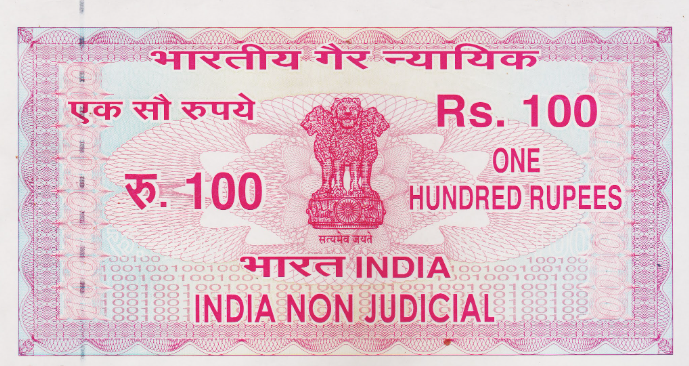
Stamp Duty is a government tax imposed on property transactions. It is paid to legally validate the ownership transfer between the seller and the buyer.
This duty is collected under the Indian Stamp Act, 1899 as applicable in Tamil Nadu, and is mandatory for all sale deed registrations.
Key Characteristics:
- Paid as a percentage of the property value
- Calculated on market value or guideline value, whichever is higher
- Collected at the time of registration at the Sub-Registrar Office (SRO)
3. What are Registration Charges?
Registration Charges are the administrative fees for processing the registration of documents, levied by the Registration Department.
Once paid, the transaction becomes part of public record. The buyer gets a legally enforceable registered deed.
4. Current Stamp Duty and Registration Rates in Tamil Nadu (as of 2026)
Note: These rates are subject to change during government budget announcements.
| Categories of Document | Stamp Duty | Registration Fee |
|---|---|---|
| Conveyance / Sale | 7% on the market value of the property | 2% on the market value of the property |
| Sale of Apartments | 4% of the composite value up to ₹50 lakhs; 5% of the composite value from ₹50 lakhs to ₹3 crores; 7% of the composite value above ₹3 crores | 2% of the composite value |
| Gift | 7% on the market value of the property | 2% on the market value of the property |
| Exchange | 7% on the market value of the property which is of greater value | 2% on the market value of the property which is of greater value |
| Simple Mortgage | 1% on the loan amount, subject to a maximum of ₹50,000 | 1% on the loan amount, subject to a maximum of ₹15,000 |
| Mortgage with Possession | 4% on the loan amount | 1% subject to a maximum of ₹2,00,000 |
| Agreement to Sale | ₹200 | 1% on money advanced; 1% on total consideration if possession is given |
| Agreement Relating to Construction of Building | 1% on the cost or value of construction, whichever is higher | 3% on the cost or value of construction, whichever is higher |
| Cancellation | ₹1,000 | ₹500 |
| Partition among Family Members | 1% on market value, subject to a maximum of ₹40,000 for each share | 1% subject to a maximum of ₹10,000 for each share |
| Partition among Non-Family Members | 4% on the market value of separated shares | 1% on the market value of separated shares |
5. How is Stamp Duty Calculated?
Stamp Duty is calculated on the higher of:
- The sale consideration (declared price in deed), or
- The guideline value (value fixed by the Tamil Nadu government)
For instance:
- Sale Price: ₹50 lakhs
- Guideline Value: ₹60 lakhs
Then, stamp duty = 7% of ₹60 lakhs = ₹4,20,000
Registration Charges = 2% of ₹60 lakhs = ₹1,20,000
Total Cost = ₹6,40,000
6. What is Guideline Value?
The Guideline Value is the minimum rate per square foot or acre determined by the Registration Department based on locality, street, survey number, or village.
It ensures:
- A baseline for tax collection
- Control over undervaluation of property
- Transparency in property transactions
You can check the guideline value of any property on https://tnreginet.gov.in
7. Penalty for Underreporting Value
If you attempt to register a property for less than the guideline value:
- The Sub-Registrar has the right to refuse registration
- You may be served a valuation notice under Section 47-A of the Indian Stamp Act
- Stamp duty and penalty will be recovered based on reassessed value
8. When are Charges Paid?
These charges must be paid:
- At the time of registration of the Sale Deed
- Through online banking, Challan, or stamp paper
You will receive a receipt, and the registered Sale Deed will carry a digital stamp indicating the duty paid.
9. Stamp Duty for Flats and Apartments
In apartment sales, duty is calculated on:
- Undivided Share (UDS) + Super Built-Up Area
- Parking charges are often not included in the deed — this should be verified
You should:
- Check whether UDS value is fair
- Ensure your builder includes all elements legally
Click here to calculate Stamp duty & Registration Fees!
10. Are There Any Concessions?
Yes. Concessions are available in:
- Gift Deeds to family members (2%)
- Registration of properties by women (same rate, but certain schemes may offer rebates)
- Agriculture land conversion under specific schemes
Always verify latest government circulars before proceeding.
11. Common Mistakes to Avoid
- Registering below guideline value without justification
- Not checking for pre-filled valuation errors at the SRO
- Ignoring joint names in parent deed or inheritance chain
- Assuming registration charges include legal vetting — they don’t
- Not keeping stamped receipts for your record
12. Final Checklist Before Registration
- Check correct guideline value from TNREGINET
- Calculate stamp duty and registration fee based on higher of GV or Sale Price
- Keep original PAN, Aadhaar, EC, Patta, and tax receipts ready
- Get sale deed reviewed by a legal advisor
- Avoid cash components that don’t reflect in the deed
Conclusion
Stamp Duty and Registration Charges are not extra costs — they are the legal foundation of your ownership in Tamil Nadu.
Ensure you:
- Pay the correct amount
- Understand how it’s calculated
- Register transparently with all facts verified
This avoids legal problems, tax scrutiny, and future title disputes.