

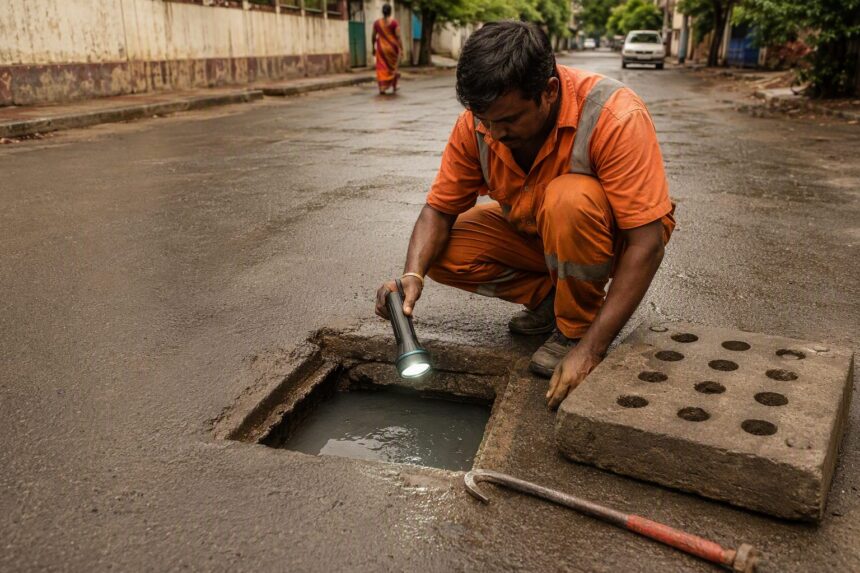
In a major urban sanitation push, the Greater Chennai Corporation (GCC) is stepping up enforcement against illegal sewage connections that have been contaminating storm-water drains and public water bodies.
Between 2023 and 2025, illegal sewage connections in Chennai have surged from 1.3 lakh to 2.1 lakh, prompting the civic body to launch stricter penalties and public monitoring efforts.
As per the new policy, violators will receive a one-week notice, after which fines starting at ₹5,000 will be levied. Larger buildings and commercial establishments face even steeper penalties.
In 2024 alone, 1,833 illegal connections were removed, and over ₹5.98 lakh in fines were collected.
Zones Under the Radar
The zones with the highest number of illegal discharges include:
- Teynampet – 336 cases
- Tondiarpet – 195 cases
- Kodambakkam – 193 cases
Many of these violations are tied to commercial hubs, including the Koyambedu market area, where dumping directly into stormwater channels has caused severe blockages, flooding, and health hazards.
Lack of Infrastructure & Night Dumping
In Chetpet, where there is no underground drainage system, most households depend on sewage tanker lorries for waste disposal. However, some residents resort to illegally releasing sewage into stormwater drains or dumping it into the Cooum River, leading to dangerous overflows and serious health risks, especially during the monsoon.
“The Corporation should take strict action against offenders, but also focus on building proper infrastructure,” urged Kumarasamy, a long-time resident of the area.
Residents have also voiced strong concerns about commercial units near the Koyambedu market, many of which operate without proper sewer connections.
Locals allege that these businesses frequently hire private tankers late at night to illegally dispose of sewage into drains and water bodies, worsening pollution and avoiding detection by authorities.
Despite repeated complaints lodged with Chennai Metrowater and local officials, enforcement has been sporadic and inadequate, allowing these violations to continue unchecked.
Residents Demand Sustainable Solutions
While enforcement has increased, residents argue that penalties alone aren’t enough and they demand better solutions as many neighborhoods still lack access to proper underground sewerage networks, leaving them few options but to resort to illegal outlets.
Despite repeated complaints to Chennai Metrowater and local officials, poor enforcement has persisted until now.
GCC Commissioner J Kumaragurubaran stated that authorities are:
- Actively tracking known dumping hotspots
- Planning upgraded infrastructure discussions in the next council meeting
Verified.RealEstate Insight
This crackdown underscores the need for verified infrastructure before purchasing or renting a property. Buyers should:
✅ Check for legal sewer connections
✅ Avoid zones with frequent flooding or drainage issues
✅ Use Verified.RealEstate’s Property Inspection Reports to stay informed
For added protection, consider our Legal Compliance Audit to ensure you’re not investing in properties with civic violations.