

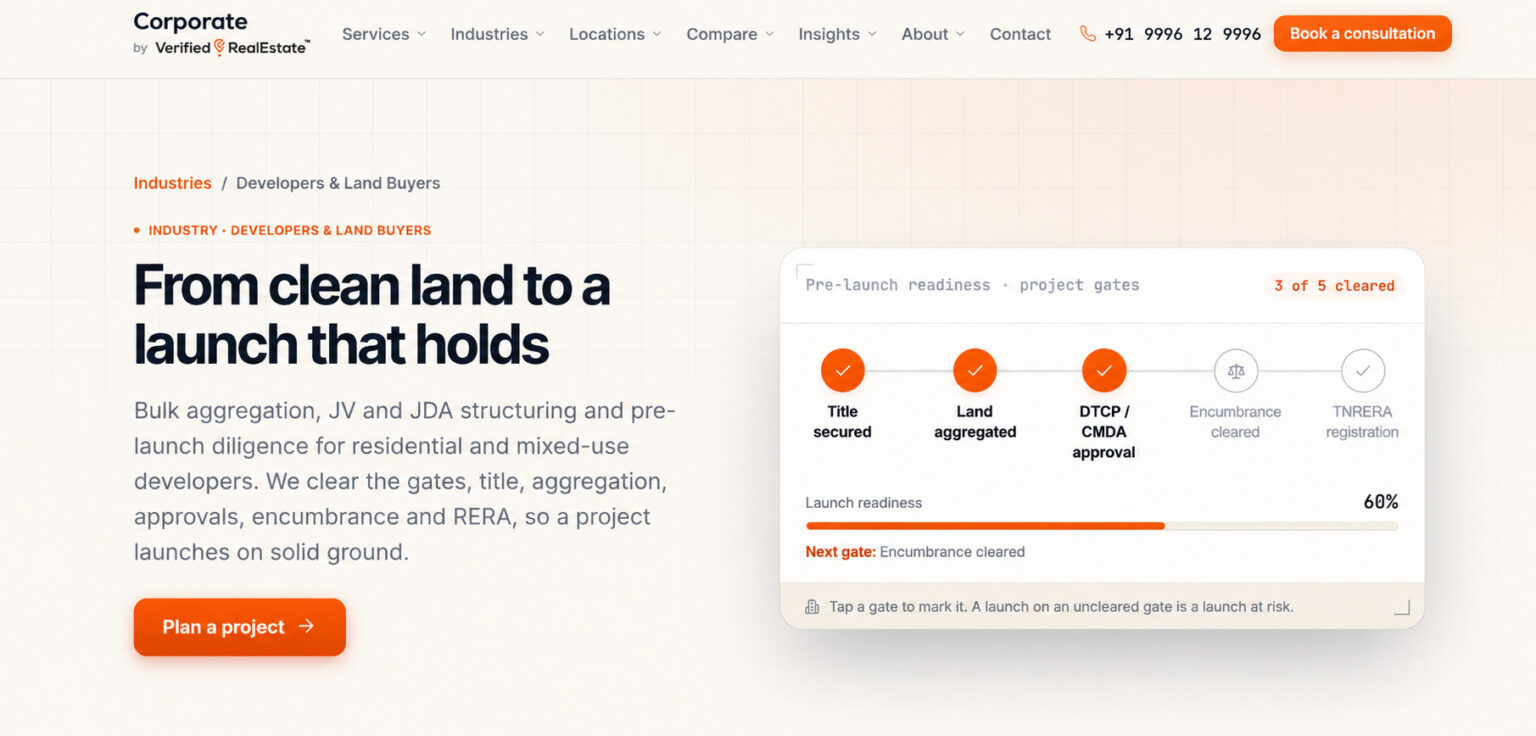
A residential or mixed-use development may look attractive on paper, but even the most ambitious projects can face serious setbacks if the underlying land has title issues, encumbrances, approval gaps, or ownership disputes. For developers and landowners, the success of a project starts long before construction begins—it starts with thorough land due diligence and proper project structuring.
With Chennai’s residential corridors rapidly expanding due to growth in the IT, GCC, and manufacturing sectors, the need for legally verified and development-ready land has become more critical than ever.
Why Residential Developers Need Comprehensive Land Due Diligence
Developing a township, apartment project, or mixed-use community involves much more than simply purchasing land. Developers often deal with multiple survey numbers, numerous landowners, and varying land classifications.
A single disputed parcel or hidden encumbrance can stall an entire project after substantial capital has already been invested.
Pre-launch diligence generally includes:
- Verification of clean and marketable title.
- Examination of historical ownership records.
- Review of encumbrances and legal liabilities.
- Agricultural conversion and land classification verification.
- Access and road connectivity checks.
- Buildability assessment under applicable development regulations.
- Verification of planning approvals and RERA readiness.
The Growing Importance of Bulk Land Aggregation
Large residential developments require sizeable, contiguous land parcels. However, assembling these parcels is often complicated because the land may belong to multiple owners and consist of several survey numbers.
Bulk land aggregation involves:
- Identifying adjoining parcels.
- Verifying ownership and title for each parcel.
- Ensuring proper access rights.
- Checking land conversion and classifications.
- Creating a legally clean and consolidated land bank for development.
Without proper aggregation and verification, developers may end up with fragmented holdings that cannot be effectively developed.
Choosing the Right Development Structure: Purchase, JV, or JDA
Every project requires a suitable commercial and legal structure.
Depending on the project and landowner requirements, developers may opt for:
Outright Purchase
The developer acquires complete ownership of the land and independently undertakes the project.
Joint Venture (JV)
The developer and landowner jointly participate in the project and share the risks and rewards.
Joint Development Agreement (JDA)
The landowner contributes the land, while the developer undertakes construction and project execution, with revenue or built-up area being shared between both parties.
Selecting the appropriate structure requires careful evaluation of:
- Buildable area.
- Market value.
- Revenue potential.
- Risk allocation.
- Funding requirements.
Approvals and Buildability Can Determine Project Viability
Before launching a project, developers must ensure that the proposed development complies with applicable planning regulations.
This includes:
- Layout approvals.
- Development permissions.
- Floor Space Index (FSI) calculations.
- Compliance with applicable building regulations.
- DTCP and CMDA approval pathways.
Failure to address these issues early can result in project delays, redesigns, or regulatory complications.
RERA Readiness Is Essential Before Launch
Every real estate project intended for sale must comply with Tamil Nadu RERA requirements before marketing begins.
To achieve a smooth registration process, developers must ensure:
- Clean title documentation.
- Proper encumbrance records.
- Approved layouts and permissions.
- Complete legal and regulatory compliance.
A missing document or unresolved issue can significantly delay project registration and launch timelines.
The Four-Step Approach to Launch-Ready Projects
Verified Real Estate Corporate Services follows a structured, end-to-end approach to ensure every project is truly launch-ready before it reaches the market.
1. Land Identification and Project Structuring
The target land is identified and the development structure is finalised.
2. Verification and Aggregation
Every parcel undergoes title, access, and conversion verification before being consolidated.
3. Approvals and Regulatory Compliance
Planning approvals and RERA preparations are completed.
4. Launch Readiness
All legal, regulatory, and documentation requirements are cleared before project launch.
Support for Developers and Landowners
For residential developers and landowners, managing title verification, bulk aggregation, approvals, project structuring, and pre-launch diligence can be highly complex.
Verified Real Estate Corporate team offers end-to-end support for:
- Bulk land aggregation.
- Title verification and due diligence.
- 50+years of Encumbrance check and compliance checks.
- Agricultural conversion and land classification.
- Joint Venture and Joint Development structuring.
- Buildable area under TNCDBR 2019.
- Approval pathway assessment.
- DTCP or CMDA approvals.
- Pre-launch readiness and RERA preparation.
By clearing every legal and regulatory gate before launch, developers can significantly reduce project risks and build on a strong and compliant foundation.
Supporting Growth Across Chennai’s Emerging Residential Corridors
Across Chennai’s fast-growing corridors such as OMR, Tambaram–Vandalur, Porur–Poonamallee, and the Ambattur and Madhavaram belts, Verified Real Estate Corporate team helps developers and landowners with land aggregation, title due diligence, project structuring, approvals, and RERA readiness, enabling projects to move from land acquisition to a clean launch.
Conclusion
In real estate development, the quality of the land and the strength of legal due diligence often determine the success or failure of an entire project. Clean title, proper aggregation, regulatory approvals, and RERA readiness are no longer optional—they are essential requirements for a successful and sustainable development.
For developers and landowners planning residential or mixed-use projects, investing in comprehensive pre-launch diligence can save years of delays, litigation, and financial exposure.