

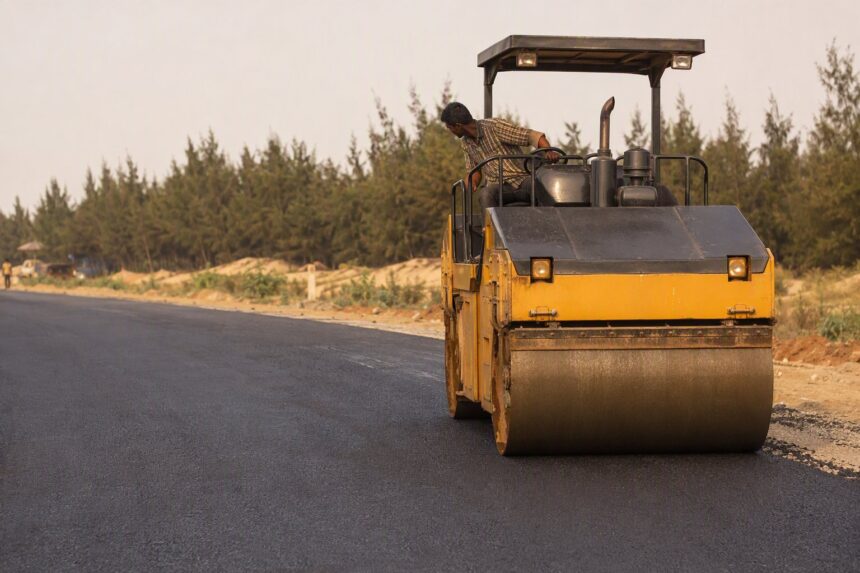
The OMR–ECR Link Road has long been one of Chennai’s most anticipated infrastructure projects. Designed to connect the IT-heavy Old Mahabalipuram Road (OMR) with the fast-developing East Coast Road (ECR), the project promises shorter travel times, reduced congestion, and improved airport access.
Comparing the situation between late 2024 and 2025 shows how the project transformed from being partially stalled to crossing major regulatory and construction milestones.
2024 Status: Progress on One Side, Delays on the Other
In 2024, the OMR–ECR link road was a mix of completed segments, pending land acquisitions, and unapproved designs.
Key Highlights from 2024
- A significant 670-metre stretch on the OMR side was already completed.
- ECR-side progress was slow due to land acquisition issues across nearly 90 private properties, including 58 buildings in Neelankarai and Sholinganallur.
- The project’s original alignment, planned since 2020 at ₹204 crore, faced delays mainly because of CRZ constraints and property disputes.
- No final approval existed for the bridge across the Buckingham Canal — leaving the project half-done.
- Residents and commuters expressed frustration over the long detours via Sholinganallur and Thiruvanmiyur.
In short: 2024 = ambitious design, partial construction, but major bottlenecks.
2025 Status: A Major Breakthrough with the Steel Bridge Approval
By late 2025, the narrative changes significantly with multiple clearances and construction acceleration.
Key Advancements in 2025
- The Tamil Nadu State Coastal Zone Management Authority (TNSCZMA) approved a 6-lane steel bridge over the Buckingham Canal.
- The new steel bridge design reduced the required approach length by ~43 metres, cutting construction time almost by half compared to RCC.
- Steel superstructure allows faster assembly — estimated within 5 months once fabrication begins.
- Around 800 metres on the OMR side were completed, while 600 metres on the ECR side remain.
- Full regulatory clearance means the project can now advance without legal or environmental obstacles.
2025 = moment of acceleration, turning a struggling link into an active, fast-evolving infrastructure network.
TNSCZMA Conditions and Why the Steel Bridge Was Chosen
Under the conditions issued by the TNSCZMA, the Highways Department must adopt strict environmental safeguards while executing the project. This includes applying anti-corrosive protective coatings on all steel components to withstand marine exposure and prevent rusting. The department is also required to conduct regular environmental monitoring—covering water quality, sedimentation levels, and biodiversity health—to ensure the ecological integrity of the Buckingham Canal is not compromised.
Long-term upkeep of both the bridge and the adjoining canal stretch has been mandated to prevent any deterioration of the waterbody’s environmental character.
Why This Project Matters for Chennai
The OMR–ECR Link Road is not just another road project — it is a connectivity multiplier that will:
- Reduce ECR → Airport travel times
- Decongest Sholinganallur junction
- Create a direct route between Chennai’s IT corridor and beachfront residential zones
- Boost real-estate value significantly on both sides
With the bridge now approved and land acquisition nearly complete, Chennai is finally close to seeing this long-delayed project materialise.