

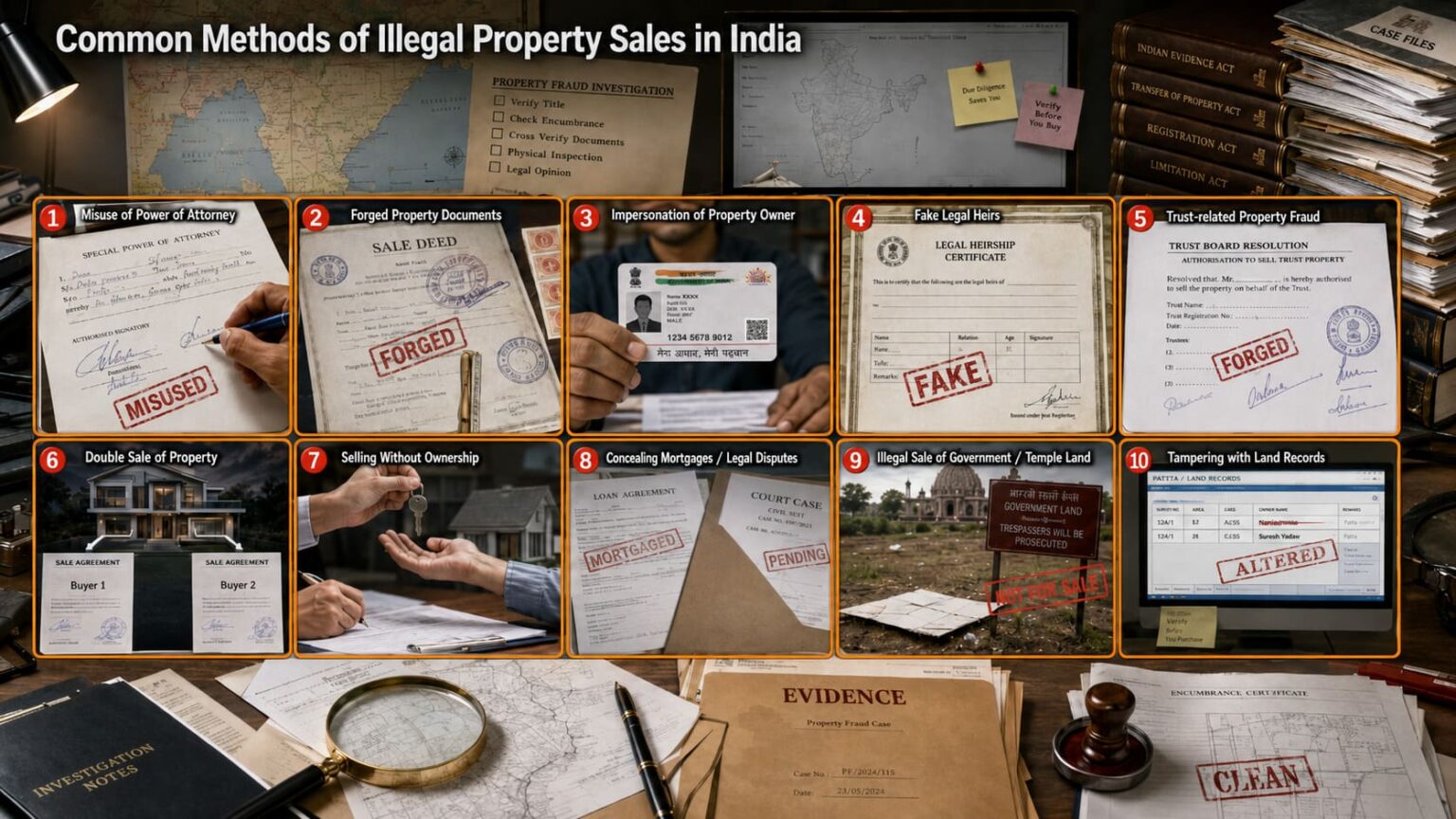
Buying property is one of the biggest financial decisions a person makes. Unfortunately, property fraud continues to rise in India, with fraudsters exploiting forged documents, fake identities, fabricated trusts, and loopholes in property transactions. Understanding the common methods used in illegal property sales can help buyers identify red flags and avoid costly mistakes.
Many NRI-owned and long-held properties still rely on decades-old registration records that lack photographs, biometric authentication, and digital identity linkage. These outdated records make it easier for fraudsters to impersonate owners, forge documents, or misuse Power of Attorney, highlighting the importance of updating legacy registrations and regularly monitoring property records.
1. Misuse of Power of Attorney (PoA)
A Power of Attorney (PoA) is a legal document that authorizes someone to act on behalf of the property owner. While a genuine PoA is perfectly legal, fraudsters often create forged or unauthorized PoAs to sell properties without the owner’s knowledge. In the past, Agreement to Sell + General Power of Attorney (GPA) + Will transactions were also misused to evade stamp duty.
The Supreme Court’s landmark judgment in Suraj Lamp & Industries Pvt. Ltd. v. State of Haryana** (2011) clarified that property ownership cannot be transferred through a General Power of Attorney, Agreement to Sell, and Will alone. A registered sale deed is generally required to convey ownership. This case is the leading authority on GPA sale misuse.
2. Forged Property Documents
Fraudsters create fake sale deeds, title deeds, pattas, encumbrance certificates, or other ownership records to falsely establish ownership before selling a property. Buyers who fail to verify original records may unknowingly purchase disputed land.
3. Impersonation of the Property Owner
In this type of fraud, criminals pose as the genuine owner using forged identity documents such as Aadhaar, PAN, or passports. The property is then sold to unsuspecting buyers before the real owner becomes aware of the transaction.
Services like owner verification by Verified Real Estate help buyers confirm the true identity of the person they are dealing with before proceeding with any transaction.
4. Fake Legal Heirs
Fraudsters sometimes fabricate legal heir certificates or succession documents and falsely claim inheritance rights over a property. They then attempt to sell the property despite having no legal ownership.
5. Trust-Related Property Frauds
Trust-owned properties can also become targets of fraud through several methods:
- Fake Trust Creation: Creating a fictitious trust using forged trust deeds to claim ownership.
- Fake Trustee: A person falsely claims to be the trustee of a genuine trust and executes a sale.
- Unauthorized Trustee Sale: A genuine trustee sells trust property without the approvals required under the trust deed or applicable law.
- Forged Trust Resolution: Fake board resolutions are created to falsely show that trustees approved the sale.
The recent Palani Temple land case in Tamil Nadu is a reminder that even religious and charitable trust properties can become targets of fraudulent transactions.
6. Double Sale of the Same Property
Some fraudsters sell the same property to multiple buyers by executing separate sale agreements or sale deeds before earlier purchasers discover the fraud.
7. Selling Property Without Legal Ownership
A person who has no legal title or ownership rights may falsely represent themselves as the owner and execute a sale. Without proper title verification, buyers can end up purchasing property from someone who had no authority to sell it.
8. Concealing Mortgages or Legal Disputes
A seller may deliberately hide that the property is already mortgaged, attached by a court, or involved in ongoing litigation. Such concealed liabilities can create significant legal and financial problems for the buyer.
9. Illegal Sale of Government or Temple Land
Encroached government land, temple land, trust property, or other public land is sometimes fraudulently sold using forged ownership documents or fabricated records.
Want to know if your property falls under temple land, Waqf land, or any other government-controlled category? Use LandLens – Verify My Land for a comprehensive analysis of your property’s legal status and land records.
10. Tampering with Land Records
Revenue records, survey details, mutation entries, and ownership records may be illegally altered to create the appearance of legitimate ownership before a fraudulent sale.
11. Concealing Financial and Statutory Liabilities
Some sellers intentionally hide outstanding property tax, electricity and water dues, maintenance charges, government notices, acquisition proceedings, or building violations before completing the sale. Buyers should verify all statutory dues and obtain no-dues certificates wherever possible to avoid inheriting unexpected liabilities.
Property Fraud Risks for NRIs & Owners Who Rarely Visit Their Sites
NRIs, who often manage their assets remotely and property owners who rarely visit their sites are at higher risk of fraud because they cannot regularly monitor physical possession or verify on-ground developments.
In many cases, encroachers or unauthorized tenants may take control of the property and later claim false occupancy rights. Fraudsters may also misuse Power of Attorney documents or manipulate local records to execute illegal transactions without the owner’s immediate knowledge.
Regular legal verification and periodic site inspections are essential to prevent such unauthorized activities and protect long-term ownership rights.
Fraudsters may exploit outdated records, misuse Powers of Attorney, impersonate owners, or even attempt unauthorized sales while the owner is overseas.
Before buying, selling, or authorizing anyone to act on your behalf, NRIs should:
- Verify the property’s title and ownership history.
- Confirm that any Power of Attorney is genuine, properly executed, and legally valid.
- Conduct legal due diligence on trust-owned or inherited properties.
- Review encumbrance certificates, revenue records, and ongoing litigation.
Use trusted legal professionals and technology-driven property verification services before completing a transaction, along with property management services and property tracker services offered by verified real estate platform for NRIs and property owners who do not have the time to regularly monitor, inspect, or manage their assets.
Protect Yourself Through Proper Due Diligence
Most property frauds can be prevented through thorough legal due diligence. Buyers should verify ownership documents, inspect revenue records, confirm the seller’s identity, review encumbrance certificates, check for pending litigation, and ensure the seller has the legal authority to transfer the property. A careful verification process significantly reduces the risk of becoming a victim of property fraud.
Protecting yourself begins with verifying every document—not simply trusting every signature.