

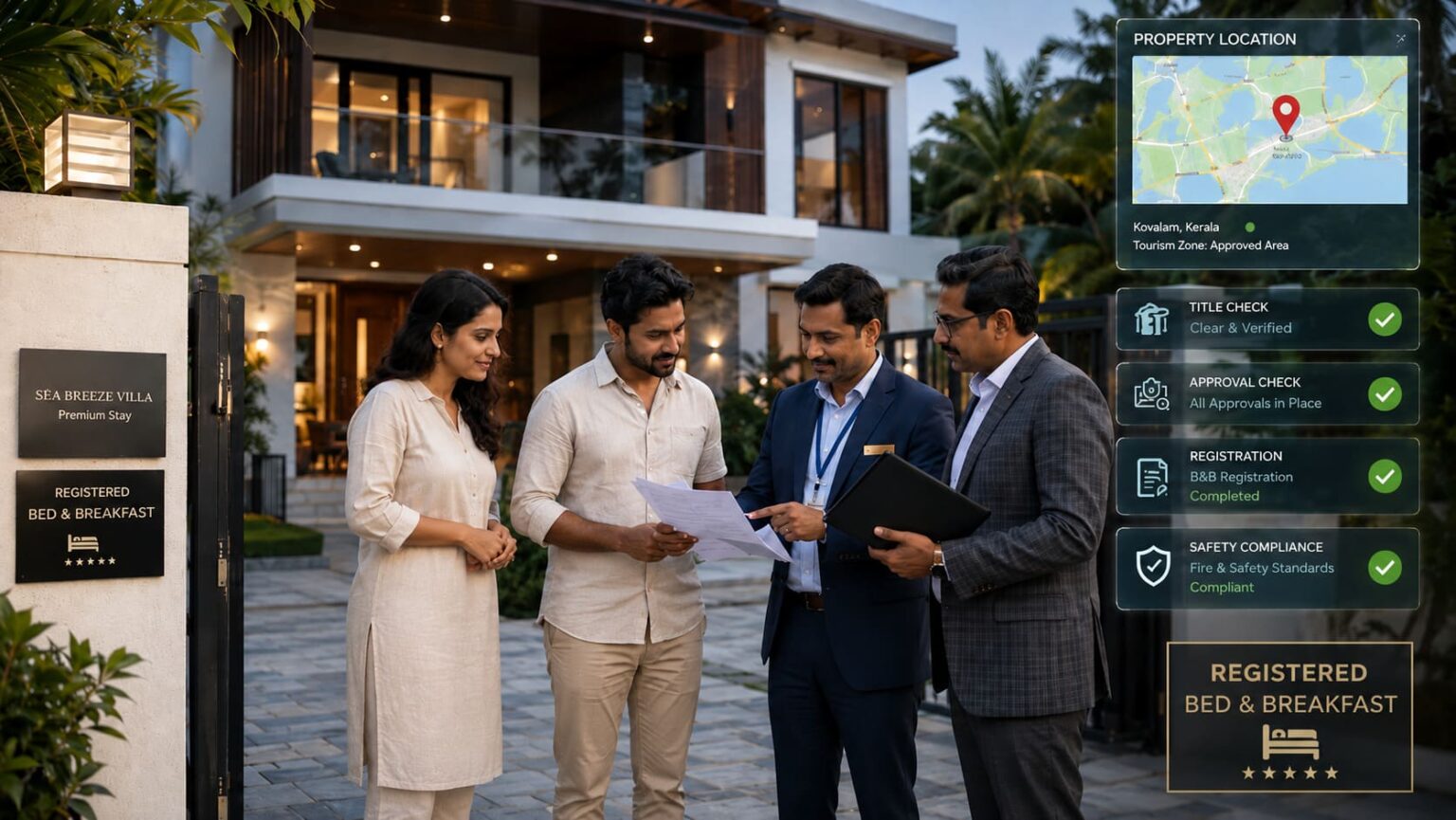
Homestays Are Becoming a Practical Tourism Opportunity in Tamil Nadu
Tamil Nadu has a strong tourism base, from temple towns and heritage locations to hill stations, beaches, business cities and cultural destinations. But not every tourism location can support large hotels or commercial resorts.
This is where Homestays and Bed & Breakfast establishments become important. They help improve hospitality infrastructure in places where full-fledged hotels may not be viable. They also give tourists a more personal experience by allowing them to stay closer to local culture, food, lifestyle and Tamil hospitality.
For homeowners, this opens up a new income opportunity. A spare room, independent house, villa, farmhouse or heritage-style property can potentially be converted into a registered tourist accommodation, provided the property and approvals are legally suitable.
Tamil Nadu’s Scheme for Registration of Bed & Breakfast and Homestays
The Tamil Nadu Department of Tourism has introduced the Scheme for Registration of Bed & Breakfast and Homestays to bring such accommodation facilities into a more organized and trusted system.
The purpose of this scheme is not just to allow homeowners to rent rooms. It is also aimed at improving tourism infrastructure, creating local livelihood opportunities and promoting authentic Tamil cultural hospitality.
Registered homestays may also receive marketing and promotional support through the official tourism website. This can help approved operators gain visibility among tourists looking for reliable accommodation options in Tamil Nadu.
In simple terms, registration can help a homestay move from being an informal stay option to a more credible tourism-linked accommodation business.
Government Guidance for Homeowners
One important benefit of the Tamil Nadu homestay registration framework is that the Department of Tourism may provide guidance to homeowners who want to establish Bed & Breakfast or Homestay facilities.
This guidance can help owners understand how to make their property more guest-friendly, safe, attractive and suitable for tourists.
For many first-time operators, this support matters because running a homestay is not just about listing a room online. It involves hospitality, cleanliness, guest handling, food arrangements, safety, local experience, documentation and basic service quality.
Skill Development and Community Sensitization
The Department of Tourism also aims to support local communities through awareness and skill-development initiatives.
These workshops may help homeowners and operators develop useful skills such as:
Cooking, hospitality, housekeeping, English speaking, guest communication and basic tourism service management.
This is a strong point because a successful homestay depends heavily on the guest experience. Tourists are not only looking for a room; they are also looking for comfort, cleanliness, trust, local guidance and a memorable cultural experience.
By training local homeowners, Tamil Nadu can improve both tourism quality and rural or semi-urban livelihood opportunities.
National-Level Incredible India B&B / Homestay Guidelines
Apart from Tamil Nadu’s state-level framework, the Ministry of Tourism also has the Incredible India Bed & Breakfast / Homestay Guidelines at the national level.
This is mainly a classification and approval framework where eligible Bed & Breakfast and Homestay establishments may be assessed and categorized, commonly under Silver or Gold categories, after inspection and evaluation.
This classification helps create a quality benchmark. It gives tourists more confidence and helps serious operators position their property as a recognized and professionally maintained stay option.
So, property owners should understand the difference clearly:
Tamil Nadu’s scheme helps with state-level registration and tourism promotion, while the Incredible India framework provides a national-level classification and quality recognition system.
Is Government Support Available for Homestays?
At the national level, the Ministry of Tourism promotes rural tourism and homestays through different schemes and classification frameworks. A 2026 government update mentions that the Ministry classifies homestay facilities under the voluntary Incredible India B&B scheme and that certain tribal homestay initiatives under tourism development schemes may include financial support for construction, renovation and community requirements, subject to eligibility.
This means opportunities exist, but owners should not assume every private property automatically qualifies for subsidy or scheme benefits. Eligibility depends on location, category, government notification, tourism policy and approval status.
Airbnb Is a Platform, Not a Legal Approval
Many property owners confuse Airbnb listing with legal permission. That is a mistake.
Airbnb, Booking.com, MakeMyTrip, Agoda or any other platform is only a marketplace where guests can discover and book stays. These platforms do not replace government registration, local permissions or property compliance.
A property may be listed online and still be unauthorized if it does not meet the required legal and operational conditions.
So, before starting an Airbnb-style business, owners should first check whether the property can legally function as a Homestay or Bed & Breakfast establishment.
What Owners Should Check Before Starting a Homestay
Before investing in interiors, furniture, photography and online marketing, property owners should check the basic legal and property-related risks.
The important checks include:
Whether the property title is clear, whether there is any encumbrance or loan charge, whether Patta and ownership records match, whether the building has proper approval, whether the property usage allows guest accommodation, whether there are local body restrictions, whether road access and parking are available, whether the property falls under any eco-sensitive or hill-area regulation, whether co-owners have given consent, and whether there are any pending disputes or litigation.
This is especially important in tourism-heavy and regulated locations such as Ooty, Kodaikanal, Yercaud, Valparai, Mahabalipuram, Rameswaram, Kanyakumari and heritage-town belts.
Why Unauthorized Homestays Can Become Risky
An unregistered homestay may look profitable in the beginning, but it can create serious problems later.
If the property is operated without proper registration or approval, the owner may face complaints from neighbours, local body action, tourism department scrutiny, police verification issues, tax complications, closure directions or legal disputes.
In sensitive tourism areas, authorities have become more watchful about unauthorized homestays, especially where public safety, overcrowding, waste management, parking, environmental impact and land-use violations are involved.
In Tamil Nadu hill stations, especially Nilgiris and Kodaikanal, the Madras High Court has been dealing with unauthorized homestays and action against unlicensed operations. Recent reports also show that courts have refused to interfere with lock-and-seal action against unauthorized homestays in the Nilgiris.
So, the safer approach is simple: verify the property first, complete the registration process, and only then operate the homestay commercially.
Why Property Verification Is Important Before Registration
A homestay business depends on the strength of the property itself.
A beautiful villa may still have weak ownership records. A farmhouse may have land-use restrictions. A hill-station property may face environmental or local authority limitations. An inherited house may have co-owner disputes. An apartment may have association rules against short-term rentals.
These issues are usually not visible from the outside. They appear only when the title, land records, approvals, encumbrance, zoning, litigation status and local restrictions are checked properly.
Homestays Can Support Local Tourism and Income
Starting an Airbnb-style Homestay or Bed & Breakfast in Tamil Nadu is a promising opportunity, but it should not be treated as casual room renting. When done legally, Homestays and Bed & Breakfast establishments can create real value.
They can help tourists experience Tamil culture more closely, support local food and local communities, generate income for homeowners, improve accommodation supply in smaller tourism destinations and reduce the need for large hotel developments in every location.
This model is especially useful for temple towns, rural tourism spots, eco-tourism locations, heritage streets, hill areas, coastal belts and culturally rich villages.
But the model works best only when it is organized, registered and responsibly managed.