



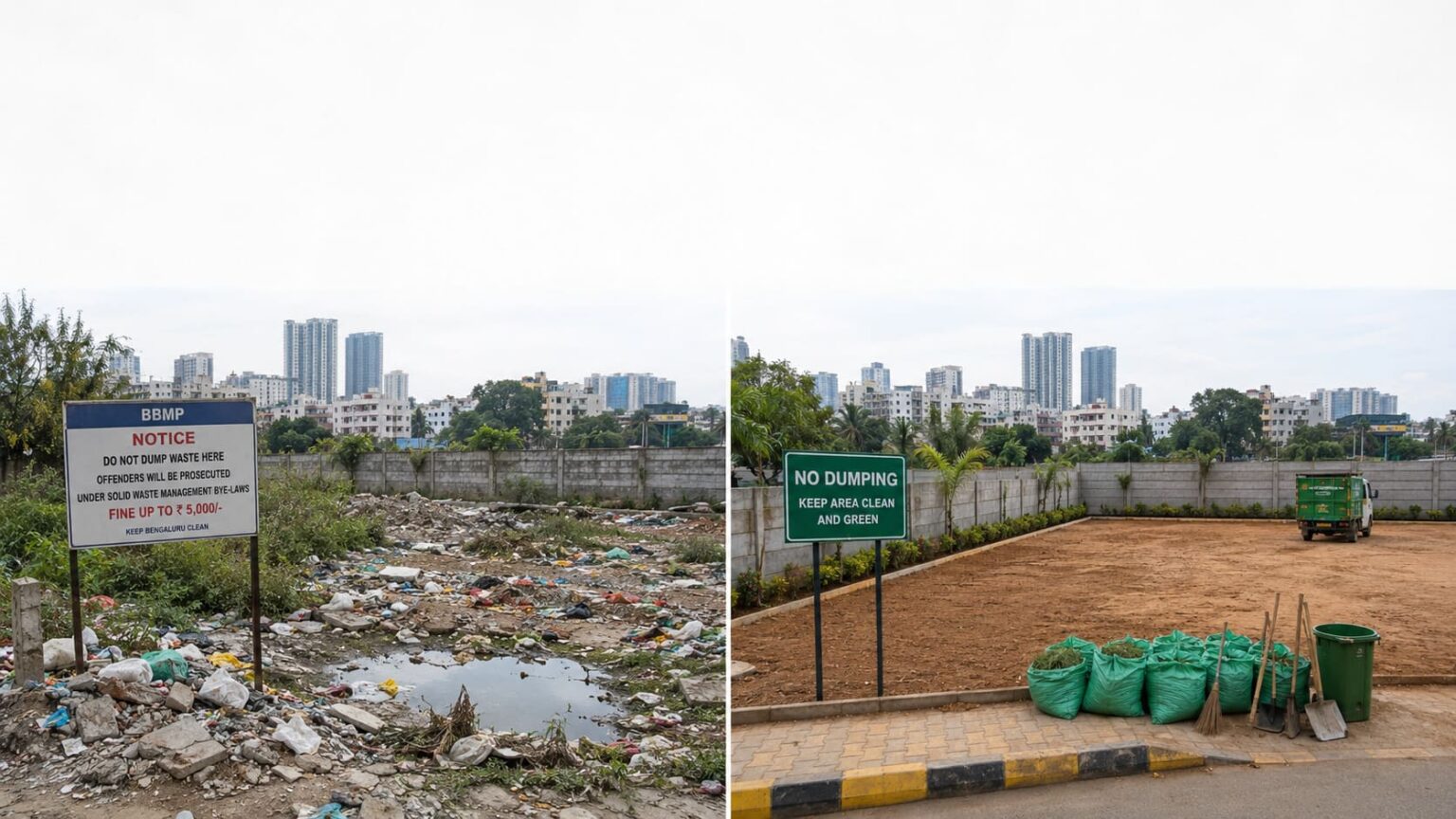
Bengaluru has launched a major cleanup drive targeting neglected vacant plots across the city.
- Initiative: Freedom from Waste (Greater Bengaluru Authority – GBA)
- Aim: To eliminate garbage, construction debris, overgrown weeds and illegal dumping from vacant plots
- Objective: Improve public health, ensure cleaner neighbourhoods, and prevent misuse of empty land for dumping waste
- Strict Deadline: August 15, 2026
If the owner fails to clean the plot, the Corporation will carry out the cleanup and recover the cost by adding it to the property’s tax bill
Why Did Bengaluru Launch This Drive?
The city found that many vacant plots had become dumping grounds for garbage and construction waste. Overgrown vegetation and stagnant water were also creating breeding grounds for mosquitoes and rodents.
According to the survey conducted before the campaign:
- 1,616 locations with accumulated debris and waste were identified across Bengaluru.
- Around 22,732 tonnes of waste were found across the city’s five civic corporations.
These findings prompted the government to launch a city-wide cleanup campaign and make landowners more accountable for maintaining their vacant plots.
Rules Every Bengaluru Vacant Plot Owner Should Know
The GBA has issued strict instructions for owners of vacant plots:
- Remove garbage, construction and demolition (C&D) waste, weeds and overgrown vegetation.
- Clean the plot on or before 15 August 2026.
- Build a compound wall or fencing to prevent illegal dumping.
- Citizens can report neglected plots through the official WhatsApp chatbot by sending GPS-tagged photographs.
If the owner fails to clean the plot:
- First violation: ₹25,000 fine.
- Repeated violations: ₹50,000 to ₹1 lakh.
- The civic body may clean the land itself and recover the cleaning cost along with the owner’s property tax.
The Public Debate & Pushback
While Resident Welfare Associations (RWAs) have widely welcomed the move to curb health hazards and mosquito breeding, vacant plot owners are raising strong concerns:
Unfair Accountability: Plot owners argue that external illegal dumpers, local vendors, and nearby residents dump garbage on empty plots due to municipal waste-collection gaps, making it unfair to penalize owners up to ₹1 Lakh.
Construction Stance: Deputy CM D.K. Shivakumar highlighted that plot owners holding onto land solely as passive investments should consider fencing or building within 5 years to keep the city clean and organized.
Government-Allotted Plots Face Stricter Action
Along with the cleanup drive, Karnataka has also announced stricter action for government-allotted residential plots. Authorities have stated that if a house is not constructed within five years of allotment, the government may resume the plot and refund the amount paid with applicable interest. This policy applies to plots allotted by government agencies and not to privately purchased land. The objective is to discourage land hoarding and prevent vacant plots from becoming dumping grounds.
Vacant Land Rules in Tamil Nadu
Although Tamil Nadu has not announced a campaign similar to Bengaluru’s, vacant landowners are also responsible for maintaining their properties under the Tamil Nadu Urban Local Bodies Rules and the Solid Waste Management Rules.
Landowners should:
- Regularly remove weeds, bushes and garbage.
- Clear construction debris and stagnant water.
- Fence or compound the property to prevent illegal dumping and encroachments.
- Keep the local body informed of their contact details if required.
Tax & Construction Site Rules
- Vacant Land Tax (VLT): Under Rule 266 of the TNULB Rules, local bodies levy a annual Vacant Land Tax on unbuilt plots within municipal limits. Non-payment or unpaid cleanup charges can lead to distraint proceedings or tax liens on the property.
- Clean Construction Rules: For plots under construction, GCC also imposes fines ranging from ₹30,000 to ₹5 Lakh if builders fail to use dust/debris tarpaulins, metallic barricades, or allow waste/water accumulation on site.
If a vacant plot is left unattended:
- The local body may issue a 7-day notice.
- A fine of up to ₹25,000 may be imposed.
- A continuing penalty of ₹500 per day may also apply for non-compliance.
- If the corporation cleans the plot, the cleanup charges can be recovered from the owner as per the applicable rules.
A Reminder for Vacant Landowners
Owning a vacant plot also comes with the responsibility of maintaining it. A clean and fenced property not only helps avoid penalties but also protects the neighbourhood from illegal dumping, mosquito breeding, health risks and encroachments.
Whether your land is in Bengaluru or Tamil Nadu, inspecting the property regularly, removing waste promptly and securing the site with proper fencing are simple steps that can save you from unnecessary legal action and expenses.
As cities continue to tighten enforcement on neglected vacant lands, landowners should treat plot maintenance as an important part of responsible property ownership.