

🏗️ What is the Uthandi Flood Canal Project?
The proposed Uthandi flood canal is a ₹91 crore infrastructure project planned by Tamil Nadu’s Water Resources Department (WRD) to mitigate flooding in South Chennai.
- Type: Underground “cut-and-cover” canal
- Length: Approx. 1–1.2 km
- Route: From Buckingham Canal (near Indian Maritime University, ECR) → through Uthandi → Bay of Bengal
- Purpose: Divert excess floodwater directly into the sea
Why is it needed?
Chennai’s drainage system is under pressure:
- Buckingham Canal capacity: ~7,100 cusecs
- Flood inflow during monsoon: ~8,000+ cusecs
This excess leads to flooding in:
- Velachery
- Perungudi
- OMR IT Corridor
👉 The canal is designed as a fast evacuation outlet to reduce water stagnation.
⚠️ Key Concerns Raised by Residents and Experts
1. Groundwater Contamination Risk
Residents fear that the canal may carry:
- Sewage inflow
- Urban runoff (oil, waste, chemicals)
This could result in:
- Pollution of groundwater aquifers
- Salinity intrusion in coastal wells
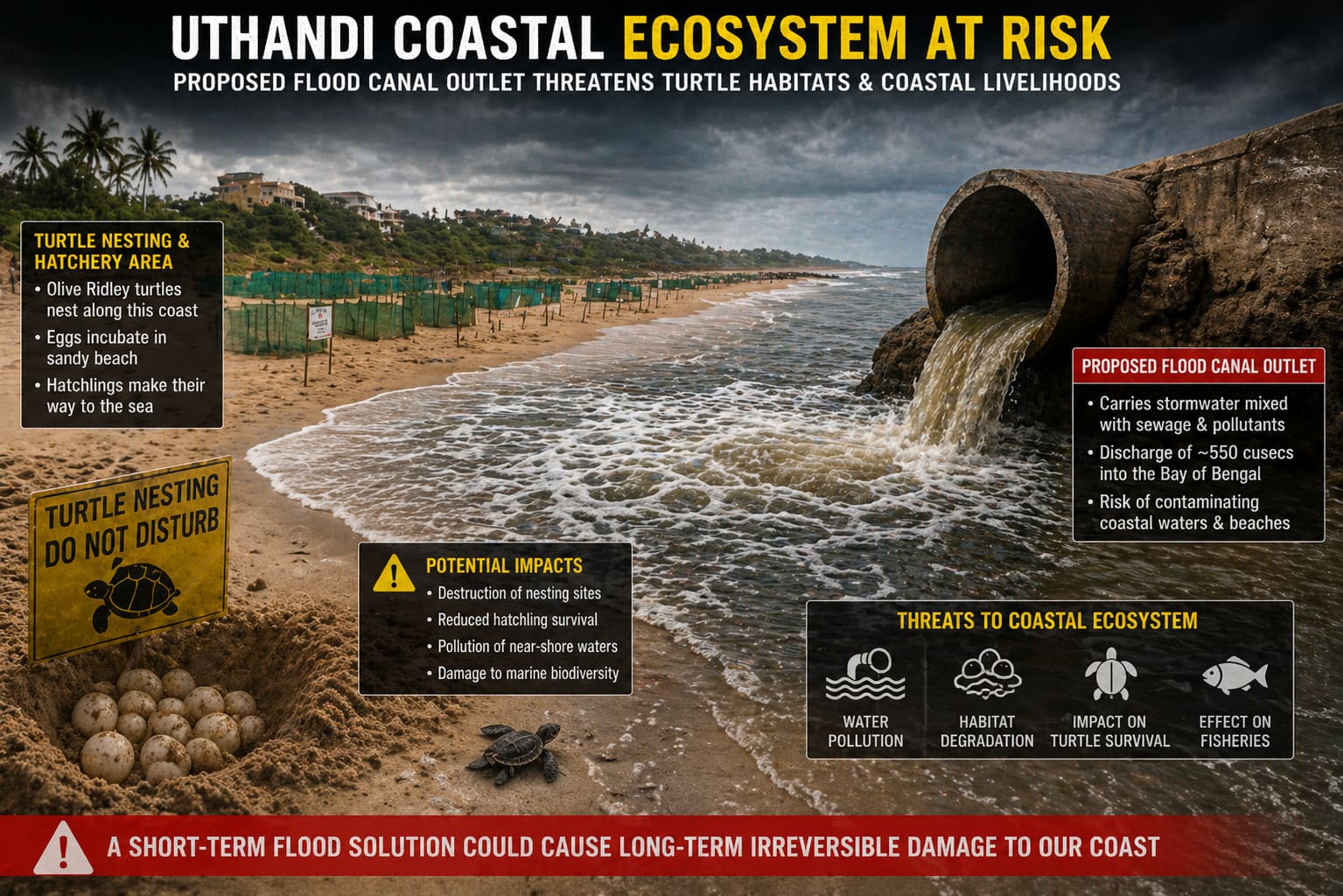
2. Coastal Ecosystem Damage
The proposed discharge point is near sensitive coastal zones, including:
- Turtle nesting areas (Olive Ridley)
- Intertidal ecosystems
- Coastal biodiversity zones
Potential impacts:
- Habitat destruction
- Beach erosion
- Marine pollution
3. CRZ Violations and Legal Issues
The project alignment reportedly intersects:
- CRZ-II (developed areas)
- CRZ-I (ecologically sensitive zones)
Concerns include:
- Lack of initial CRZ clearance
- Possible violation of coastal protection norms
- Risk of legal challenges
4. High-Volume Polluted Discharge
- Independent testing shows Buckingham Canal water is already highly contaminated
- Contaminants include:
- Elevated faecal coliform levels
- Biochemical Oxygen Demand (BOD) exceeding permissible limits
- Residents highlight that the proposed canal route passes through sandy, porous soil
- Such terrain increases the risk of pollutant seepage into groundwater
- This could lead to long-term or permanent contamination of drinking water sources
Moreover it is estimated that there is likely to be a discharge of:
- ~550 cusecs (≈15,500 litres per second) of water from the Buckingham Canal.
So the residents fear this may include the untreated or partially treated wastewater.
👉 This raises the concern that the canal could function as a:
stormwater + sewage outfall system
5. Impact on Fishing Communities
Local fishing hamlets particularly in Nainarkuppam have raised concerns about:
- Decline in fish population
- Pollution of near-shore fishing zones
- Loss of livelihood
This introduces a direct socio-economic impact, not just environmental.
6. Engineering and Sustainability Concerns
Experts have questioned the long-term viability:
- Underground canals are difficult to maintain
- Risk of clogging and reduced efficiency
- May become ineffective over time
🧭 Lack of Transparency & Public Consultation
Residents have highlighted:
- Limited disclosure of project details
- No clear publicly available alignment map
- Insufficient stakeholder consultation
👉 This creates potential procedural and legal vulnerabilities.
📩 Escalation and Public Opposition
The issue has moved beyond informal concerns:
- Petitions submitted to authorities
- Complaints escalated to regulatory bodies
- Organized resistance from:
- Resident welfare associations
- Coastal communities
👉 This is now a civic and governance issue, not just technical.
🌧️ Is the Canal Necessary in Uthandi?
A key argument raised:
- Uthandi itself is not a major flood-prone area
- The canal is designed to solve flooding elsewhere
👉 Interpretation:
- Flood burden from upstream areas is being shifted to a coastal zone
👉 The Bigger Urban Planning Problem
The project reflects deeper systemic issues in Chennai:
- Shrinking of Pallikaranai marsh
- Encroachment of natural waterways
- Rapid urbanisation in IT corridors
- Overloaded drainage infrastructure
👉 The canal addresses symptoms, not root causes
⚖️ Government’s Position
Authorities maintain that the project will:
- Reduce flood duration significantly
- Improve drainage efficiency
- Provide faster water evacuation during monsoon
They also claim:
- Environmental impact will be minimal
- Studies are being conducted
📊 Balanced Evaluation
✔ Potential Benefits
- Faster flood drainage
- Reduced urban waterlogging
- Protection for high-value IT corridor zones
❌ Risks
- Groundwater contamination
- Coastal ecosystem damage
- CRZ violations
- Livelihood disruption
- Legal challenges
- Short-term solution to a long-term problem
📌 Final Takeaway
The Uthandi flood canal project represents a critical urban dilemma:
Immediate flood relief vs long-term environmental and social sustainability
If implemented without strong safeguards, it could:
- Solve flooding temporarily
- But create lasting ecological and groundwater damage