

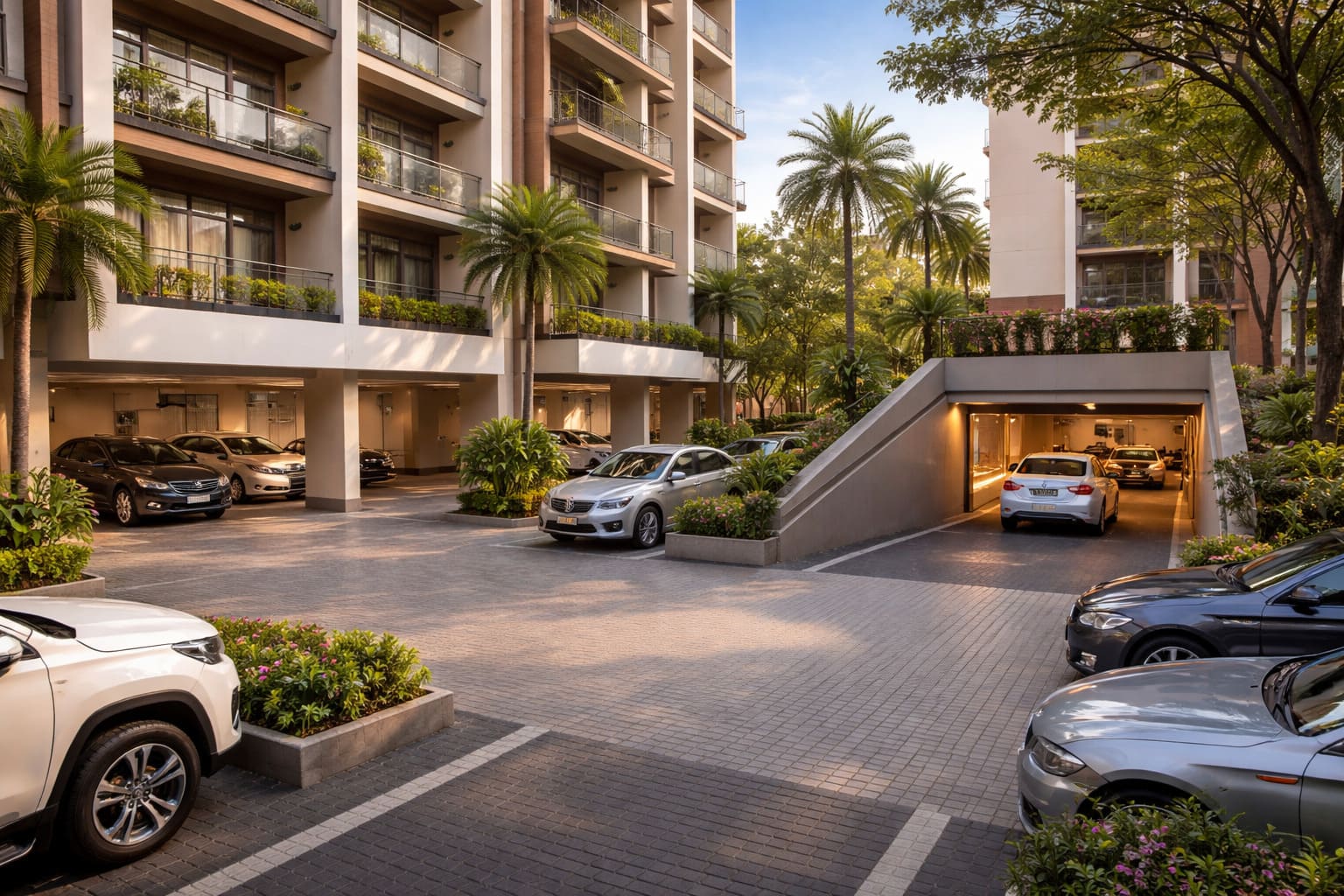
Car parking is no longer just an add-on in apartment projects—it directly affects daily convenience, safety, resale value, and even legal clarity. Modern residential developments offer multiple parking formats depending on land size, building height, and local regulations.
Here’s a simple explanation of the different types of car parking commonly found in apartments.
1. Open Parking
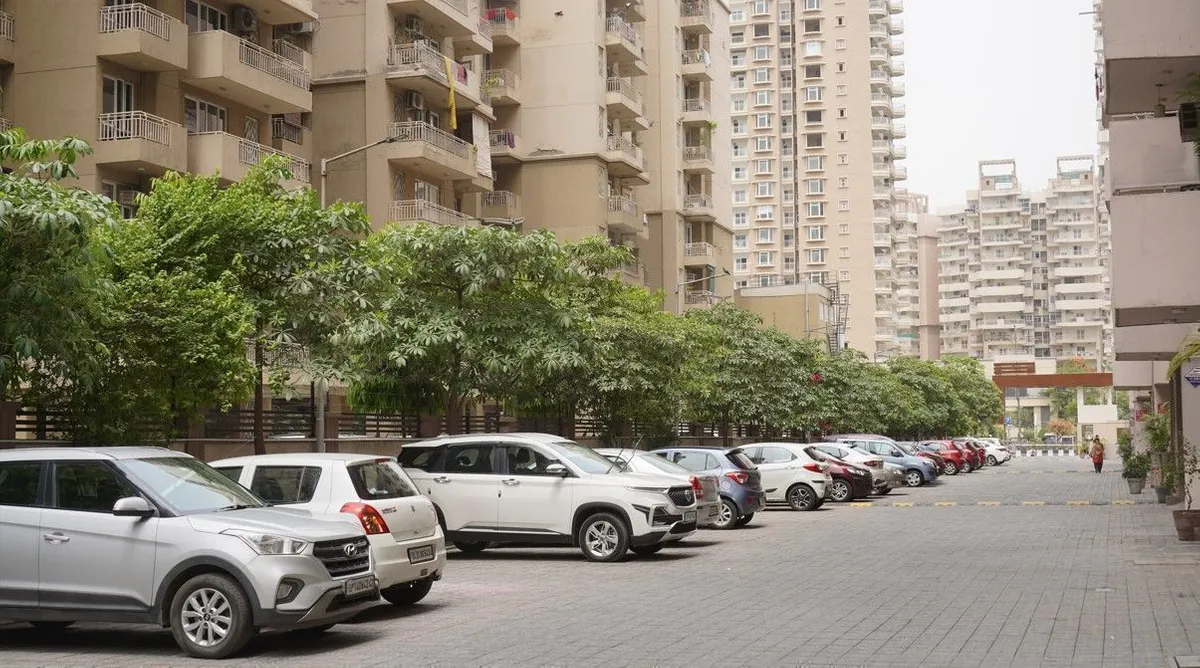
Open parking refers to parking spaces located in the open ground area of the apartment complex, without any roof or enclosure.
Key points:
- Usually the most affordable option
- Exposed to sun, rain, and dust
- Often not deeded separately
- Limited security compared to covered parking
Best suited for:
Low-rise apartments and budget housing projects.
2. Covered Parking
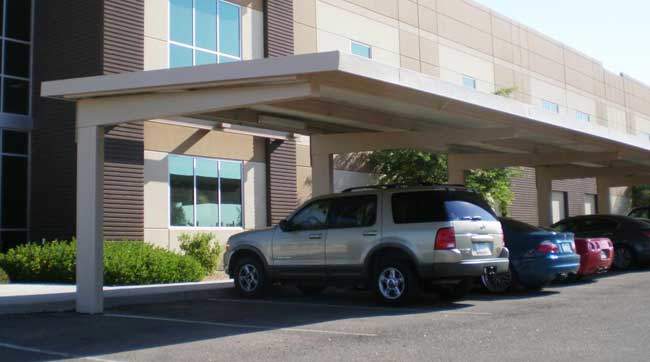
Covered parking provides a roofed structure to protect vehicles from weather conditions.
Key points:
- Better protection than open parking
- May be at ground level or within the building
- More secure and durable
- Frequently charged extra by developers
Best suited for:
Mid-range apartment projects and gated communities.
3. Stilt Parking

Stilt parking is created by leaving the ground floor open on pillars, with parking below and apartments starting from the first floor.
Key points:
- Common in urban apartments
- Improves ventilation and natural light
- Keeps parking easily accessible
- Must comply with local building norms
Best suited for:
Standalone apartment buildings in cities.
4. Basement Parking
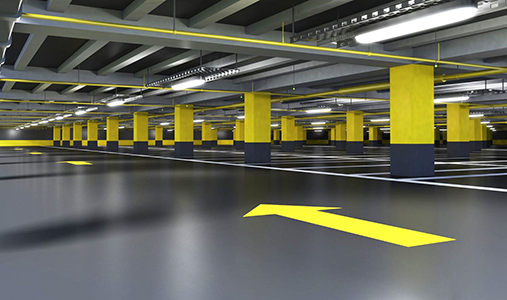
Basement parking is located below ground level, fully enclosed within the building structure.
Key points:
- Saves surface space for landscaping
- Protected from weather
- Requires proper drainage and ventilation
- Flood-prone areas need extra safety planning
Best suited for:
Premium apartments and land-scarce city locations.
Difference Between Basement Parking and Stilt Parking
| Feature | Basement Parking | Stilt Parking |
|---|---|---|
| Location | Below ground level | At ground level under the building |
| Structure | Fully enclosed underground space | Building raised on pillars with open sides |
| Ventilation | Mechanical ventilation required | Natural airflow |
| Flood Risk | Higher in low-lying areas | Lower compared to basements |
| Accessibility | Entry via ramp | Direct entry from driveway |
| Common Usage | High-rise and premium apartments | Standalone and mid-rise apartments |
| Weather Protection | Fully protected from sun and rain | Protected, but open on sides |
5. Podium Parking
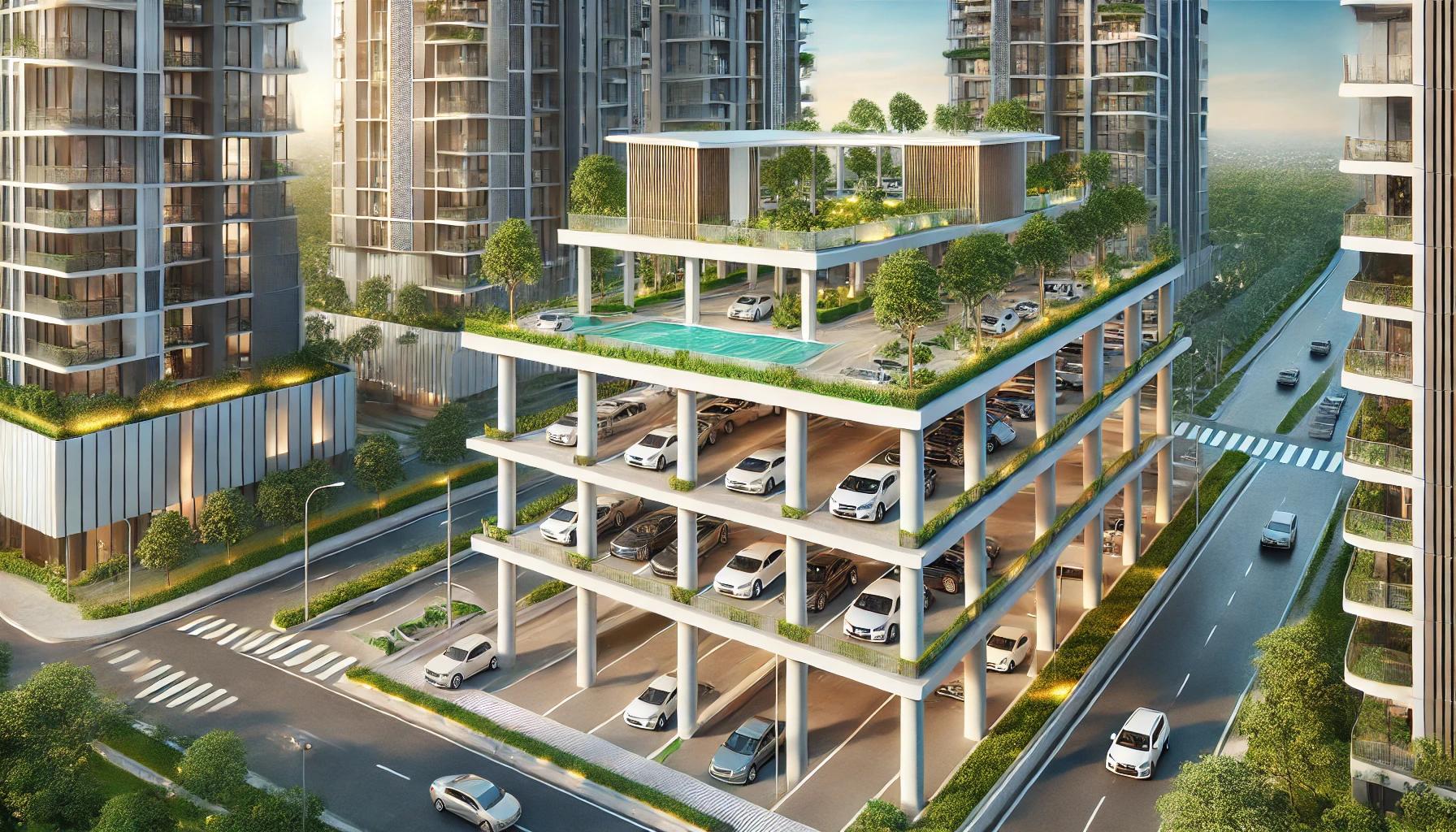
Podium parking involves one or more dedicated parking floors forming the base of the building, with residential towers constructed above.
Key points:
- Allows large-scale parking in compact land parcels
- Amenities like parks or pools may be built above the podium
- Separates parking traffic from living areas
- Common in high-rise and luxury projects
Best suited for:
High-rise apartments and mixed-use developments.
6. Mechanical / Automated Parking

Mechanical parking uses automated lifts or stacking systems to park multiple cars in a small area.
Key points:
- Maximizes parking capacity
- Technology-driven and space-efficient
- Slightly higher maintenance cost
- Requires power backup and regular servicing
Best suited for:
Ultra-compact urban projects with limited land.
Visitor Car Parking
Visitor parking is common parking space reserved exclusively for guests, delivery vehicles, and short-term visitors.

Key features:
- Not allotted to any flat owner
- Usually located near entry gates or driveways
- Clearly marked as “Visitor Parking”
- Managed by the association
Visitor parking cannot be sold or permanently occupied by residents.
Independent / Exclusive Parking
Independent (or exclusive) parking means a clearly identified parking slot allotted to a specific apartment, though ownership usually remains common.
Key features:
- Clearly demarcated and numbered parking slots
- Allotted to individual flats
- Reduces disputes among residents
- Improves resale appeal and buyer confidence
Important note: Independent parking does not mean separate land ownership—it means exclusive usage rights.
Multiple Car Parking (More Than One Parking Slot for a Single Apartment)
Multiple car parking refers to a situation where one apartment is allotted more than one car parking slot, either within the same parking area or across different levels such as stilt, basement, or podium.
Key points buyers should understand:
- Multiple parking slots are usually charged additionally by the developer
- The extra slots are commonly usage rights, not separate ownership
- Locations may vary (one in basement, one in stilt, etc.)
- Allocation must be clearly mentioned in the sale agreement
- Availability depends on approved building plans and local norms
Why it matters:
With many households owning more than one car, multiple parking provides daily convenience and flexibility, but buyers must ensure that the allotment is transparent, documented, and compliant with approval norms to avoid future disputes.
What Homebuyers Should Always Verify
Before booking an apartment, buyers should check:
- Type of parking offered
- Whether parking is exclusive or common
- Location of the parking slot
- Parking mention in the sale agreement
- Compliance with approved building plans
- Verify whether additional parking slots are part of common areas and how they are regulated by the association after handover.
Conclusion
Car parking design plays a major role in livability, safety, and long-term value of apartment homes. Knowing the difference between independent parking, visitor parking, and other parking types helps buyers make informed decisions and avoid future conflicts.