

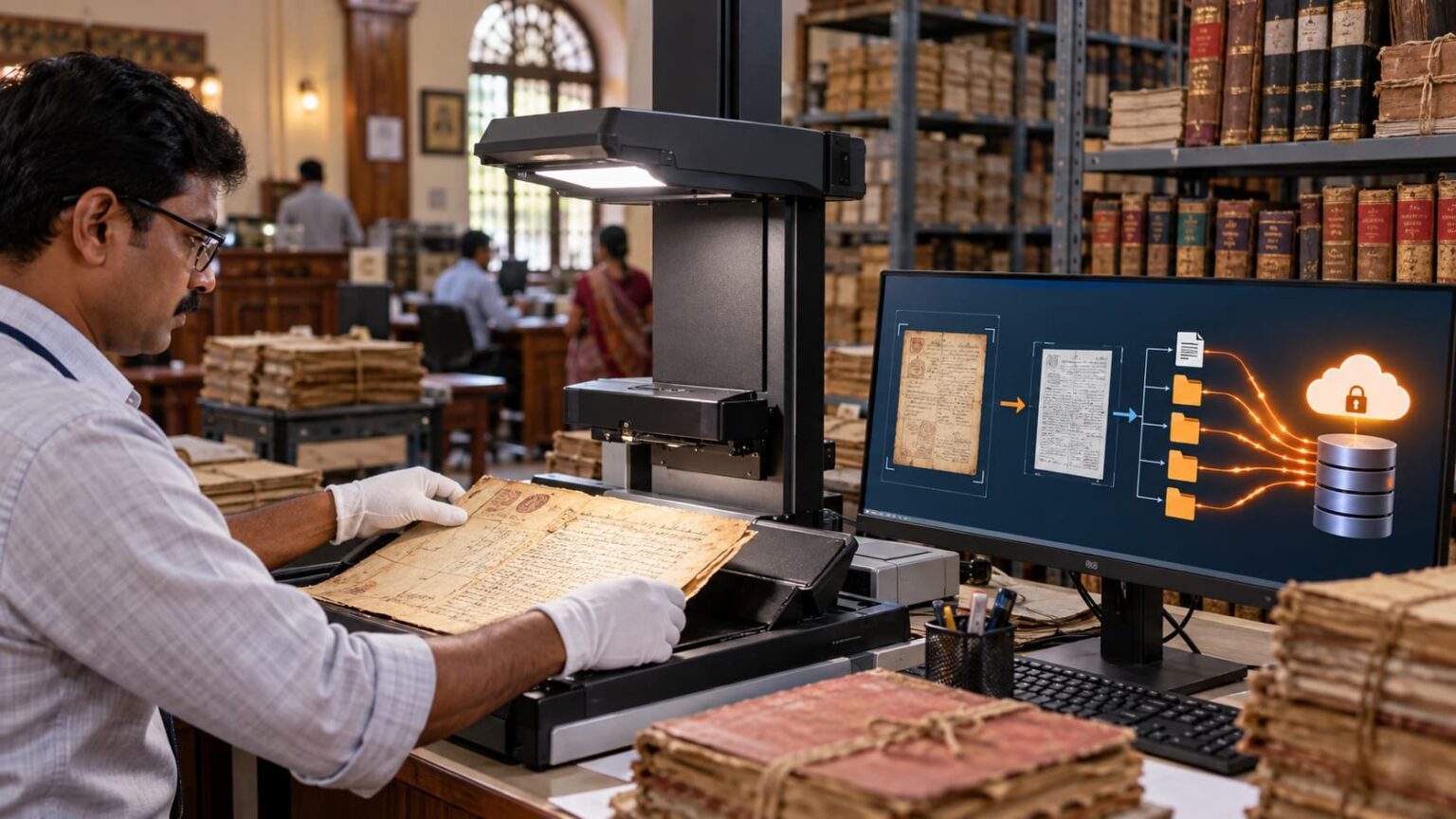
Tamil Nadu is preparing to digitise millions of historical property records dating back to 1865. The project could eventually make it easier for property owners, buyers and lawyers to trace old transactions and identify gaps in a property’s ownership history.
However, the project is presently at the tender stage. The records have not yet become fully available online.
What happened to the earlier digitisation project?
In 2019, the Tamil Nadu Registration Department carried out a major exercise and digitised more than 10 crore historical records covering the period from 1865 to 2009.
The department later stated that the exercise could not be continued fully because of the COVID-19 pandemic and other unspecified factors. Nevertheless, the regular scanning of newly registered documents continued at Sub-Registrar Offices after 2009.
The figure of 10 crore refers broadly to digitised “records.” It should not be treated as 10 crore individual property deeds because a record may include scanned documents, pages or Index-II entries.
How many records are still pending?
The latest exercise will cover:
- 2.23 crore property documents registered between January 1, 1865 and July 5, 2009 that were missed earlier
- Approximately 11.14 crore pages contained in these documents
- Around 7.06 crore EC and Index-II entries from 1865 to 1974
- Approximately 5.68 crore birth and death records up to 2018
Encumbrance records from 1975 onwards have reportedly already been digitised. The new project will focus on older entries and documents that were left out of the earlier exercise.
Which parts of Tamil Nadu will be covered?
The project will cover records maintained across 581 Sub-Registrar Offices in all nine Registration Zones:
▶Chennai, Cuddalore, Coimbatore, Madurai, Salem, Tirunelveli, Thanjavur, Tiruchirappalli, Vellore
How will the old documents be digitised?
The records are already held in the Sub-Registrar Offices.
The proposed process includes:
- Identifying unscanned and missing documents
- Scanning the original records inside the respective Sub-Registrar Office
- Entering important document information
- Meta-tagging and indexing the records
- Using OCR-assisted software to detect possible mismatches
- Verification by authorised registration officials
- Biometric authentication and digital signing of each batch
- Migration of verified records to the STAR 2.0 platform
The documents cannot be taken outside the Sub-Registrar Office for scanning. The system will also maintain an audit trail showing who scanned, reviewed and approved each batch.
To protect the records, every batch will have a clear audit trail showing who processed and verified it. Department officials will use fingerprint authentication before digitally signing each verified batch. The digitised records will then be securely stored at the State Data Centre in Perungudi, maintained jointly by the National Informatics Centre (NIC) and ELCOT.
Bids for the project are scheduled to open on September 15 and close on September 23.
The entire exercise is proposed to be completed within 14 months, including final verification and handover.
Digitising Historical Property Records Strengthen Verification
Searchable historical records could strengthen property verification for buyers, sellers, lenders, legal professionals, developers and public authorities by helping them:
- Trace older sale and settlement deeds
- Identify previous mortgages and registered claims
- Check the continuity of ownership
- Detect duplicate or suspicious transactions
- Obtain information about transactions preceding 1975
- Verify ancestral and inherited properties more effectively
- Support due diligence for property transactions, lending and development
- Improve the accuracy of legal opinions and title verification
- Strengthen transparency in land administration and property records
Once the old EC entries are integrated into the system, tools such as the Verified.RealEstate EC Analyzer can make it easier to understand lengthy EC records and identify transactions that require closer examination.
A major improvement—but not a substitute for verification
Digitising records dating back to 1865 could make Tamil Nadu’s property-registration history far easier to search and preserve. It may also help identify forged documents, duplicate transactions and breaks in ownership records.
But buyers should not mistake digital availability for legal approval. Every historical entry must be compared with the original document and supported by complete legal and property due diligence before a purchase is finalised.
Disclaimer: This project is currently based on a tender floated by the Tamil Nadu Registration Department. Its completion schedule, public-access facilities and final record coverage may change during implementation.