

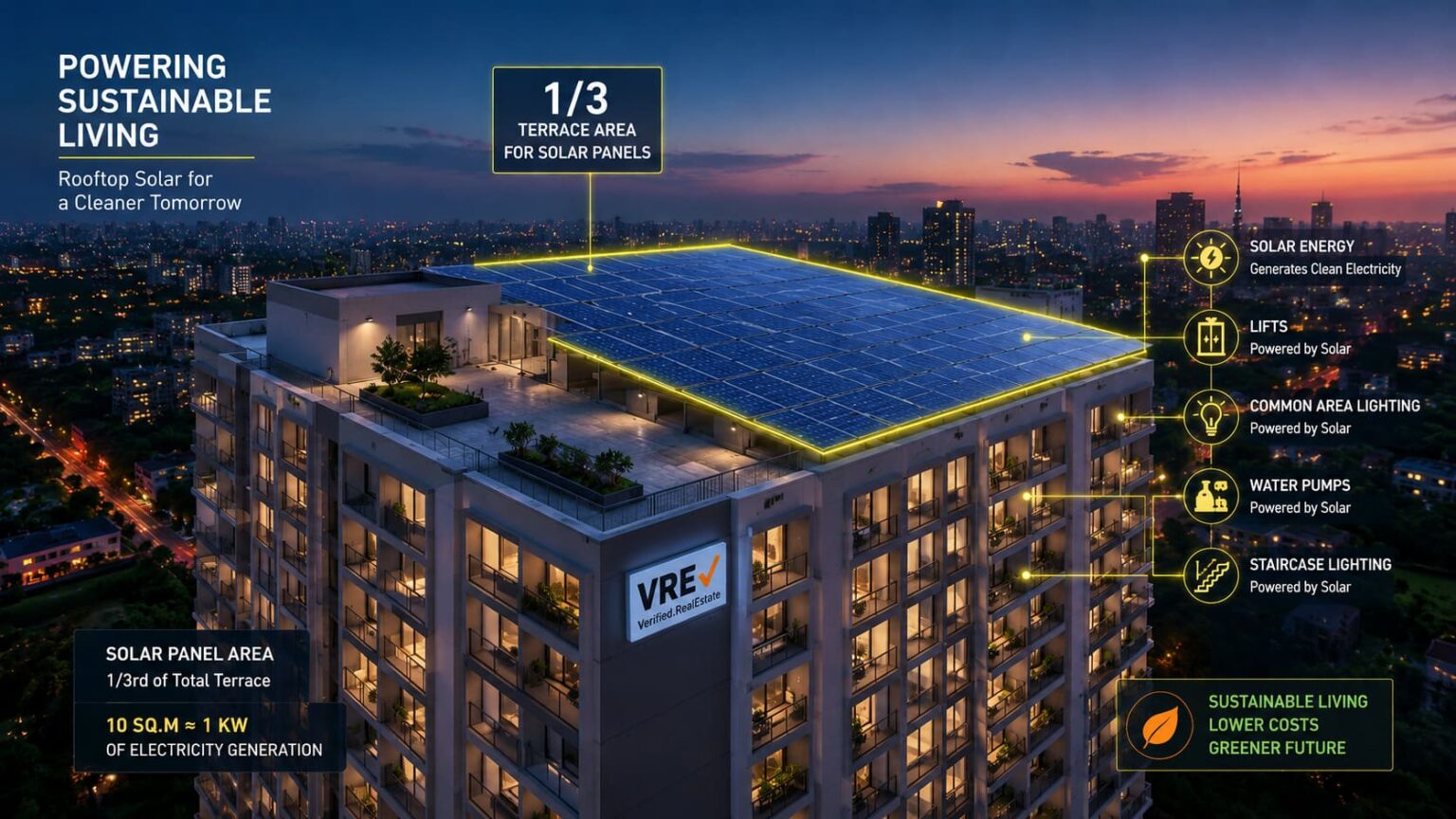
Solar Energy Systems Becoming Mandatory in Urban Developments
As cities continue to expand and electricity consumption rises, urban planning authorities are increasingly integrating renewable energy requirements into building regulations. In Tamil Nadu, rooftop solar energy systems have now become a mandatory component in several categories of developments under the Tamil Nadu Combined Development and Building Rules (TNCDRBR), 2019.
The rules aim to encourage sustainable construction practices, reduce dependence on conventional electricity sources, and promote environmentally responsible urban growth.
Under these provisions, installation of Solar Photo Voltaic (SPV) panels has become compulsory in specific building categories, especially within areas governed by the Chennai Metropolitan Development Authority (CMDA).
Which Buildings Must Install Solar Panels?
As per the regulations, solar photo voltaic systems are mandatory in:
- High Rise Buildings (HRB)
- Non High Rise Buildings (NHRB) exceeding 16 dwelling units
- Commercial buildings exceeding 300 sq.m built-up area
The rule applies to both residential and commercial developments where electricity demand for common facilities is considerably high.
One-Third Terrace Area Must Be Reserved
One of the most important provisions under the rules is the mandatory reservation of terrace space for solar infrastructure.
The regulation states that:
A minimum of one-third of the total terrace area shall be reserved for erecting Solar Photo Voltaic Panels.
This provision ensures that rooftop areas are systematically planned for renewable energy generation during the building design stage itself.
For high-rise buildings especially, rooftop planning has now become an important part of regulatory compliance due to the need to accommodate:
- solar panels,
- overhead tanks,
- service areas,
- fire safety requirements,
- lift machine rooms,
- and open terrace spaces.
Solar Power Generation Capacity Explained
The rules further clarify the approximate area requirement for power generation:
- Around 10 sq.m of rooftop space is required to generate 1 KW of electricity through solar panels.
This means larger residential apartment projects and commercial developments can generate substantial electricity for common usage areas directly from rooftop installations.
For example:
- A terrace area of 100 sq.m allocated for solar panels can potentially support around 10 KW solar capacity.
Electricity Generated Will Support Common Building Operations
The electricity generated from rooftop solar systems is primarily intended for common utility operations within the building, including:
- Staircase lighting
- Lift operations
- Water pumps
- Setback lighting
- Common area lighting
- Non-FSI utility spaces
This can significantly reduce monthly electricity expenditure for apartment associations and commercial establishments.
Net Metering Benefits for Building Owners
The rules also bring rooftop solar systems under Tamil Nadu’s net metering framework.
Under net metering:
- Excess electricity generated from solar panels can be exported back to the electricity grid.
- Building owners receive electricity credits against their consumption.
This improves long-term operational savings and increases the financial viability of rooftop solar infrastructure.
Solar Installation Linked to Completion Certificate Approval
One of the strongest enforcement mechanisms under the rules is the linkage between solar installation and Completion Certificate (CC) approval.
The competent authority is empowered to:
- inspect the actual installation of rooftop solar systems,
- verify compliance,
- and issue Completion Certificates only after the required solar infrastructure is erected.
In addition:
- TANGEDCO net metering service connection will be provided only after the Completion Certificate is issued.
This makes rooftop solar installation a critical compliance requirement rather than merely an environmental recommendation.
CMDA Monitoring and Enforcement
Authorities have also increased scrutiny over solar compliance in approved buildings.
Reports previously indicated that several developments allegedly installed temporary solar systems during inspections solely to obtain approvals. Following this, CMDA strengthened monitoring procedures and warned that violations may attract action under planning regulations.
The emphasis now is on ensuring that rooftop solar systems are:
- permanently installed,
- operational,
- and functionally integrated into the building infrastructure.
Environmental Benefits of Rooftop Solar Systems
The mandatory solar provisions support several broader sustainability goals:
Reduced Dependence on Conventional Power
Solar systems reduce pressure on fossil-fuel-based electricity generation.
Lower Carbon Emissions
Renewable energy integration contributes toward cleaner and climate-resilient cities.
Sustainable Urban Infrastructure
Modern urban planning increasingly views rooftop solar as essential infrastructure similar to parking, water supply, and fire safety systems.
Reduced Maintenance Costs
Apartment communities can reduce recurring electricity expenses for common area operations.
Rooftop Solar Planning Becoming Essential for Developers
The introduction of mandatory rooftop solar provisions is gradually transforming how buildings are designed and approved in Tamil Nadu.
Architects, developers, and property owners now need to account for:
- rooftop zoning,
- structural load capacity,
- solar access,
- electrical integration,
- and maintenance pathways
right from the planning stage itself.
As sustainability regulations become more integrated into urban development policies, solar-ready buildings are expected to become a standard feature in future residential and commercial projects.
Expert Architectural Planning for Solar-Compliant Buildings
With rooftop solar infrastructure now becoming a mandatory component in several residential and commercial developments, proper architectural planning has become essential during the design stage itself.
Architect Services from Verified.Realestate , assists property owners, developers, and builders in designing solar-compliant buildings by strategically planning terrace utilization, structural load considerations, solar access, electrical integration, and utility zoning in accordance with prevailing building regulations. From high-rise developments to large apartment communities and commercial projects, the architectural team helps ensure that solar panel installations are seamlessly integrated into the overall building design while maintaining functional efficiency and regulatory compliance.
References
- Tamil Nadu Combined Development and Building Rules (TNCDRBR), 2019
https://chennaicorporation.gov.in/images/TNCDRBR-2019.pdf - Chennai Metropolitan Development Authority (CMDA)
https://www.cmdachennai.gov.in - CMDA Solar Photo Voltaic Panel Guidelines
https://cmdachennai.gov.in/pdfs/pressnote/PressNoteSolarPhotoVoltaicPanel-English.pdf