

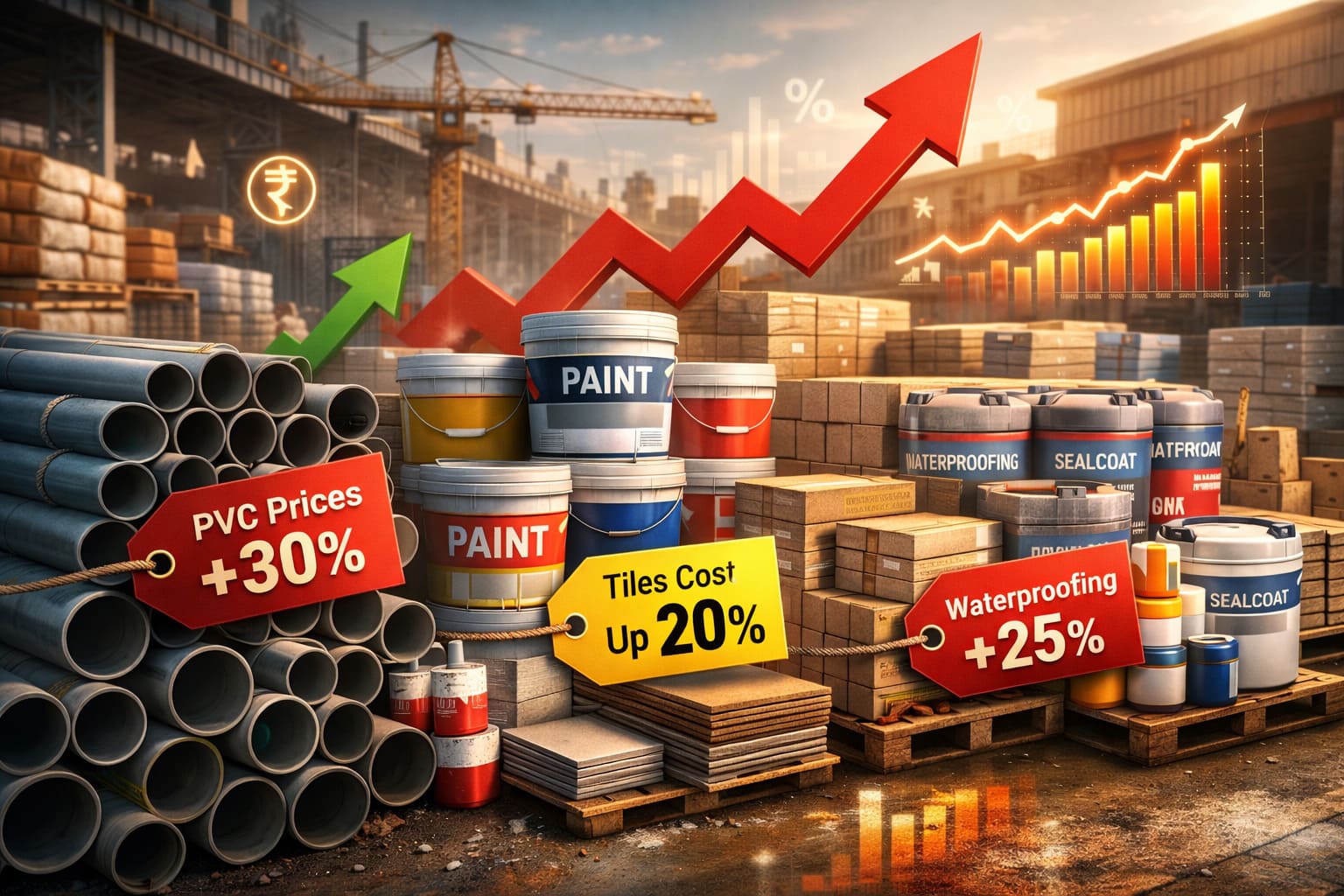
Why Construction Costs Are Increasing
The Indian real estate sector is currently experiencing a measured rise in construction costs, driven by a mix of:
- Global geopolitical tensions (impacting crude oil)
- Supply chain disruptions
- Domestic demand and labour dynamics
This is not a sudden spike, but a gradual and layered cost escalation affecting multiple components of construction.
How It Directly Affects Real Estate
Rising crude oil prices and global instability impact real estate through three primary channels:
1. Transportation Costs (Diesel) ↑
- Higher fuel prices increase logistics expenses
- Movement of raw materials becomes costlier
- Impacts every stage of construction
2. Material Production Costs ↑
- Steel manufacturing becomes expensive due to energy costs
- Cement production (energy-intensive) sees price pressure
3. Petrochemical-Based Products ↑ (Key Impact Area)
This is where the most visible fluctuations are happening.
Products affected include:
- PVC & CPVC pipes
- Electrical conduits and insulation
- Paints and coatings
- Waterproofing chemicals
- Adhesives and sealants
- Tiles (due to fuel and kiln costs)
👉 These materials are directly or indirectly linked to crude oil derivatives, making them more volatile.
Real Market Examples (Ground Reality)
- PVC prices: ↑ 25–40% in certain periods
- Steel prices: ↑ up to ~20% in specific markets
- Logistics costs: noticeable increase across regions
📌 Important:
These are component-level spikes, not overall project cost increases.
Actual Cost Increase vs Market Perception
There is a clear difference between perceived inflation and actual project cost escalation.
What is being claimed (social media):
- 10–30% construction cost increase
What is actually happening:
- Short-term cost increase: ~5%
- Expected 2026 increase: ~3–5% overall
- Localized spikes: Higher depending on region/material
Why the Confusion Exists
When individual components like steel, PVC, or logistics rise by 20–40%, it creates the illusion of a 30% total cost increase.
In reality:
- Not all materials rise simultaneously
- Not all costs have equal weight in construction
Project Delays: A Real and Immediate Risk
One area where the concern is completely valid is project timelines.
Current challenges:
- Supply disruptions in tiles, pipes, fittings
- Shipping delays (extended by 10–20 days)
- Intermittent material shortages
Result:
- Delayed project completion
- Slower execution cycles
What Developers Are Actually Doing
Developers are responding strategically rather than aggressively.
✔️ Common real-world responses:
- Absorbing initial cost increases
- To maintain market competitiveness
- Increasing prices in new launches
- Adjusting for revised input costs
- Delaying launches or project phases
- Waiting for cost stabilization
- Value engineering
- Optimizing specifications without obvious compromise
❗ Important Clarification:
Immediate price hikes for existing buyers are not the first or default response.
Such increases depend strictly on:
- Contract terms (Builder Buyer Agreement)
- Legal enforceability
Short-Term Impact on Real Estate (0–12 Months)
- Moderate increase in property prices (mainly new projects)
- Margin pressure on developers
- Increased likelihood of project delays
👉 The market remains stable, not volatile
Medium-Term Outlook (1–3 Years)
- Gradual upward trend in real estate prices
- Cost stabilization expected if crude oil normalizes
- Continued demand will sustain pricing levels
👉 No signs of a market shock or collapse
Final Analysis: What Buyers Should Understand
✔️ Cost increases are real but controlled
✔️ Petrochemical-linked materials show higher volatility
✔️ War is a trigger factor, not the sole reason
✔️ Overall cost escalation remains in the 3–5% range
Conclusion
The rise in construction costs is a multi-factor phenomenon, influenced by
- global oil dynamics,
- supply chain disruptions, and
- domestic demand.
While certain materials like PVC, paint, waterproofing compounds, and tiles are seeing sharper increases due to petrochemical dependency, the overall impact on real estate prices remains gradual and manageable.
For buyers and investors, the key is to distinguish between actual market trends and exaggerated narratives, and focus on long-term fundamentals.
Stay connected with Verified Real Estate for the latest updates on real estate price trends and market developments.