

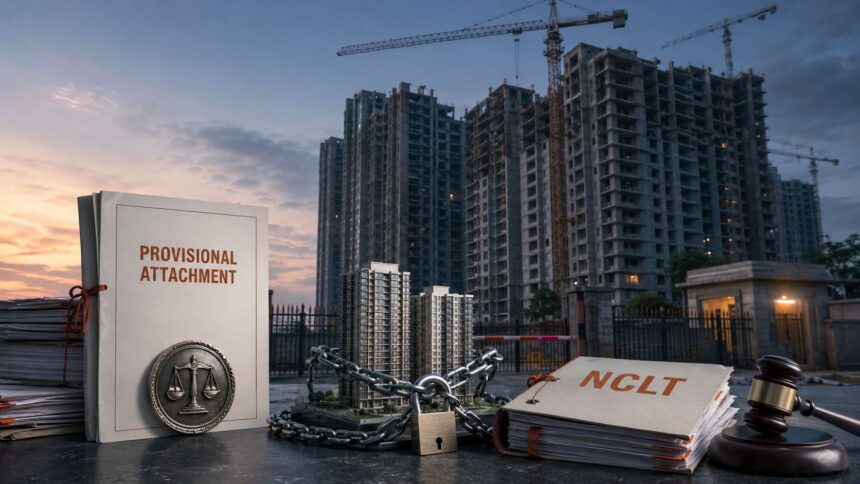
Raheja Developers is facing an Enforcement Directorate (ED) investigation and separate insolvency proceedings following years of complaints from homebuyers over delayed homes and non-delivery of possession.
The two proceedings are legally different. The ED is investigating alleged money laundering and fund diversion, while the National Company Law Tribunal (NCLT) is dealing with default in the Raheja Revanta project.
What does the ED allege?
The ED investigation arises from multiple FIRs registered by the Delhi Police Economic Offences Wing based on complaints from homebuyers.
According to the ED:
- 🏢 Raheja Developers allegedly collected around ₹2,425.99 crore from nearly 4,600 homebuyers across various projects.
- 🏠 The money was collected after promising construction and delivery of residential units.
- 💰 A substantial part of the money was allegedly diverted for purposes unrelated to completing the promised projects.
- ⏳ The alleged diversion reportedly contributed to delays and left many buyers waiting for possession.
- 🔍 The agency is examining whether the diverted money amounts to “proceeds of crime” under the Prevention of Money Laundering Act, 2002.
The ED carried out searches at locations connected to the developer and associated persons across Delhi-NCR in April 2026. Documents, digital records and property-related material were reportedly examined as part of the investigation.
ED attaches assets worth ₹2,399.65 crore
The ED has issued three provisional attachment orders:
- 28 April 2026: ₹1,113.81 crore
- 15 June 2026: ₹503.48 crore
- 31 July 2026: ₹782.36 crore
- Total estimated value: ₹2,399.65 crore
A provisional attachment restricts the sale or transfer of the identified properties while proceedings continue. It is not final confiscation and does not amount to a finding of guilt.
The investigation is still ongoing, according to the ED’s statement dated 31 July 2026.
NCLT admits Raheja Revanta insolvency petition
In a separate major development, the NCLT’s Principal Bench admitted a Section 7 insolvency petition filed by 176 homebuyers holding 99 units in the Raheja Revanta project at Sector 78, Gurugram.
The buyers claimed that:
- They had collectively paid more than ₹137 crore.
- Several buyers had paid around 90% to 95% of the sale price.
- Possession was not delivered even after the promised timelines expired.
- Revised possession and compensation commitments were allegedly not honoured.
- Certain Haryana RERA refund and interest directions were allegedly not followed.
In its order dated 8 June 2026, the NCLT held that amounts paid by homebuyers constitute financial debt under the Insolvency and Bankruptcy Code. Failure to deliver possession despite receiving substantial payments was treated as a default.
The NCLT order means that the money paid by Raheja Revanta homebuyers is legally treated as a debt owed by the developer. Buyers can now submit their claims and participate in the insolvency process, which may lead to project completion, a takeover by another developer or refunds. However, the order does not guarantee immediate possession or a full refund, as the final result will depend on the approved resolution plan and available project assets.
The Tribunal also clarified that proceedings before RERA or consumer forums do not prevent homebuyers from seeking remedies under the IBC. The insolvency process has been confined to the Raheja Revanta project, rather than automatically covering every project of the company.
What does Raheja Developers say?
Raheja Developers has denied fraud and diversion of homebuyers’ money. The company claims that it invested more in the projects than it collected and refers to a forensic audit conducted under Haryana RERA supervision.
It has attributed delays, particularly at Revanta, to missing external infrastructure such as roads, water supply, sewerage, electricity and firefighting facilities, along with approval delays and litigation.
On 4 August 2026, a Delhi court granted Chairman Navin M. Raheja and Managing Director Nayan M. Raheja temporary protection from arrest, subject to their cooperation with the ED investigation. This procedural protection is not an acquittal or a decision on the merits of the allegations.
What should homebuyers understand?
The ED investigation and the NCLT insolvency order indicate serious regulatory and legal scrutiny, but neither should be presented as a final criminal conviction.
The case is also a reminder that buyers must independently verify a project’s:
- RERA registration and completion status
- Title and approval documents
- Construction progress
- Existing loans and charges
- Litigation and regulatory history
- Promoter’s delivery record
Thorough legal and property due diligence before payment can help buyers identify risks that advertisements and sales promises may not reveal.
Buyers can also cross-check a builder’s track record, approvals, and ongoing litigation through independent verification platforms such as Verified.RealEstate which aggregates project-level data, RERA filings, and delivery histories to help assess credibility before investing.