

Many Parents Believe They Can Reclaim Gifted Property. Is It True?
Across India, many elderly parents transfer their properties to their children out of love and affection through gift deeds or settlement deeds. However, relationships sometimes deteriorate, and parents are left wondering whether they can cancel the transfer and reclaim their property.
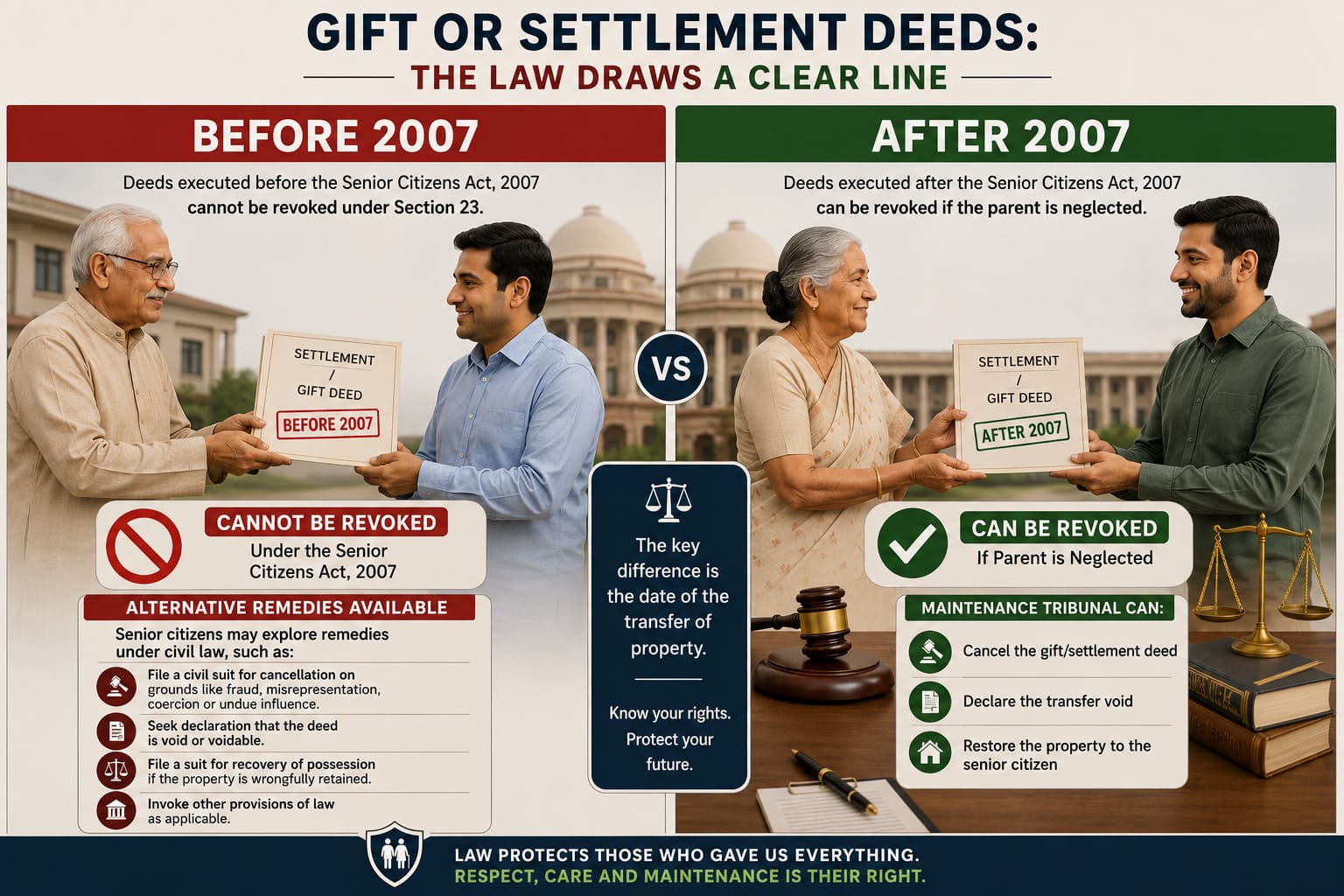
Yes, a parent can cancel a gift deed if they are neglected after transferring their property, but this remedy is available only in specific cases and depends largely on when the transfer was made
If the gift deed was executed before the Maintenance and Welfare of Parents and Senior Citizens Act, 2007 came into force, the parent cannot seek cancellation of the deed under Section 23 of the Act.
Section 23 of the Senior Citizens Act
Section 23 of the Maintenance and Welfare of Parents and Senior Citizens Act, 2007 allows a senior citizen to cancel a gift or settlement deed if:
- The property was transferred after the Act came into force;
- The transfer was made on the condition that the child or relative would provide care and maintenance; and
- The transferee later neglects or refuses to maintain the senior citizen.
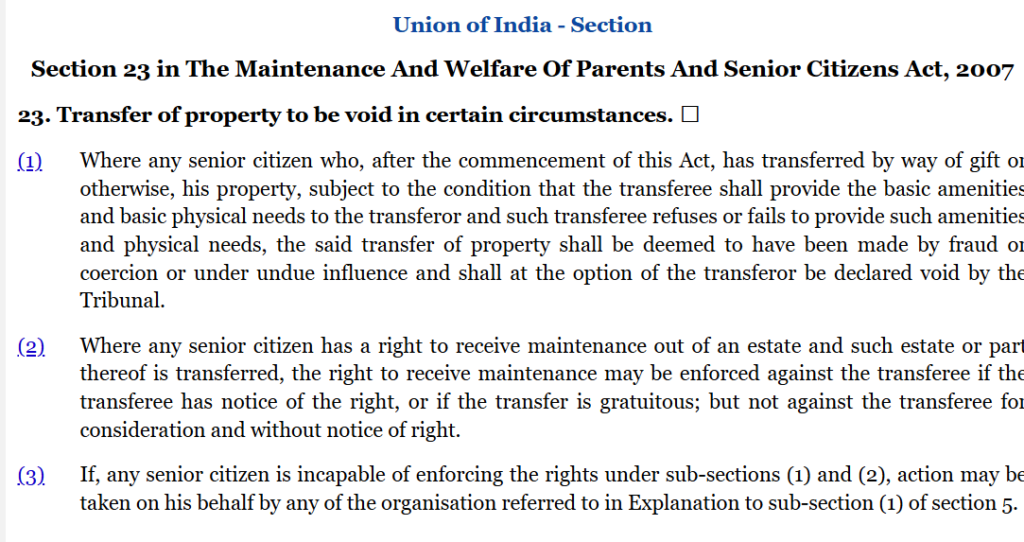
In such cases, the Maintenance Tribunal can declare the transfer void, meaning the gift or settlement deed is treated as if it never existed and the ownership of the property reverts back to the senior citizen.
Why Can’t Gift Deeds Executed Before 2007 Be Cancelled?
The reason lies in a fundamental legal principle:
1. Laws Generally Operate Prospectively
A law usually applies only to future transactions unless Parliament expressly states that it will have retrospective effect.
The Senior Citizens Act does not contain any provision stating that it applies to property transfers made before 2007.
2. Property Rights That Already Existed Cannot Be Disturbed
When a gift deed is validly executed and registered, the recipient acquires legal rights over the property.
A law enacted later cannot simply take away those vested rights unless the legislation specifically permits it.
3. Courts Have Repeatedly Upheld This Principle
Several courts have held that Section 23 of the Senior Citizens Act applies only to property transfers executed after the Act came into force.
Therefore, a senior citizen who gifted property before 2007 cannot approach the Maintenance Tribunal seeking cancellation under this provision.
Does This Mean the Parent Has No Remedy?
No.
Even if the gift deed was executed before 2007, a parent can still approach a civil court if there are allegations of:
- Fraud;
- Coercion;
- Undue influence;
- Misrepresentation; or
- Violation of conditions mentioned in the deed.
However, the parent cannot invoke Section 23 of the Senior Citizens Act for pre-2007 transfers.
A Simple Example
Scenario 1
A father gifted his property to his son in 2005.
In 2026, the son stops caring for him.
❌ The father cannot seek cancellation under Section 23 because the gift deed was executed before the Act came into force.
Scenario 2
A mother gifted her property to her daughter in 2015, expecting maintenance and care.
The daughter later abandons her.
✅ The mother can approach the Maintenance Tribunal under Section 23 and seek cancellation of the gift deed.
The Case That Clarified the Law
The legal position was recently reaffirmed by the Madras High Court in S. Subramanian v. The District Collector (2025). In this case, a senior citizen sought to cancel a property transfer under Section 23 of the Maintenance and Welfare of Parents and Senior Citizens Act, 2007, even though the deed had been executed before the Act came into force.
The Court held that the Senior Citizens Act operates prospectively and cannot be applied retrospectively to reopen transactions that were completed before 2007.
Consequently, the Court ruled that gift or settlement deeds executed before the commencement of the Act cannot be revoked under Section 23, though the parties may still pursue other remedies available under civil law.
The Bigger Lesson for Property Owners
Many elderly parents transfer their properties to their children without retaining safeguards.
Legal experts often advise senior citizens to:
- Include maintenance conditions in the deed;
- Retain life interest over the property wherever possible;
- Understand the legal consequences before gifting valuable assets; and
- Seek legal advice before executing settlement or gift deeds.
Conclusion
The Senior Citizens Act provides powerful protection to elderly parents who are neglected after transferring their properties. However, these protections are available only for transfers made after the law came into effect in 2007.
For gift deeds executed before 2007, parents may still seek relief through civil courts, but they cannot use Section 23 of the Senior Citizens Act to revoke the transfer.
Professional Guidance for Drafting Gift and Settlement Deeds
Since transferring property through a gift deed or settlement deed can have significant legal consequences, property owners should fully understand their rights and the conditions attached to such transfers before executing them.
Those looking to draft or register a gift deed or settlement deed and also to revoke the settlement deed as per the law they can seek the assistance of Verified Real Estate for guidance on the documentation process and to make informed property decisions.
Key Takeaway
🟠 A gift deed executed before the commencement of the Senior Citizens Act, 2007 cannot be cancelled under Section 23 because the law does not operate retrospectively.