

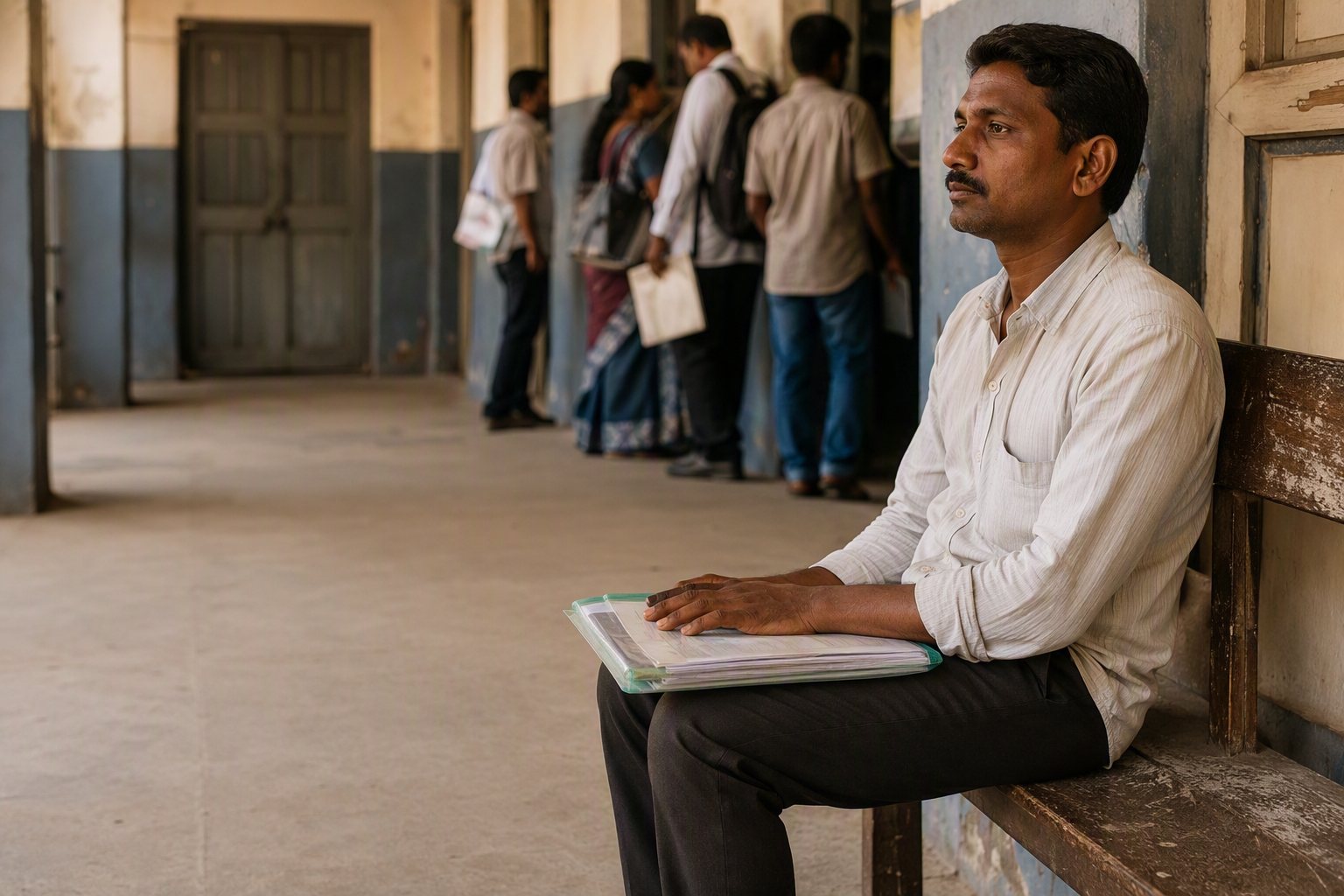
When Tamil Nadu rolled out digital patta transfers, Chennai’s property buyers expected faster ownership updates after every sale deed. The new system promised near-instant name changes for uncomplicated cases. But on the ground, delays remain widespread, forcing residents to chase officials and wait weeks for something that was supposed to take minutes.
What the Promise Was
The Tamil Nadu e-Services portal was designed to eliminate paperwork. As per the official workflow:
- If a property sale involves no subdivision, the patta is meant to update automatically, almost instantly.
- If the property is subdivided or has multiple buyers, the case is routed to the local Village Administrative Officer (VAO) or surveyor, with an official 30-day timeline.
What’s Going Wrong in Practice
Despite the Tamil Nadu government’s digital upgrade, many Chennai residents complain that patta transfers are still moving at a snail’s pace.
The official promise says the process is “instant,” but in reality, applicants wait for weeks—sometimes even months.
The gap between “digital” and “done” is what’s hurting public trust — people hear “digital system,” but the experience still feels like old-school manual processing.
Simply put, the government has built an online façade, but the underlying workflow still depends on manual steps, verifications, and departmental coordination.
According to multiple reports, delays arise mainly when:
- Land parcels are subdivided or sold to multiple buyers.
- Field Measurement Book (FMB) or ownership data is outdated or inconsistent.
- Files require manual checks by local revenue officials before approval.
Adding to this, the Tamil Nadu State Information Commission has flagged missing or untraceable land-record documents, showing that record-keeping remains weak even after digitalisation.
Read more about it in https://community.verified.realestate/article/tamil-nadus-land-reforms-department-is-rewriting-the-rulebook-on-file-maintenance/
Without taluk-wise transparency, citizens have no way of knowing how many applications are pending or which revenue offices are lagging behind.
Experts’ View
Experts advise that the government must now move beyond partial digitisation. They recommend implementing end-to-end automation — integrating direct digital approval workflows and on-site verification through GIS mapping.
Such a system would ensure time-bound service delivery, reduce human interference, and provide real-time visibility into every stage of the transfer.
They also note that clearing existing backlogs will require more staff training and routine monitoring of pending files to keep the process accountable and consistent.
Why This Matters for Buyers & Investors
A patta establishes legal ownership. Any delay in updating it directly affects resale, bank loans, and property disputes.
In Chennai, buyers are finding that a “digital” tag doesn’t guarantee a quick outcome. Subdivisions, legacy survey issues, and mismatched documents still slow things down.
For property investors and homebuyers, this means factoring in additional time for verification, especially if the property isn’t a clean, single-owner plot.
What Still Needs Fixing
- Data Cleansing: Outdated survey records must be corrected before automation can work smoothly.
- Public Dashboards: The government should publish taluk-wise statistics on pending and completed applications.
- Accountability & Monitoring: Departments should track turnaround times and flag unusual delays.
- Staff Upskilling: Officials handling digital records must be trained to use automated tools correctly.
How Verified.RealEstate Can Help
Verified.RealEstate supports Chennai buyers and investors by:
- Checking the existing patta and chitta status before registration.
- Detecting potentially delayed cases (like subdivisions or shared ownership).
- Providing document checklists to prevent rejections or manual hold-ups.
- Offering application tracking support and timely alerts when delays occur