

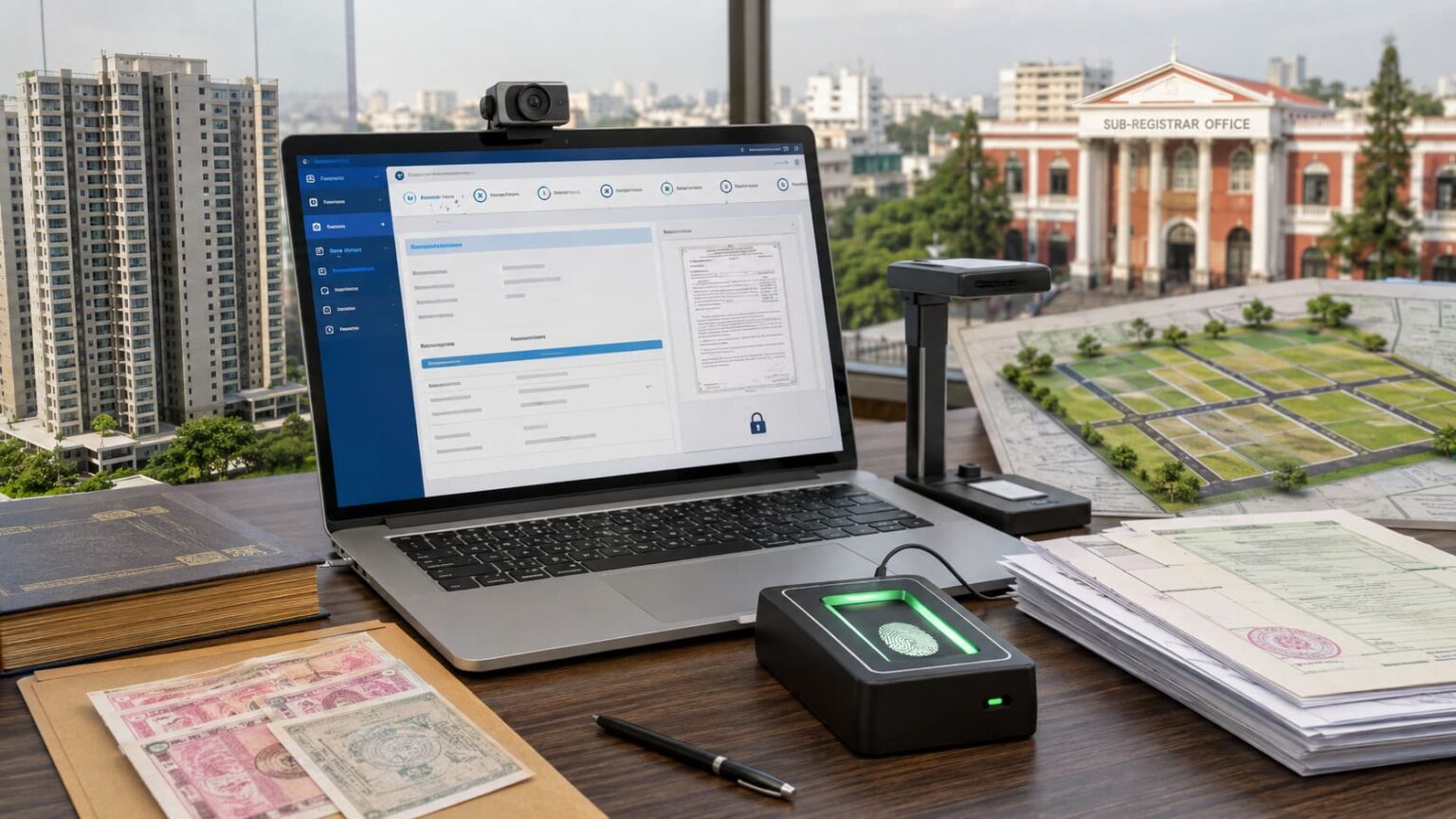
The Government of Tamil Nadu is set to revolutionize its real estate sector with a major digital leap. Starting August 17, 2026, online registration will become entirely compulsory for the first sale of plots and apartments under the state’s ambitious “Anywhere Registration” scheme.
Announced by the Minister for Commercial Taxes and Registration, D. Logesh Tamilselvan, at the Integrated Commercial Taxes and Registration Department Office in Chennai, this Phase I rollout marks the official transition of the state’s portal into the advanced STAR 3.0 ecosystem.
The landmark move is designed to eliminate middleman corruption, improve transparency, remove the need for physical footfall at Sub-Registrar Offices (SROs), and allow citizens to securely execute property transactions from anywhere, at any time.
What is the “Sale of First Apartment” and “First Plot”?
The new presence-less, digital mandate strictly targets primary market transactions to ensure a smooth, dispute-free digital transition. It applies exclusively to two main categories:
- First Sale of Apartments/Flats: New residential units sold directly by builders to the initial buyer, along with all linked home loan mortgage documents.
- First Sale of Plots: Newly developed layout grounds sold directly by land promoters, along with the corresponding deposit of title deeds.
- Linked Mortgage Documents: Any home loan or mortgage paperwork tied directly to that first apartment purchase must also be registered entirely online.
[Builder / Developer] ───(First Sale: MANDATORY ONLINE)───> [First Buyer] ───(Resale: TRADITIONAL SRO)───> [Second Buyer]
Crucial Exclusion: This mandate does not apply to secondary market resales (transactions between individual buyers and sellers for older properties). Resale transactions will continue to follow the traditional system requiring a physical visit to the local SRO.
How the Presence-Less E-Registration Process Works
The STAR 3.0 system replaces the conventional, pen-and-ink paperwork with a completely remote, secure verification workflow:
- Developer Portal Credentials: Builders and layout promoters must create dedicated corporate login credentials on the Tamil Nadu Registration Department website to initiate and upload draft sale deeds.
- Aadhaar-Based Biometric Verification: Instead of traveling to a government office, the buyer, the seller (builder’s representative), and two attesting witnesses complete authentication remotely by providing the Aadhaar based biometric verification.
- Hardware setup: This requires hardware setups on the developer’s end, including
- UIDAI-approved digital fingerprint verification (L0/L1 devices),
- iris scanners, and
- a live webcam photo capture.
- Real-Time Database Matching: The biometric data captured at the developer’s office is cross-verified against the central Aadhaar database instantaneously to eliminate identity theft or fraudulent property transfers.
Processing Timelines and Turnaround Guarantees
The state has integrated strict citizen charter commitments into the electronic registration software to maintain speed and efficiency:
- Same-Day Turnaround: The Registration Department guarantees same-day registration and digital return of documents (or by the next working day at the latest).
- 30-Day Online Clarification Window: If a Sub-Registrar raises a query regarding compliance, the applicant has a 30-day grace period to clear the validation online without facing immediate rejection.
- Digital Retrieval: Once approved and digitally signed by the Registering Authority, the final deed is available for download on the portal for 60 days and is pushed directly to the user’s registered mobile number via WhatsApp.
Legal Validity and Statutory Backing
To prevent financial institutions or courts from questioning the legitimacy of paperless property titles, the process is heavily fortified by state legislation.
The online process operates securely under the legal framework of the Registration (Tamil Nadu Amendment) Act, 2021 and the state’s e-Registration Rules, which specifically amended Rules 32, 52, and 69 of the historic Registration Act, 1908.
Furthermore, the government clarifies that Registering Officers will continue to scrutinize all electronic submissions for statutory and guideline compliance online. Consequently, these presence-less, digitally signed e-deeds carry the exact same legal weight and validity as traditional physical stamp paper registrations.
Impact on Citizens and Real Estate
By moving these heavy-volume primary transactions online, the government projectively forecasts an immediate 30% reduction in physical crowds at Sub-Registrar Offices across Tamil Nadu.
Compulsory Deadline: This presence-less e-registration becomes strictly compulsory from August 17, 2026.
The Tech System: This is the first phase of the state’s transition to the advanced STAR 3.0 ecosystem (upgrading from STAR 2.0).
Crowd Reduction: The minister stated that moving these specific first-sale transactions online will instantly reduce crowds visiting sub-registrar offices by 30%.
Same-Day Turnaround: The government’s existing citizen charter commitment—guaranteeing same-day registration and return of documents—will strictly apply to this new online system as well.
LandLens By Verified Real Estate:
The LandLens AI verification suite by Verified.RealEstate automates over 30 critical property checks—including title authenticity, encumbrances, and zoning compliance—to guarantee a risk-free transaction. Once verified, buyers and sellers move into the secure Deal Room dashboard. This centralized workspace replaces messy emails by allowing parties, agents, and lawyers to directly negotiate offers, collaboratively draft custom MOUs, track escrow payment milestones, and legally execute contracts via Aadhaar-based e-signatures all in one place.