



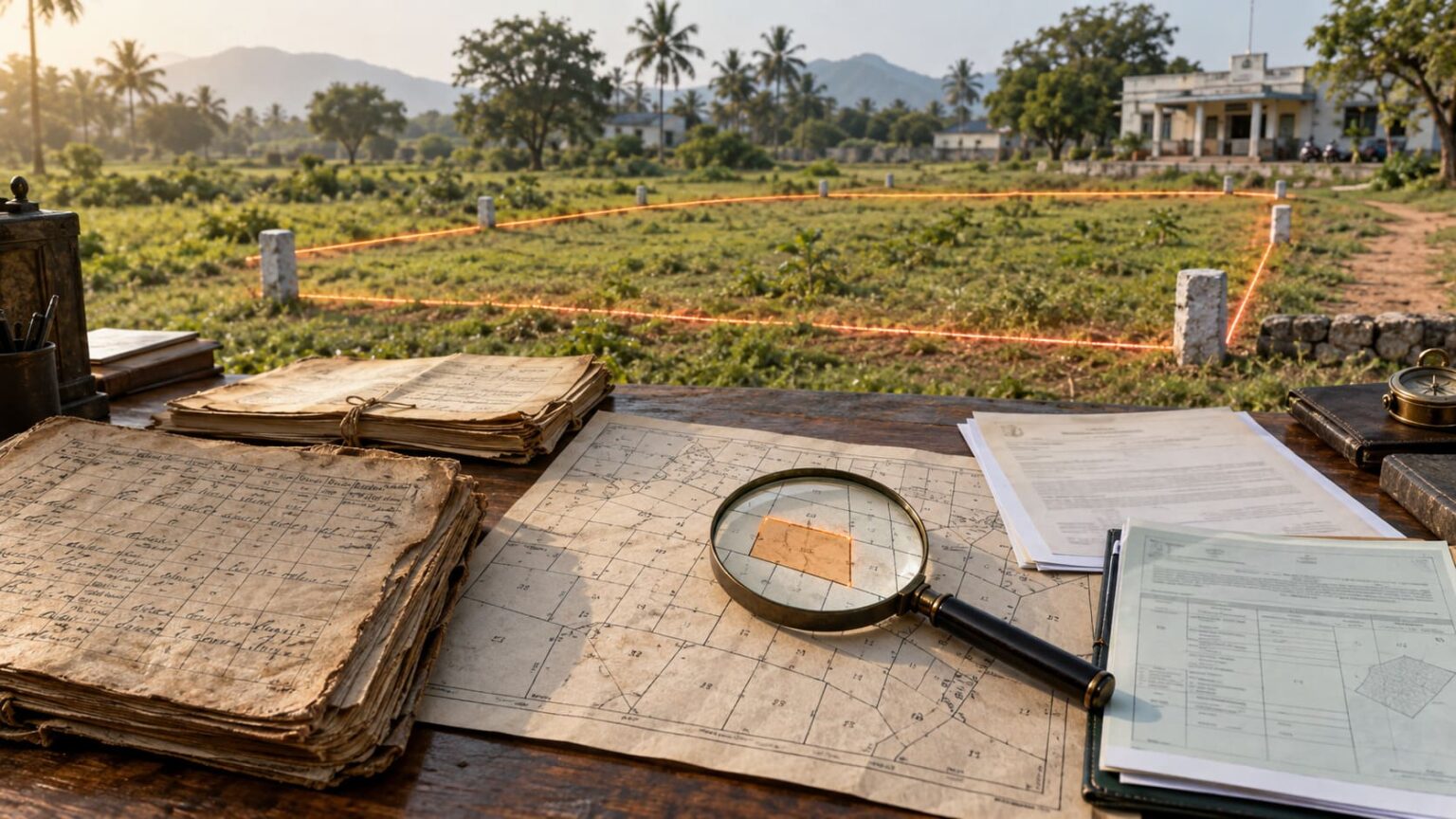
The Tamil Nadu government has announced that a special commission will be constituted to identify and facilitate the recovery of Panchami lands. Social Justice Minister Vanni Arasu made the announcement in the Assembly on 7 September 2026. However, the commission’s members, powers, procedure and formation date have not yet been officially detailed.
What is Panchami land?
Panchami lands were assigned to members of the Depressed Classes—now referred to as Scheduled Castes—during the British period to protect them from landlessness and exploitation.
In the V.G.P. Prem Nagar case, the Madras High Court discussed the conditions applicable to such assignments.
- Under the relevant Special Form-D condition, the assigned land could not be sold, gifted, mortgaged or leased during the first ten years.
- After that period, it could be transferred only to another member of the eligible community.
- A transfer violating the assignment conditions could make the land liable to government claiming it back. (Madras High Court judgment)
The exact legal position of a property depends on its original assignment order, applicable conditions, subsequent records and relevant court rulings.
Why can later buyers face problems?
The latest sale deed, patta or Encumbrance Certificate may show a continuous chain of transactions without clearly revealing that the land was originally assigned with transfer restrictions.
A registered sale deed or a patta in the seller’s name does not automatically prove that an earlier transfer was legally valid. A buyer may discover the Panchami-land issue only after paying an advance, purchasing the property or applying for building approval.
Common Panchami Land Questions—Answered
Which records to Check – To check whether your property is Panchami land, search the exact survey number in the original assignment order, Special Form-D, land-assignment register, old A-Register and survey-correlation records. The current EC or patta may not show the land’s original classification.
Legality of the land – The legality of the purchased land depends on the original assignment conditions and the buyer’s eligibility. A sale made against those conditions may be invalid, and the government may take back the land.
Proposed Commission – As of 12 September 2026, the proposed Panchami Land Commission had not been formally formed, and details about its members, powers and procedures were not available. It is also unclear whether the commission will be allowed to examine or cancel old sale deeds.
Therefore, anyone planning to buy or build on suspected Panchami land should first check its complete assignment and sale history. Registering the property or obtaining building approval will not correct a defective title.
Which records and Where to Check
| Record type | Where it can be verified |
|---|---|
| Original assignment order or Special Form-D | Taluk office, Tahsildar’s records or District Collectorate |
| Land Assignment Register or Darkhast/D-Register | Revenue Department records maintained at the Taluk office |
| Old and current Village A-Register | Taluk office or Tamil Nadu land-records e-services, where available |
| Old Settlement or Resettlement Register | Taluk office, District Survey and Land Records Department or Tamil Nadu Archives |
| Survey correlation records | Taluk Survey Section or District Survey and Land Records Office |
| Assignment, cancellation, resumption or reclassification proceedings | Tahsildar, Revenue Divisional Officer, District Collector or Commissioner of Land Administration |
| District Panchami/DC-land records | Taluk office, District Collectorate or Adi Dravidar and Tribal Welfare Department; records may also be requested through RTI |
| Government orders and court cases | Tamil Nadu government gazettes and departmental records, Madras High Court portal and Supreme Court records |
Check the parcel using LandLens Pro
The paid version of the LandLens map helps users examine the exact parcel and survey number against available revenue records, cadastral boundaries, historical records and relevant property-warning layers.
Users can also Ask Veritas questions concerning the selected property, such as:
- Is this survey number identified or flagged as Panchami land?
- Does the land appear to originate from a restricted assignment?
- Are the old and new survey numbers properly connected?
- What documents should I obtain to confirm its classification?
- Do my patta, EC and sale deeds reveal any inconsistency?
- Is there any government order or court ruling relevant to this property?
Veritas can explain the available records, identify missing documents and guide the user towards further checks or assistance from the Verified.RealEstate legal and real-estate team.
LandLens and Veritas can help with preliminary identification and risk detection, but the final conclusion should be based on certified government records and a property-specific legal opinion.
Do not mistake the announcement for a land clearance
The proposed commission has not yet published a parcel-level list or introduced a new clearance certificate. Therefore, nobody should claim that a particular property has been “cleared,” “released” or “confirmed as non-Panchami land” without supporting official records.
Disclaimer: This article provides general information and is not a legal opinion. Panchami-land status must be examined using the exact survey number, original assignment records, certified government documents and applicable court decisions.