

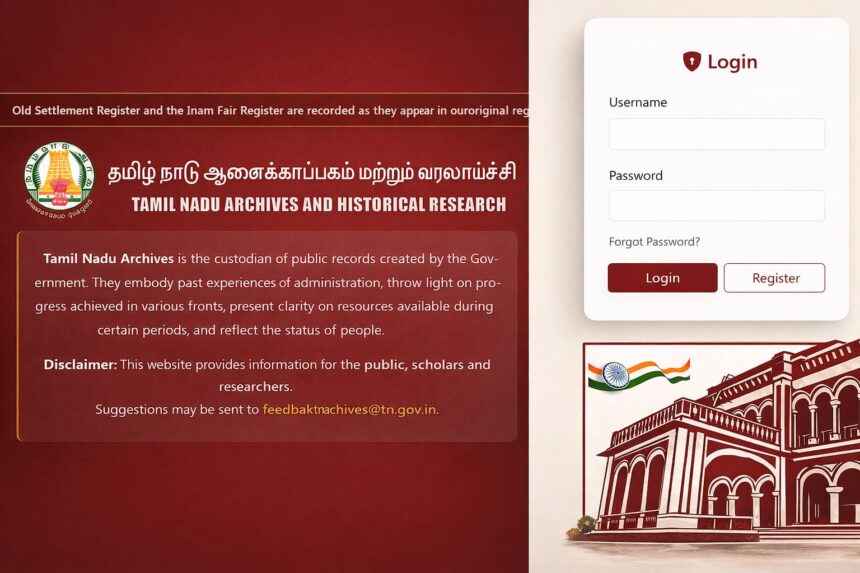
For land verification in Tamil Nadu, present-day records alone are not always enough. While modern portals help confirm current ownership and survey details, many land disputes trace back to pre-1960 settlement entries, Inam grants, or colonial revenue classifications.
Earlier, tracing these records meant physically visiting government offices and waiting weeks for certified copies. Now, the Tamil Nadu Archives and Historical Research has begun digitising historical revenue records and making them accessible online through its digital archive portal.
This development is crucial for anyone dealing with land ownership confusion, missing parent documents, or historical survey number mismatches.
What is OSR and IFR?
Old Settlement Records (OSR)
OSR refers to revenue settlement registers prepared during the British period. These records formed the foundation of land taxation and survey classification in the old Madras Presidency. They contain original survey numbers, land extent, soil classification, irrigation sources, and revenue assessment.
Inam Fair Register (IFR)
IFR records lands granted as inams — including religious grants, service inams, and minor personal grants. These registers list the inam holder, extent granted, nature of the grant, confirmation status, and remarks.
Both OSR and IFR are primary parent documents for pre-1960 land investigation.
🔎 Present-Day Records (Post-Computerisation)
1️⃣ TNREGINET – Registration Records
Use TNREGINET
- Sale deeds
- Encumbrance Certificate (EC)
- Document copies
- Guideline value
- Present ownership chain
This tells you who owns the land now and how it changed hands after registration began being digitised.
2️⃣ Tamil Nadu GIS – Land Location & Classification
Use Tamil Nadu GIS
- Survey number location
- FMB sketch reference
- Land classification
- Boundaries
This confirms where the land lies physically and under what classification today.
📜 For 1920s and Pre-1960 Records (Old Settlement / Inam Period)
Earlier, you had to go physically to:
- District Collector Office
- Taluk Office
- Tamil Nadu Archives (Egmore, Chennai)
- Settlement Department
Submit an application with:
- Present patta copy
- EC
- Survey number
- Village details
Then wait weeks to get certified hard copies.
💻 Now — Digitised Archives Available
You can access:
🔹 Tamil Nadu Archives and Historical Research –https://digitamilnaduarchives.tn.gov.in/ or
🔹 Verified Real Estate – https://verified.realestate/dashboard/utility/tnahr
Step-by-Step to Access Old Settlement Records (OSR) / Inam Fair Register (IFR) in TNAHR
- Register with:
- Name
- Mobile number
- Email ID
- Address
- OTP verification
- Login credentials sent to email
- Login → Change password
- Go to Dashboard
📂 What You’ll Find Inside
✅ Old Settlement Records (OSR)
✅ Inam Fair Register (IFR)
✅ Old Government Orders
✅ Village accounts & maps (select districts only)
Once you log in to the Tamil Nadu Archives and Historical Research digital portal and click on:
- OSR (Old Settlement Records)
- IFR (Inam Fair Register)
- GO (Government Orders)
You will be redirected to a selection page.
🔎 On that page, you must select:
- District
- Taluk
- Village
After selecting these details, submit the search to retrieve the available digitised records.
⚠ Important Historical Detail
Many districts were reorganised later.
Example:
- Present district: Dindigul
- Historically: Part of Madurai district
- Old spelling: “Madurai” recorded as Madura
So when searching:
Select District → Madurai
Select Taluk → Dindigul
Then Village
If you search under “Dindigul district,” it may not appear because that district did not exist during the old settlement period.
This is critical.
🗺 Old District Names (1800s) → Present Districts
| Old District Name (1800s) | Alternative / Colonial Spelling | Present-Day Districts Formed From It | Notes for OSR / IFR Search |
|---|---|---|---|
| Chengelpet | Chingleput | Chengalpattu, parts of Kancheepuram, Chennai outskirts | Search under Chengelpet, not Chengalpattu |
| Coimbatore | Coimbatore | Coimbatore, Tiruppur, Erode, parts of Nilgiris | Tiruppur will not appear separately in old records |
| Madura | Madura | Madurai, Dindigul, Theni, parts of Virudhunagar | Must select Madura, not Madurai |
| North Arcot | North Arcot | Vellore, Tiruvannamalai, Ranipet, Tirupattur | Ranipet & Tirupattur did not exist then |
| South Arcot | South Arcot | Cuddalore, Villupuram, Kallakurichi | Search under South Arcot |
| Salem | Salem | Salem, Namakkal, Dharmapuri, Krishnagiri | Krishnagiri & Dharmapuri were carved later |
| Tanjore | Tanjore | Thanjavur, Tiruvarur, Nagapattinam, Mayiladuthurai | Old spelling used in settlement registers |
| Tinnevelly | Tinnevelly | Tirunelveli, Thoothukudi, Tenkasi | Search under Tinnevelly |
| Trichinopoly | Trichinopoly | Tiruchirappalli, Perambalur, Ariyalur, parts of Karur | Must use Trichinopoly spelling |
📘 What OSR and IFR Actually Contain
These are not simple revenue extracts. They contain:
- Original survey numbers
- Extent of land (in acres, cents)
- Boundary descriptions
- Land classification (wet, dry, poramboke, inam, etc.)
- Crops cultivated at that time
- Joint pattas / separate pattas
- Names of landholders
- Village limits
- Settlement year details
- Revenue assessment
These records often go back to the 1800s. These records can be used as a parent document as a reference of their own land record.
📄 Example: Madura District – Periyakulam Taluk OSR (Digitised PDF)
One digitised OSR PDF under old Madura District and Periyakulam Taluk clearly shows how detailed these records are.
The 20-page settlement document includes:
Settlement Proceedings Section
- Official heading indicating “Proceedings of the Settlement”
- Administrative explanation of revenue fixation
- Summary of total village extent
- Cultivable vs non-cultivable classification
- Government land vs assessed land breakup
Survey and Assessment Tables
Structured tables listing:
- Survey number
- Sub-division number
- Extent (acres and cents)
- Soil classification (wet, dry, garden, manavari)
- Irrigation reference
- Assessment amount (tax fixed)
- Remarks
Inam Table Section
A separate table titled under the Inam register includes:
- Serial number
- Name of inam holder
- Nature of inam (religious/service/minor grant)
- Extent granted
- Confirmation status
- Remarks
Village Boundary Sketch
The document also contains a printed village map showing:
- Village limits
- Adjacent boundaries
- Survey demarcation
This proves that OSR is not a simple extract — it is a complete historical revenue blueprint of the village.
🦁 Digitized Historical Records Access in Verified Real Estate
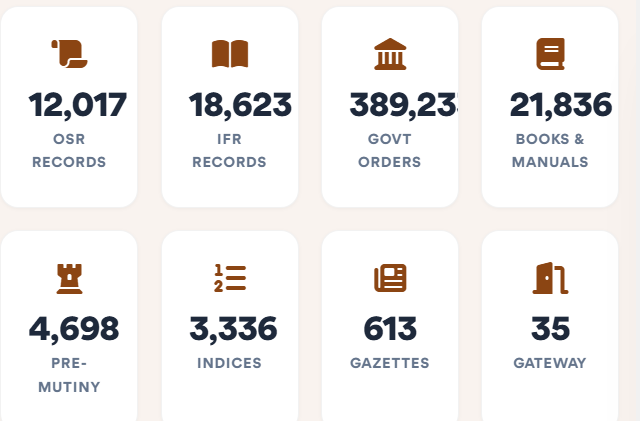
The Verified Real Estate’s Tamil Nadu Archives platform also offers the comprehensive digital gateway to over 450,000 historical records from the Madras Presidency era, making rare and fragile documents easily accessible online. Users simply need to visit the webpage and click on the available options to access these records free of cost.
💰 Cost
Currently:
- Viewing and downloading available records is free both in TNAHR & Verified Real estate
- Instant access (if digitised for that district)
However, only limited districts are uploaded so far. Uploading is happening progressively.
🔥 Why This Matters
If you are dealing with:
- Land ownership confusion
- Missing parent documents
- Old Inam lands
- Pre-1960 settlement disputes
- Boundary confusion
- OSR vs current patta mismatch
These records become powerful parent reference documents.
They help establish:
- Original title flow
- Historical classification
- Extent mismatch
- Whether land was inam, ryotwari, estate, etc.
⚠ Practical Reality
- Not all villages are uploaded yet
- Old spellings are used
- District boundaries are historical
- Some scans may be incomplete
- Certified copies may still require office visit if needed for court use