


1. Introduction: Why This Distinction Matters
When buying or selling land in Tamil Nadu, two terms often confuse even experienced buyers: Guideline Value and Market Value. They sound similar, but can be wildly different—and understanding the gap between them is crucial for making safe, smart real estate decisions.
In this article, we decode both terms, explain how each is calculated, show their impact on stamp duty, and help you navigate negotiations, legal compliance, and fair pricing.
2. What Is Guideline Value (GV)?
Guideline Value (also called Ready Reckoner Rate) is the minimum value set by the Tamil Nadu Government for each street or survey number.
It is:
- A government-estimated rate per square foot or per acre
- Used to calculate registration fees and stamp duty
- Updated periodically by the Registration Department
It represents the government’s view of “floor pricing” in an area—not the actual transaction value.
Example:
If the guideline value in Anna Nagar, Chennai is ₹4,500/sq.ft., this becomes the minimum value for registration—even if you buy for less.
3. What Is Market Value?
Market Value is the actual price buyers and sellers agree upon in open market conditions.
It depends on:
- Real demand in the area
- Amenities, road width, locality appeal
- Plot dimension and frontage
- Urgency of seller/buyer
It is negotiable, can vary street to street—even house to house.
Example:
Even if the guideline value is ₹4,500/sq.ft., actual transactions might happen at ₹6,000/sq.ft. or even ₹7,000/sq.ft. depending on the plot.
4. Key Differences: Guideline vs Market Value
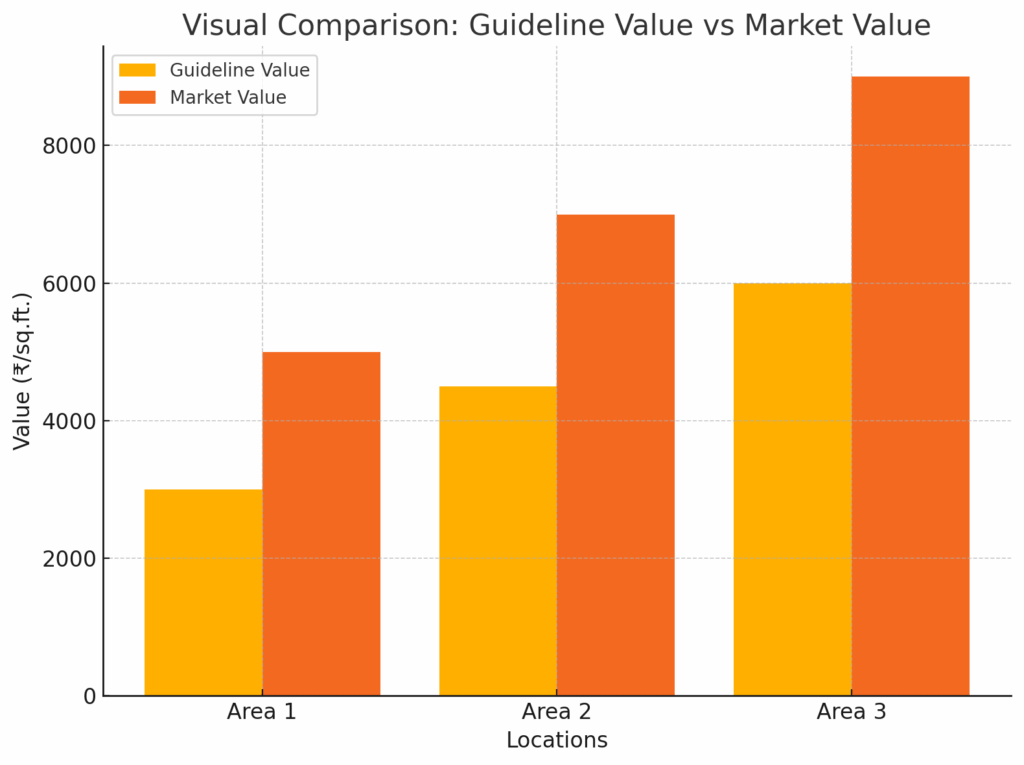
| Aspect | Guideline Value | Market Value |
|---|---|---|
| Set By | Tamil Nadu Registration Department | Real estate market (buyers/sellers) |
| Purpose | Stamp duty & registration calculation | Actual transaction amount |
| Fixed or Variable? | Fixed per revision (few years) | Dynamic—changes with demand |
| Impact on Tax/Fees | Yes – duty based on this value | No direct impact on fees |
| Can It Be Negotiated? | ❌ No | ✅ Yes |
TNREGINET Guideline Value Page

- Where to check: https://tnreginet.gov.in/portal/
- Go to “Guideline Value Search” under E-Services
- Enter Zone, Sub-Registrar Office, Village, Street Name or Survey Number
5. Why the Difference Matters (Risks & Reality)
Seller Risk:
If you sell at below guideline value, you still pay stamp duty on GV.
Buyer Risk:
If the market value is too high compared to GV, undervaluation might attract Income Tax scrutiny.
Common Pitfalls:
- Some plots have a GV higher than market value, making resale hard.
- Others have very low GV but premium pricing in reality—watch for fraud.
At Verified Real Estate, we help avoid overpaying or underreporting risks.
Get our “True Value Check” before your next land deal!
6. How Guideline Value Affects Stamp Duty
In Tamil Nadu, stamp duty and registration charges are based on higher of the two:
Stamp Duty = % of Higher of Sale Price or Guideline Value
| Type | Rate (as of 2024) |
|---|---|
| Stamp Duty | 7% |
| Registration Charges | 4% |
Example:
If Market Value = ₹20L
Guideline Value = ₹25L
Then stamp duty = 7% of ₹25L = ₹1.75L
Even if you paid only ₹20L to the seller!
7. Can Guideline Value Be Changed?
Yes. Guideline values are revised:
- Every few years by the TN Inspector General of Registration
- Based on land sales, town development, road widening, zoning, etc.
You can also file appeals if GV is unrealistically high for your land type. It requires revenue evidence.
8. Conclusion: What Should You Do?
Always check both the Guideline Value and recent Market Transactions.
Be ready to pay stamp duty on the higher amount.
Don’t blindly trust seller quotes or what “neighbours paid.” Combine GV checks with EC, Patta, FMB, and layout classification to make the right decision.