



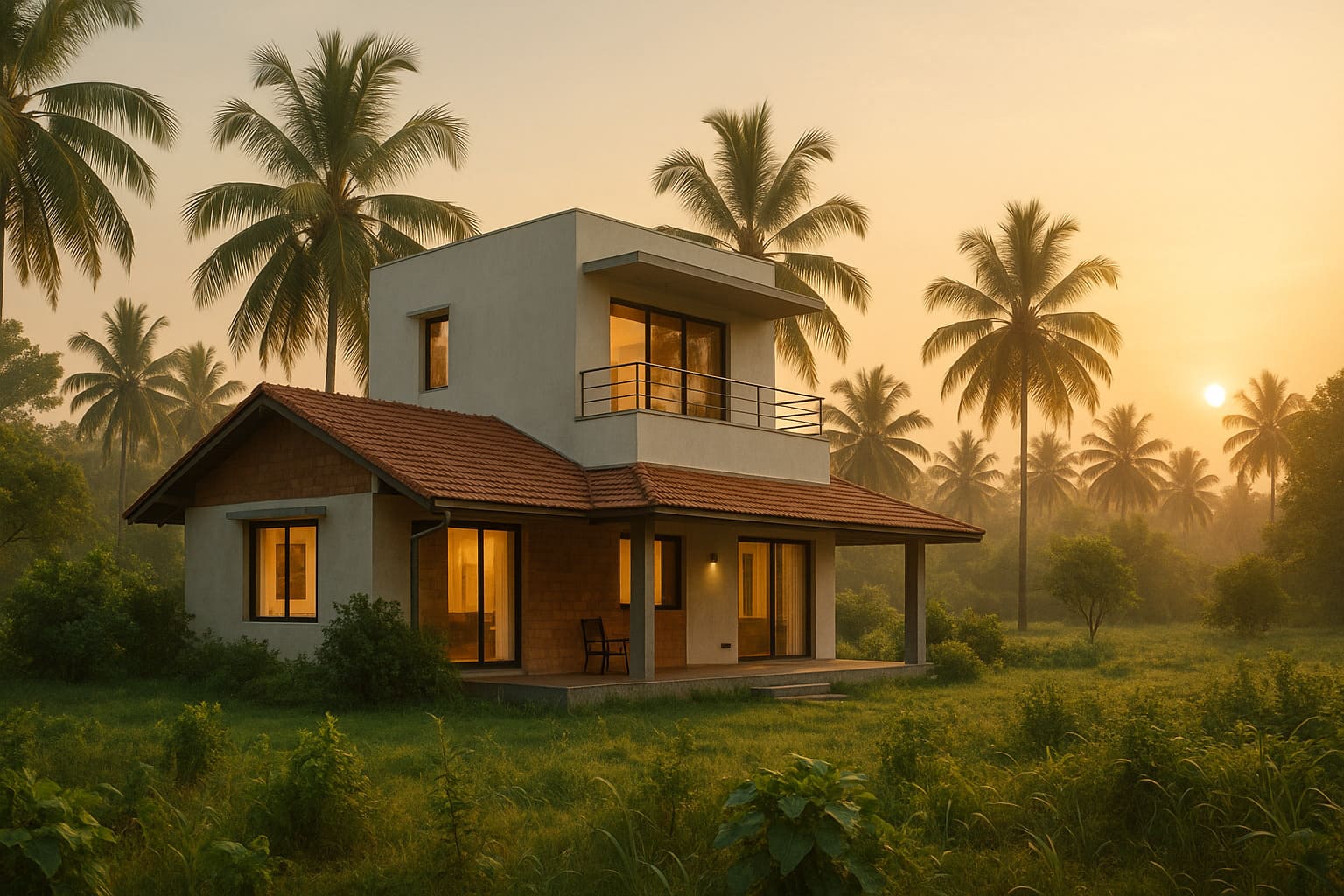
A Peaceful Escape with Legal Groundwork You Can’t Ignore
For many city-dwellers, a farmhouse represents the ultimate getaway — open skies, homegrown vegetables, and a break from concrete life. But before you buy that dream patch of green, it’s crucial to understand the farmhouse regulations that govern what you can build and where.
Each state in India has distinct laws for agricultural land and construction, and knowing them early can save you from expensive legal surprises later.
🌿 What Is a Farmhouse and Why Do People Buy It?
A farmhouse (often called a country home) is a residence set amid farmland or rural surroundings. Traditionally built for farmers to stay close to their fields, modern farmhouses have evolved into second homes, eco-stays, or weekend retreats for city residents.
These homes can be traditional or ultra-modern — with verandas, open courtyards, gardens, and even swimming pools. Apart from comfort, they’re also seen as investment assets, often appreciating in value faster than city flats due to land scarcity and scenic demand.
📜 Farmhouse Rules and Minimum Land Requirements
While the idea of owning a farmhouse sounds simple, the laws behind it are not.
Every Indian state defines who can buy agricultural land, how much can be built, and what permissions are needed.
Here’s a quick look at how it works across major states:
| State | Who Can Buy | Minimum Land Area | Construction Limit | Key Highlights |
|---|---|---|---|---|
| Maharashtra | Only registered farmers | 2 acres (approx.) | Up to 10% of total land | Non-farmers can’t buy agricultural land |
| Karnataka | Non-farmers allowed if income ≤ ₹25 lakh/year (with approval) | 1 acre or more | 10% of land | Must follow farm-use zoning |
| Tamil Nadu | Anyone can buy, subject to land classification | 1 acre or more | ~10–15% of plot | Promotes farm tourism and eco-retreats |
| Haryana / UP | Residents & farmers | 1 acre (min) | 10–15% | Rest must remain open or cultivated |
| Goa (Draft 2025) | Citizens & registered farmers | 10,000 m² | Max 500 m² | Allowed only in agricultural zones |
📝 Note: Always consult a local land lawyer or revenue official — zoning and CLU (Change of Land Use) rules often differ even between districts.
🏠 When Is a Farmhouse Considered Legal?
According to India’s planning and building codes, including the Tamil Nadu Combined Development and Building Rules, 2019 (TNCDBR) and similar regulations in other states:
- A farmhouse must be connected to agricultural activity — it’s not meant for purely residential or commercial use.
- For weekend homes or rentals, you must obtain CLU permission to convert the land’s use.
- Construction must respect zoning regulations, setbacks, and FSI limits.
- Avoid restricted zones — forest areas, floodplains, CRZ (coastal regulation), or eco-sensitive belts.
- Even a farmhouse requires planning permission from the local authority (CMDA, DTCP, or panchayat office).
⚖️ Legal Checklist Before Buying or Building
Before you invest, make sure every legal detail is in place:
- Title Deed: Verify ownership history and ensure no disputes.
- Encumbrance Certificate: Confirms the land is free of legal debt.
- Land Classification: Check if it’s agricultural, residential, or restricted.
- CLU Approval: Essential if you plan to change land use or construct non-farming buildings.
- Release Certificate: Required if the property was previously mortgaged.
- Property Tax Receipts: Confirm there are no dues.
- Boundary & Survey Maps: Ensure the plot doesn’t overlap forest or government land.
🛡️ Platforms like Verified.RealEstate can help you instantly check zoning, patta, EC, and approval records, reducing risk before purchase.
💡 Things to Check Before You Buy
- Accessibility: Choose a location that balances peace and connectivity.
- Utilities: Confirm power, water, and road access before buying.
- Maintenance Costs: Larger plots need more upkeep and security.
- Future Developments: Check for planned roads, airports, or SEZs nearby — they can raise value.
- Insurance: Protect your farmhouse from flood, fire, or theft risks.
- Legal Access Roads: Ensure you have official entry to the property.
📈 Farmhouse Market Trends in India (2025)
- Rising Demand: Post-pandemic lifestyles have made farmhouses a popular investment for relaxation and remote work.
- Prime Locations: Lonavala, Ooty, Yercaud, Coorg, Pondicherry, ECR-Chennai belt, and Devanahalli (Bengaluru).
- Eco-Focused Buyers: Solar energy, rainwater harvesting, and organic gardens are trending features.
- Income Potential: Owners often rent out farmhouses for weddings, corporate retreats, or staycations.
- High-Value Appreciation: Scenic locations near urban centers have seen property values rise by 20–30% in the last five years.
🚫 Common Legal Mistakes to Avoid
- Building on agricultural land without required conversion.
- Exceeding the permissible construction limit (10–15%).
- Buying property in forest or waterbody zones.
- Skipping NOC or property tax checks.
- Trusting verbal claims instead of verified government records.
✨ Final Takeaway
A farmhouse can be your gateway to calm, green living — but it must stand on a solid legal foundation.
Before investing, confirm the land’s classification, get all permissions, and verify the documents.
Handled correctly, your farmhouse can be both a peaceful retreat and a smart long-term investment