

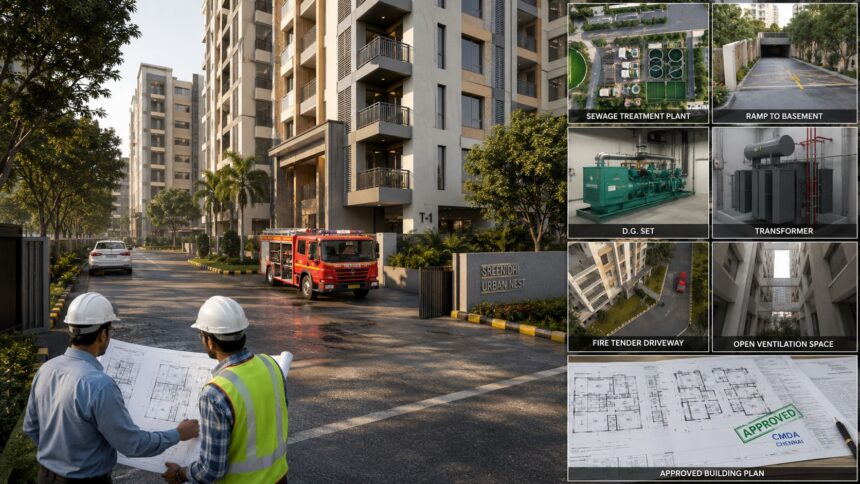
The Chennai Metropolitan Development Authority permits certain utility structures within setback areas in both HRB and NHRB buildings, subject to compliance with approved planning norms.
These provisions allow essential infrastructure integration while ensuring that accessibility and safety standards are not compromised.
Utility Structures Permitted in Setbacks
Builders may install:
- Access steps
- Ramps
- Closed wells
- Sewage Treatment Plants (STP)
- Water treatment systems
- Generator rooms
- Box-type transformers
within setback areas, provided mandatory movement and ventilation requirements are maintained.
Compliance Conditions Builders Must Follow
Such structures should not:
- Obstruct emergency access
- Reduce mandatory driveway width
- Affect parking provisions
- Restrict natural ventilation
- Interfere with fire tender movement
Setback spaces must continue to function as approved circulation and safety zones.
Common Violations Authorities Monitor
Authorities frequently identify violations involving:
- Covered structures within setbacks
- Unauthorized storage rooms
- Encroachment into fire movement areas
- Conversion of setbacks into enclosed spaces
Such deviations may attract enforcement action and occupancy-related complications.
Importance of Setback Compliance
These rules help ensure:
- Fire safety access
- Proper ventilation
- Smooth pedestrian and vehicular movement
- Efficient infrastructure integration
- Long-term operational safety
Builders must coordinate all utility placements with approved building plans before execution.
BuildScope & Land Lens Compliance Services
Using BuildScope and Land Lens services, builders and property owners can assess setback compliance by evaluating mandatory front, side, and rear open spaces as per plot size, road width, and building height requirements under approved development norms.