

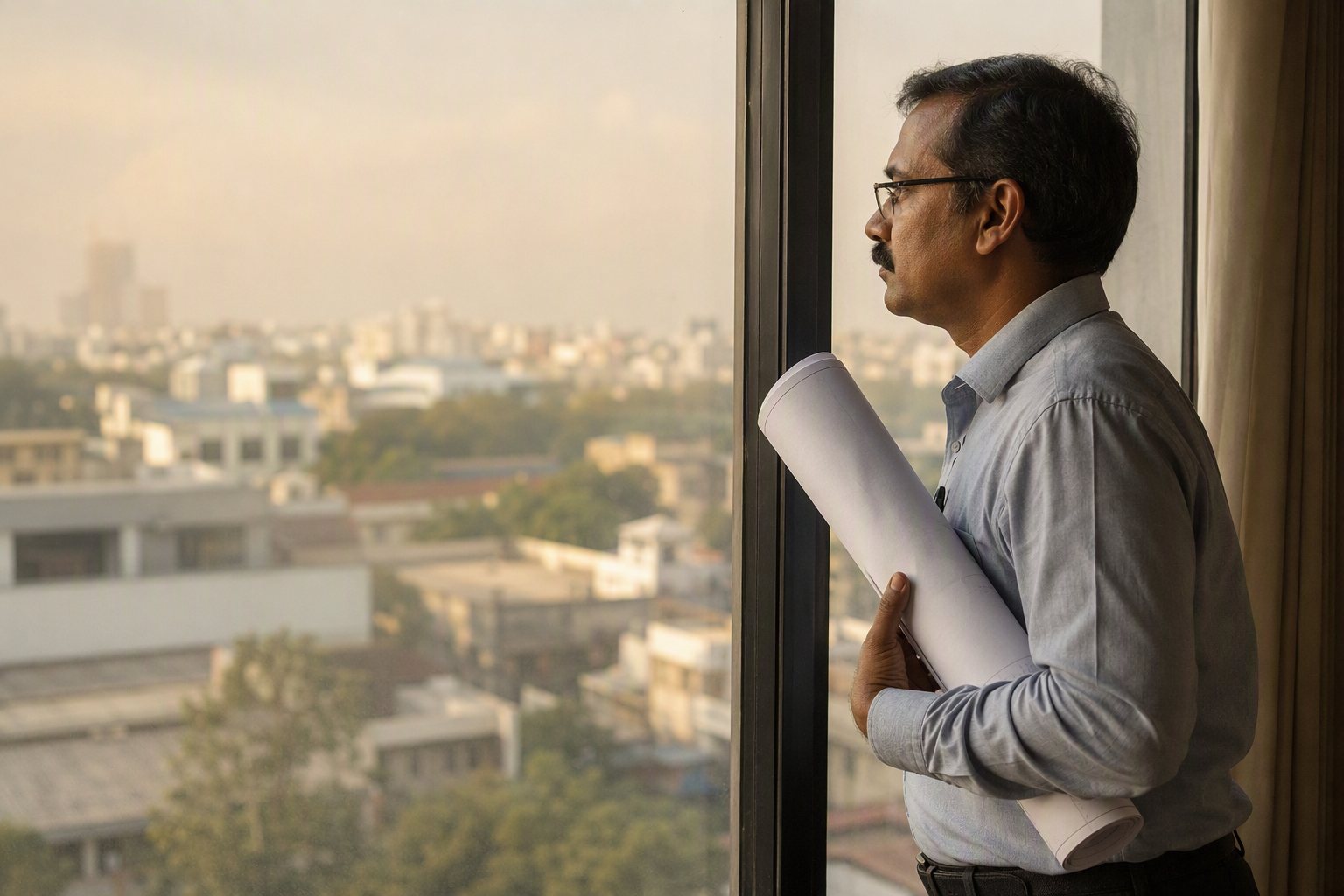
Introduction: A Turning Point for Chennai
The Chennai Metropolitan Development Authority (CMDA) will release the Third Master Plan (2027–2046) during Pongal 2026, Minister for Hindu Religious & Charitable Endowments and CMDA, P. K. Sekar Babu, has confirmed.
The announcement marks a major step in reshaping how Chennai will grow, move, and adapt over the next twenty years.
Speaking at the launch of the Koyambedu Market Management Committee’s portal, the Minister said Chief Minister M. K. Stalin had directed CMDA to fast-track the plan’s preparation. The work, initiated under the World Bank-assisted Tamil Nadu Housing and Urban Habitat Development Project, aims to make Chennai more modern, liveable, and climate-*resilient.
Extensive Consultations Behind the Plan
The CMDA has already completed a large-scale Vision Document exercise and held public consultations across the city and suburbs.
Between December 2022 and January 2023, meetings were conducted in 15 zones of the Greater Chennai Corporation and 14 locations outside GCC, gathering opinions from citizens, urban experts, and local bodies.
Further, in October 2023, *CMDA hosted sectoral meetings covering housing, infrastructure, economic growth, transport, environment, heritage, tourism, and technology, ensuring that every major urban issue was addressed in the planning framework.
The Planning Area: Beyond the Old City Limits
The Third Master Plan covers 1,189 sq.km. of the Chennai Metropolitan Area (CMA), extending across Chennai, Tiruvallur, Chengalpattu, and Kancheepuram districts.
Outer areas will receive regional plans to balance growth and avoid the over-centralisation that has historically strained the city core.
Without such decentralisation, suburban expansion risks leading to traffic bottlenecks, poor utilities, and loss of green cover — problems *CMDA aims to curb this time.
1. Vertical Growth: Chennai to Rise Taller
The new plan promotes taller, denser buildings by increasing Floor Space Index (FSI) limits in transit corridors, IT hubs, and commercial zones.
By building upward instead of outward, Chennai can:
- Save valuable land,
- Reduce unplanned sprawl, and
- Deliver public services more efficiently.
However, this shift demands stronger water, sewage, and transport networks, a gap CMDA acknowledges must be closed for sustainable high-rise growth.
2. Transit-Oriented Development (TOD): Building Around Mobility
The heart of the Third Master Plan is Transit-Oriented Development (TOD).
Housing, workplaces, and retail zones will cluster around metro, rail, and bus corridors to boost public transport usage from under 30% today to over 50% by 2048.
This will ease congestion, lower emissions, and shorten daily commutes — making Chennai’s transport network the backbone of its urban life.
3. Housing for All: Redevelopment Without Displacement
Unlike earlier policies that relocated slum residents to distant colonies, the Third Master Plan promotes on-site slum redevelopment.
Existing settlements will be rebuilt into vertical housing blocks with schools, clinics, and community spaces within the same locality.
This ensures the urban poor remain integrated into the city’s economy and social life — a people-centric shift in Chennai’s housing strategy.
4. Greener, Safer, Climate-Resilient Chennai
The plan directly tackles floods, heat, and water shortages — Chennai’s biggest urban risks.
Using *JICA’s flood-risk mapping, CMDA will mark buffer zones around rivers, lakes, and wetlands, restricting construction in vulnerable areas.
Green corridors and tree-lined networks will expand, and new projects will need to meet climate-resilient design standards.
For property buyers, Verified.RealEstate’s Aquifer Zone and Flood-Risk Tools provide an early environmental safety check before investment.
5. Local Economy and Employment Hubs
The plan re-imagines where Chennaians work.
By analysing employment clusters, CMDA intends to bring jobs closer to homes — cutting travel time and dispersing growth beyond IT corridors.
Expect more neighbourhood business hubs, logistics parks, and start-up clusters, supporting both local entrepreneurs and large employers.
6. Citizen-Led Planning
CMDA’s Vision Document follows a bottom-up approach — gathering input from residents, NGOs, academics, industry bodies, and community representatives, including women, senior citizens, and differently abled groups.
This participatory structure reflects a new planning culture: cities co-created with citizens, not dictated from above.
7. Institutional Strengthening
The plan also focuses on CMDA’s internal capacity — training staff, improving digital systems, and ensuring enforcement.
Experts in gender inclusion, mobility, disaster resilience, and urban design have been engaged to make the plan’s implementation practical and measurable.
Challenges Ahead
While the Third Master Plan is visionary, success depends on strong governance and steady follow-through.
| Challenge | Reality Check |
|---|---|
| Infrastructure Gaps | High-rises and TOD zones require upgraded utilities and transport systems. |
| Weak Enforcement | Previous master plans failed due to poor compliance monitoring. |
| Affordability Risks | TOD-linked land value could push up housing costs without safeguards. |
| Environmental Pressure | Development near floodplains and wetlands must stay under strict control. |
Conclusion: Chennai’s Future, Rewritten
The Third Master Plan (2027–2046) is more than an urban policy — it’s a commitment to a smarter, inclusive, and resilient Chennai.
If CMDA’s roadmap is executed effectively, Chennai could emerge as India’s model coastal metropolis — one that grows taller yet greener, denser yet fairer, and modern yet mindful of its roots.
For homebuyers, developers, and policymakers alike, this master plan represents Chennai’s most ambitious urban transformation in decades.
*"resilient” means a city that can withstand and recover quickly from problems like floods, heatwaves, water shortages, and other climate or infrastructure shocks.
*CMDA stands for Chennai Metropolitan Development Authority.
*JICA stands for Japan International Cooperation Agency.