


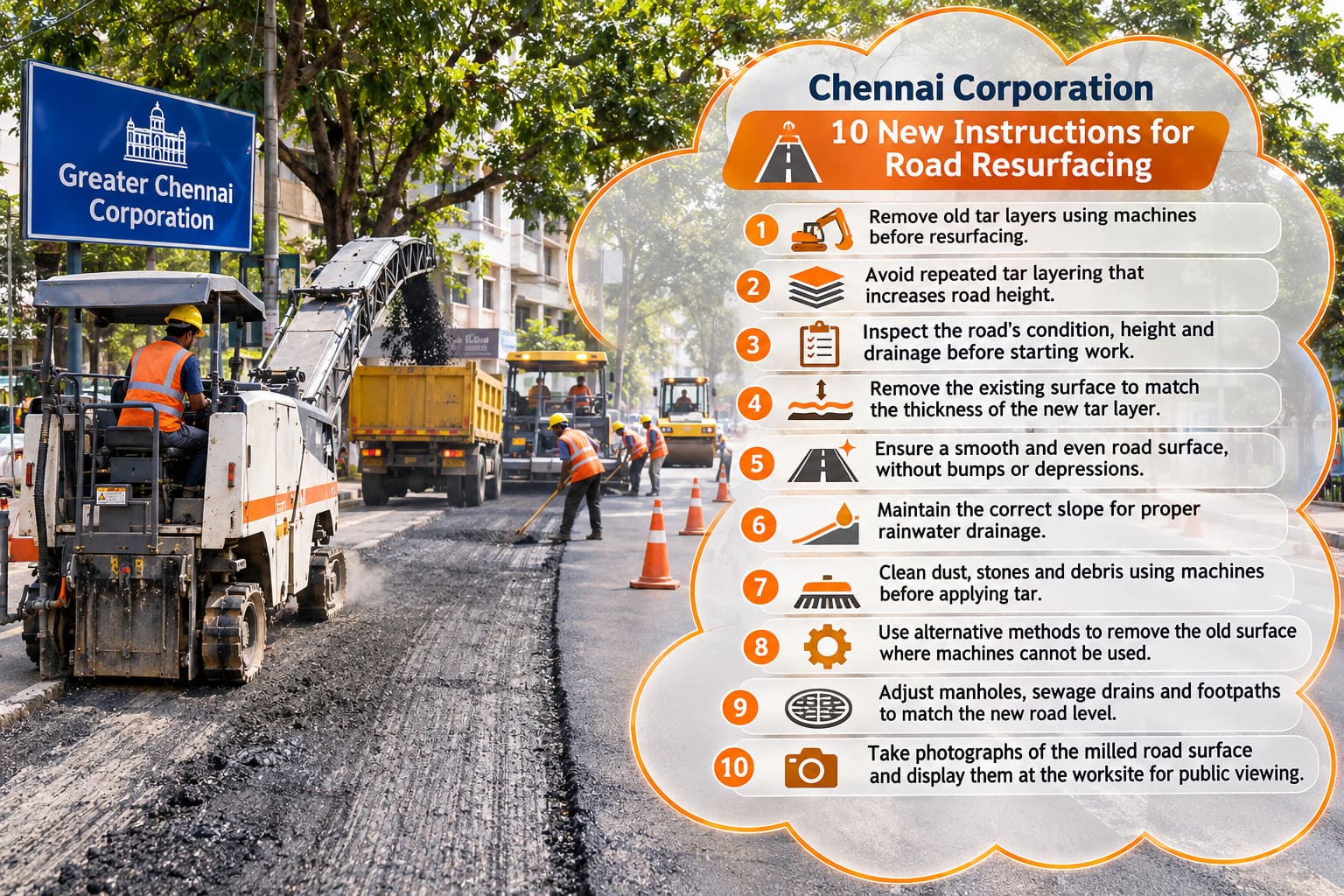
The Greater Chennai Corporation (GCC) has issued a set of 10 important instructions to its engineers to improve the quality of road repair and resurfacing works across Chennai. The new guidelines focus on removing old road surfaces before relaying fresh tar, preventing roads from becoming progressively higher, maintaining proper road gradients and ensuring that essential infrastructure such as manholes and drainage facilities matches the finished road level.
The instructions are intended to address common problems associated with repeated road resurfacing, including uneven road surfaces, water stagnation, rising road levels and inadequate drainage. The Corporation has also emphasised the importance of documenting road-milling work through photographs and displaying them at the worksite for public viewing.
10 New Instructions for Road Resurfacing and Maintenance
The Chennai Corporation has outlined the following requirements for engineers overseeing road improvement projects:
1. Mechanically Remove Existing Tar Layers
Before resurfacing, the existing tar layers must be removed using appropriate road-milling machinery rather than simply laying a fresh layer over the old surface.
2. Prevent Continuous Increase in Road Height
Repeatedly adding new tar layers must be avoided, as this can gradually increase road levels and create difficulties for buildings and properties situated alongside the road.
3. Inspect Existing Road Conditions Before Starting Work
Engineers must assess the existing road condition, road height and drainage facilities before undertaking resurfacing activities.
4. Remove the Old Surface According to the New Layer Thickness
The depth of the existing road surface to be removed must correspond to the thickness of the proposed new tar layer, ensuring that the finished road maintains an appropriate level.
5. Ensure a Smooth and Even Road Surface
The completed road must be properly levelled, without unwanted bumps, depressions or uneven surfaces.
6. Maintain Proper Slope for Rainwater Drainage
Road gradients must be designed appropriately to facilitate the smooth flow of rainwater and prevent water stagnation.
7. Mechanically Clean the Surface Before Tar Application
Dust, loose stones and construction debris must be removed using machinery before applying the new tar layer.
8. Adopt Alternative Methods Where Mechanical Milling Is Not Possible
In locations where road-milling machinery cannot be used, suitable alternative methods must be adopted to remove the existing road surface.
9. Adjust Manholes, Sewage Drains and Footpaths
Manholes, sewerage infrastructure and footpaths must be brought to the appropriate levels in accordance with the newly finished road surface.
10. Display Photographs of Milled Road Surfaces
Engineers must take photographs of the road after the existing surface has been milled and display them at the worksite so that the public can inspect the work carried out.
Why Proper Road Resurfacing Matters
The Chennai Corporation’s new instructions address issues that directly affect everyday life, particularly for residents whose properties are situated along roads undergoing repeated resurfacing. Maintaining appropriate road levels, ensuring proper gradients and aligning manholes and drainage infrastructure are essential to prevent rainwater from entering properties and causing water stagnation.
Equally important is the requirement to document road-milling work and display photographs at the worksite. This allows residents to have better visibility into the resurfacing process and encourages greater accountability in the execution of civic infrastructure projects.
Rising Public Concerns and the Need for Better Road Management
The issue of road quality and maintenance has also attracted judicial attention. In its observations in Saju Alex v. The Zonal Officer, the Madras High Court questioned the gap between the taxes paid by residents and the quality of civic infrastructure provided to them. The Court highlighted the need for motorable roads, unobstructed footpaths and dependable civic amenities. Public complaints about potholes, unfinished roadwork, repeated digging and poorly maintained roads across Tamil Nadu further underline the need for timely repairs and effective monitoring. These concerns are discussed in our article, Madras High Court Calls for Better Roads in Tamil Nadu as Public Concerns Grow.
Another significant concern is the gradual increase in road height due to repeated resurfacing without adequately removing existing layers. When roads rise above the level of adjoining properties, rainwater can flow into homes, affecting access and increasing drainage-related problems. The Madras High Court has previously addressed this issue, and government instructions have emphasised the need for milling existing road surfaces before relaying. A citizen-led road-height audit reported concerns at several locations across Tamil Nadu, bringing renewed attention to the impact on homeowners. Our article, Tamil Nadu’s Homes Are Not Sinking—Its Roads Are Rising, examines this issue and explains why proper road-level management is essential.
Towards Better Roads and Responsible Road Management
The new guidelines reflect the need for a more systematic approach to road maintenance, where existing road conditions are assessed and necessary corrective measures are undertaken before fresh layers are laid. Rather than repeatedly raising road levels through additional tar layers, the focus must remain on proper surface removal, engineering standards and effective drainage.
Effective implementation of these instructions will be crucial in ensuring durable roads, protecting neighbouring properties and improving Chennai’s overall urban infrastructure. Ultimately, better roads require not just timely repairs but also proper planning, quality execution and continuous monitoring.