



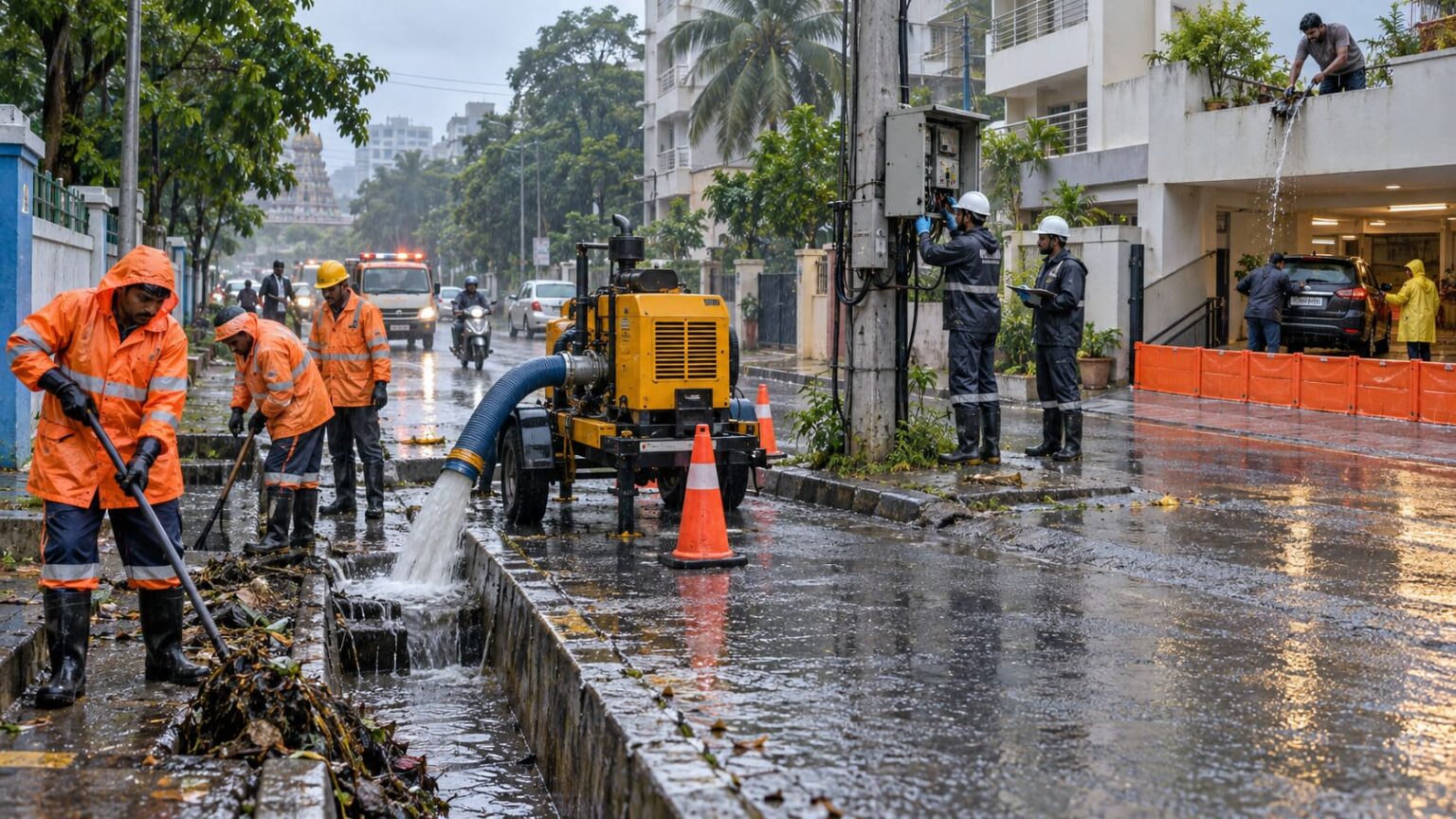
Tamil Nadu Chief Minister C. Joseph Vijay has reviewed the State’s Northeast Monsoon preparedness and directed multiple departments to coordinate flood-prevention and emergency-response work.
The government has reportedly set a September-end deadline for completing major works across Chennai, Avadi and Tambaram.
Flood-Prone Areas Get Priority
Officials have been asked to position high-capacity pumps in areas that regularly experience waterlogging. Velachery, Ambattur SIDCO, Tiruvottiyur and Manali are among the locations specifically identified.
Missing stormwater-drain connections near Metro Rail construction sites and arterial roads must also be completed. Urgent works have been ordered along Demellows Road, Nookampalayam and MRH Road.
Within Greater Chennai Corporation limits, desilting work covers approximately:
- 1,671 km of stormwater drains
- 1,10,082 silt-catch pits
- 207 identified flood-vulnerable locations
The government has reportedly sanctioned ₹100 crore for Chennai’s wider monsoon-preparedness measures.
Steps to Prevent Electric Shocks During Rain
TANGEDCO has been directed to identify exposed electrical cables, insulate underground lines properly and raise low-lying distribution pillar boxes above flood level.
Exposed or damaged cables must be repaired or placed underground wherever required. These precautions are intended to reduce electricity leakage and electrocution when roads and residential areas become waterlogged.
Rescue Centres and Emergency Facilities
The emergency arrangements planned for Chennai include:
- 311 rescue boats
- 215 flood-relief centres
- 111 community kitchens
- Around 1,000 additional field workers
- More than 1,000 volunteers
The GCC’s Integrated Command and Control Centre, 1913 helpline and official social-media channels are expected to operate continuously during emergencies.
Tambaram Reports 80% Completion
Tambaram Corporation has separately reported that nearly 80% of its monsoon-preparedness work has been completed.
The work includes desilting 344 km of stormwater drains and 45 km of major and link canals. The Corporation has also kept 48 pumps and 75 tractors ready, identified 20 relief camps and made arrangements to prepare up to 84,000 food packets daily.
Low-lying areas such as Perungalathur, West Tambaram and Pallavaram are receiving particular attention.
₹42 Crore for Waterway Desilting
The Water Resources Department has separately allocated ₹42 crore for 202 desilting works across Chennai, Tiruvallur, Kancheepuram, Chengalpattu and Cuddalore.
This allocation includes work in major waterways such as the Buckingham Canal and the Palar River. It is separate from the ₹100 crore reported for Chennai’s broader monsoon-preparedness programme.
How Property Owners Can Prepare for the Monsoon
Whether the coming monsoon causes minor waterlogging or serious damage, property owners should prepare early.
Residents of individual houses should clean terrace outlets, rainwater pipes and nearby drains; check roofs and exterior walls for cracks or leakage; secure loose electrical wires; raise appliances and important documents above possible flood level; and keep emergency lights, medicines and essential supplies ready.
Apartment residents should ask their association to inspect terrace drains, basements, sump pits, sewage pumps, lifts, generators and electrical panels. Basement parking areas should have working dewatering pumps and a clear plan for moving vehicles during heavy rain.
Owners should also photograph the property and valuables, keep insurance and ownership documents in waterproof storage, monitor official weather warnings and avoid touching electrical poles, cables or equipment in waterlogged areas.
Check the Property’s Flood Risk Before Buying
Before buying land or a house, check its elevation, nearby waterbodies, drainage routes and history of flooding. Verified.RealEstate’s LandLens can help users identify location-based property warnings during preliminary verification.
Buyers who are not in a hurry can consider waiting until the monsoon passes before making a purchase. This gives them time to assess their preferred location under heavy-rain conditions, including waterlogging, drainage, road access, traffic disruptions and the condition of nearby infrastructure. Once this analysis is complete, they can make a more informed decision and proceed with the purchase.
Preparing for the Monsoon
The real test will be whether the announced works are completed properly before the Northeast Monsoon begins. Timely desilting, effective drainage improvements and regular maintenance can significantly reduce flooding and waterlogging.
However, residents and property owners must also take practical precautions, report vulnerable locations and follow official advisories. With coordinated action from civic authorities, apartment associations and the public, the city can be better prepared to face the monsoon and minimise disruption and damage.
Disclaimer: The preparedness figures and completion status are based on government directions and published news reports available as of September 9, 2026. Ground-level progress may change and should be independently verified.
.