

If you have ever walked through the vibrant commercial lanes of Chennai—such as Sowcarpet, George Town, Parry’s Corner, Purasaiwalkam, or Pondy Bazaar in T. Nagar—you might have noticed small retail shops that have been run by the same family for three generations.
On paper, these shopkeepers pay rent. But in reality, their monthly rent is absurdly low—sometimes just ₹500 or ₹1,000 a month for a prime showroom space! How is this possible?
The answer lies in a traditional, historical tenancy setup known as the Pagdi system. In this first part of our series, we will unpack what the Pagdi system is, its historical roots, how “quasi-ownership” works with a real-life example, how it differs from modern rentals, and how property owners, tenants, buyers, and sellers should handle such properties today.
What is the Pagdi System and How Did It Begin?
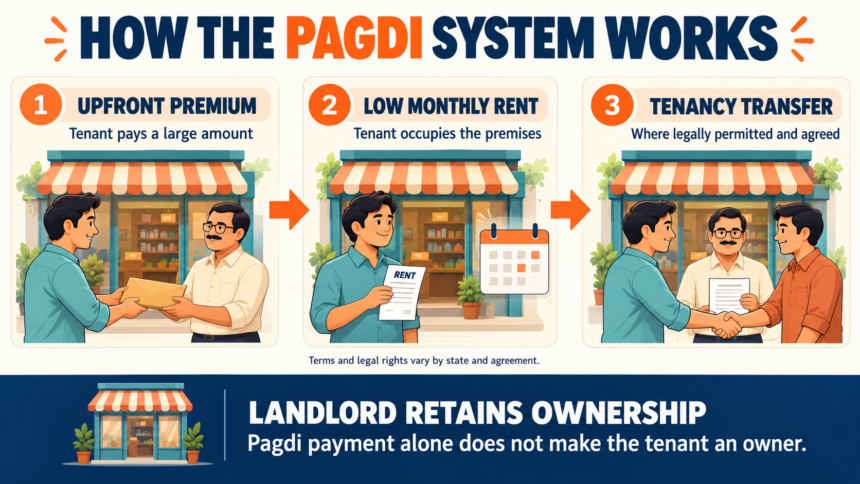
The Pagdi system is a unique form of long-term tenancy practiced in India. Under this system:
- The tenant pays a huge, non-refundable lump-sum payment (called “Pagdi” or premium) upfront to the property owner at the start of the tenancy.
- In exchange, the tenant pays a very low, frozen monthly rent for decades.
- The tenant gains strong rights over the property, effectively holding it indefinitely and even acquiring the right to sell or transfer those tenancy rights to someone else.
The History Behind It
The Pagdi system originated in British-ruled India around the mid-20th century (during and after World War II) in crowded commercial hubs like Mumbai, Kolkata, and Delhi.
To protect citizens from severe housing shortages and rapid inflation, governments introduced Rent Control Acts. These laws legally froze monthly rents at baseline historical rates (often fixing them at rates from the 1940s or 1960s).
Because landlords could no longer raise rents to match inflation—and could not easily evict tenants—they began accepting a massive one-time cash premium (“Pagdi”) upfront from incoming tenants. In return, tenants received “statutory protection,” making their tenancy almost permanent.
What Does “Quasi-Ownership” Mean?
In a Pagdi arrangement, the tenant holds quasi-ownership (or partial ownership) rights.
This means that while the landlord holds the official property title deed (the legal ownership), the tenant holds the financial value and exclusive physical right of occupation.
A Pagdi tenant acts almost like an owner because:
- They cannot be easily evicted as long as they pay their small monthly rent.
- They can pass the property down to their children or legal heirs.
- They can sell the tenancy rights to a new buyer and keep a huge chunk of the sale price.
Real-Life Example: How a Pagdi Tenancy “Sale” Works
Let’s look at a practical example set right here in Chennai to understand how trading a Pagdi tenancy works.
The Scenario
Imagine Ramesh, who runs a wholesale textile shop measuring 300 sq. ft. in an old commercial complex in Sowcarpet.
- Ramesh’s grandfather took the shop in 1975 under a heavy-deposit Pagdi arrangement.
- Ramesh still pays a tiny rent of ₹500 per month to the original landlord, even though a similar shop in the open market today would easily rent for ₹60,000 per month.
Step-by-Step: Ramesh Sells His Tenancy
Ramesh decides to retire. Instead of handing the keys back to the landlord for free, Ramesh treats his tenancy as a valuable asset:
- Market Valuation: A new buyer, Kumar, wants the shop. Because the monthly rent is frozen at ₹500 forever, Kumar is willing to pay ₹50 Lakhs just to step into Ramesh’s shoes.
- Finding the Buyer: Ramesh finds Kumar independently and agrees on the ₹50 Lakh payout.
- The Customary 67/33 Split: Under traditional Pagdi customs, to get the landlord’s written consent on the new lease paperwork, the ₹50 Lakhs is split between the tenant and the landlord:
- The Landlord’s Share (33%): The building owner gets ₹16.5 Lakhs.
- Ramesh’s Share (67%): Ramesh pockets ₹33.5 Lakhs for giving up his family’s occupancy rights.
- The Reset: Kumar becomes the new tenant, continues paying ₹500/month to the landlord, and now holds the right to sell the tenancy again decades later!
Is the Pagdi System Practiced in Tamil Nadu?
While the word “Pagdi” (or Pugri) is most famous in Mumbai, Tamil Nadu never had a formal legal system by that exact name.
However, informal local variations have existed for decades in Chennai’s oldest commercial centers:
- Sowcarpet, George Town, Parry’s Corner, and Purasaiwalkam: Merchants often pay massive non-refundable “key money” or “heavy deposits” to lock in ultra-low monthly rents for generations.
- Pondy Bazaar (T. Nagar): Complexes like Maya Plaza and nearby older shopping centers operate on similar quasi-ownership logic, where shopkeepers pay heavy upfront amounts and trade shop running rights among themselves.
Variations of the heavy-deposit and quasi-ownership system are practiced in other major commercial and trading towns across Tamil Nadu—such as Madurai (around the Meenakshi Amman temple and South Masi Street), Coimbatore (older textile and hardware wholesale markets like R.S. Puram and Town Hall), Tiruchirappalli (Chinthamani and Teppakulam), and Salem. Just like in Chennai’s older pockets, merchants in these historic regional trade hubs historically paid large upfront deposits to secure generational shops for nominal monthly rents.
Pagdi System vs. Modern Rental and Lease Systems
| Feature | Pagdi System | Modern Standard Rental | Long-Term Commercial Lease |
| Upfront Payment | Huge, non-refundable sum (30%–80% of property value). | Refundable security deposit (usually 3–10 months’ rent). | Refundable advance or agreed lease premium. |
| Monthly Rent | Extremely low / Frozen rate (e.g., ₹200–₹1,000/month). | Market rate, increasing by 5%–10% annually. | Agreed commercial rate with periodic escalation clauses. |
| Transfer Rights | Tenant can sell tenancy rights and keep most of the money. | Tenant cannot sell or transfer the lease to anyone else. | Sub-leasing allowed only if written into the contract. |
| Eviction | Extremely difficult under old rent control rules. | Straightforward upon lease expiry or contract breach. | Clear terms governed by the lease deed. |
How Stakeholders Should Handle a Pagdi Property
1. For Property Owners (Landlords)
- Do Not Accept Informal Cash Premiums: Accepting unrecorded “key money” creates cloudiness over your property title and locks you into low-rent traps.
- Transition to Registered Agreements: Under the Tamil Nadu Regulation of Rights and Responsibilities of Landlords and Tenants Act (TNRRRLTA), all tenancies must be covered by a written, registered agreement on the state tenancy portal.
- Consider Negotiated Buyouts: If you want vacant possession of an old Pagdi property, offering a fair cash settlement (buyout) to the tenant is often faster and cheaper than fighting a 20-year court battle.
- If the Landlord Sells: A landlord can sell the legal title to an investor, but the property must be sold “as-is” with the sitting Pagdi tenant intact (which usually reduces the market selling price).
⭕The Landlords should always be honest and tell the buyer right at the start if someone is living or running a business there under an old system. Hiding it will only ruin the deal or drag you into messy court fights later.
2. For Existing Tenants
- Maintain Proof of Occupation: Keep all historical rent receipts, electricity bills, tax payments, and old correspondence safe to prove your continuous occupancy.
- Always Get Landlord Consent: Never hand over your shop keys or sell your tenancy rights to a new buyer behind the landlord’s back.
⭕ Always bring the landlord into the loop early, put the profit-sharing agreement in writing, and sign a fresh tenancy agreement with the new buyer to avoid getting evicted for unauthorized sub-letting.
3. For Prospective Buyers (Buying the Property Title)
- Conduct Thorough Physical Due Diligence: If you are buying a building, never rely solely on title deeds. Inspect the physical building and check who is inside!
- Identify Sitting Statutory Tenants: If a tenant is sitting inside paying ₹500/month under an old arrangement, you will not be able to use the shop or raise the rent easily after purchase.
⭕Remember, you are buying a property that brings in frozen, tiny rent—not an empty building you can move into right away. Make sure to calculate the extra time and money you will need to pay off or negotiate with the tenant.
Uncovering Hidden Legacy Risks: The Role of Verified.RealEstate
In dense Chennai commercial hubs, buying a property without checking for legacy Pagdi or heavy-deposit arrangements can lead to massive financial traps.
Verified.RealEstate team offers expert Due Diligence services to catch up Pagdi Encumbrances by going through
- Multi-Decade Title History: Traces ownership chains and past mutations far beyond standard recent sale deeds.
- On-Site Occupancy Audits: Cross-references active business operators with title deeds, flagging mismatches and suspiciously low rental trails.
- Deep EC & Legal Scrutiny: Analyzes Encumbrance Certificates to uncover unrecorded liabilities, family disputes, or court stays.
Safe Handling Strategies
Using Tech Advisory: Leverage platforms like Verified.RealEstate’s Landlens to unearth occupancy and legal risks before committing any funds.
Summary & What’s Next
The Pagdi system is a unique historical bridge between renting and buying that still influences older commercial markets in Chennai today. While it provided affordable spaces for merchants, it often left property owners with frozen incomes and clouded titles.
In Part 2 of our series, we will dive deep into the legal formalities, rent control acts, the 2019 Tamil Nadu Tenancy Act (TNRRRLTA), and how courts evaluate eviction claims like ‘Bona Fide Personal Requirement’.
Disclaimer: This article is for general informational purposes only and is not legal advice. Property and tenancy laws vary by case and location. Always consult a qualified lawyer before making any property decisions or financial commitments.