

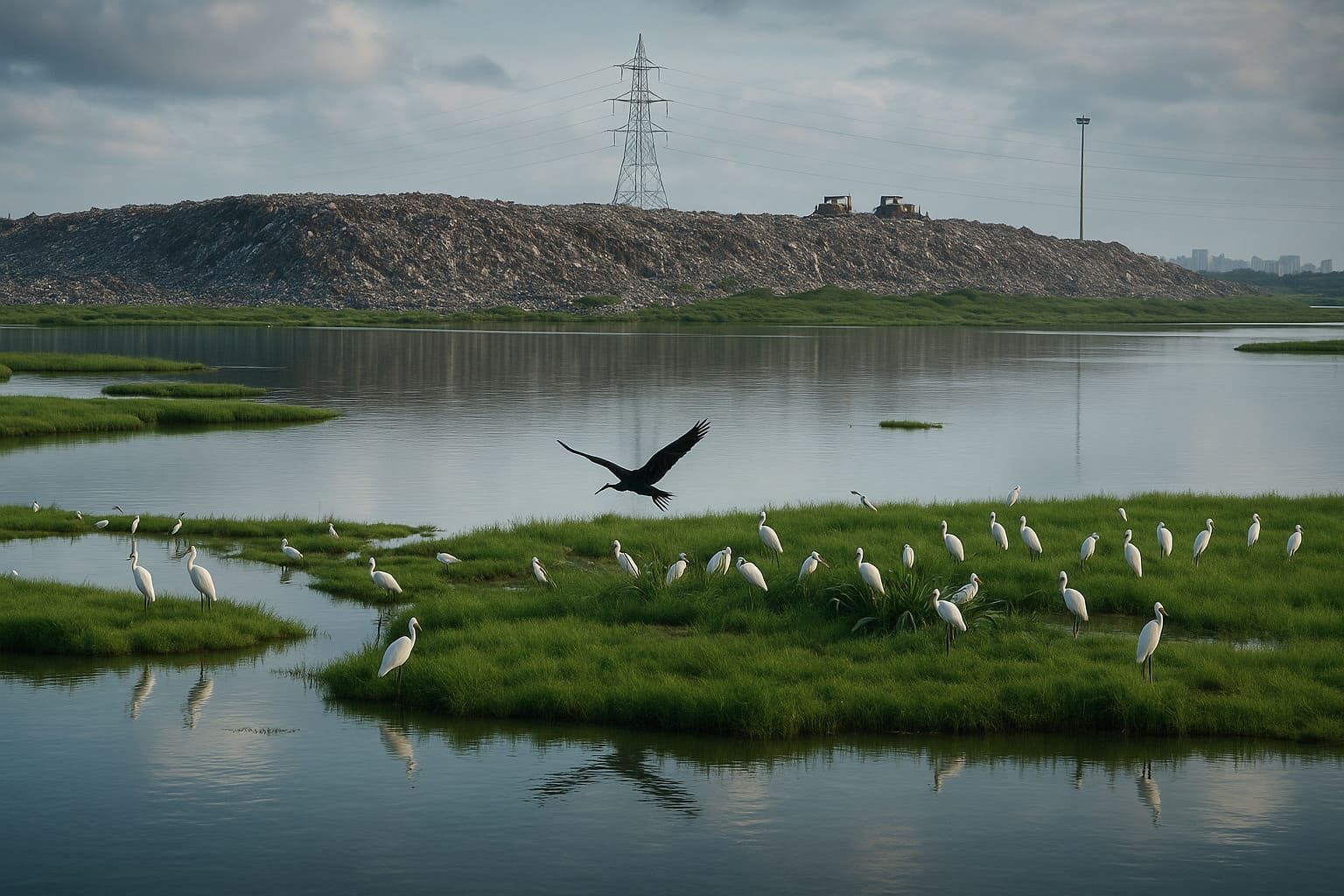
The National Green Tribunal (NGT) – Southern Bench has directed the Chennai Metropolitan Development Authority (CMDA) to immediately stop issuing building and planning approvals in and around the Pallikaranai Marshland, one of Tamil Nadu’s most critical wetlands.
The order came after reports of debris dumping and road-laying on the Perumbakkam side of the marsh, which risk blocking feeder canals and raising flood levels in the city.
What is the NGT?
The National Green Tribunal (NGT) is a special judicial body set up under the NGT Act, 2010 to handle environmental cases. It has powers similar to a court but focuses only on issues related to the protection of the environment, conservation of forests, and natural resources. Its orders are binding, and state authorities are required to comply.
What is a Suo Motu Case?
A suo motu case means the tribunal itself takes notice of an environmental issue—without waiting for a formal complaint—because it believes the matter is urgent and in the public interest. In this case, NGT acted on its own after media reports highlighted violations around the marsh.
Why the Order Matters
- Flood Risk: The marsh is a natural flood buffer. Encroachment and dumping debris choke the water flow.
- Ecological Impact: Pallikaranai is a Ramsar-notified wetland, home to migratory birds and rich biodiversity.
- Legal Precedent: NGT clarified that previous approvals don’t justify fresh ones. No new permissions will be granted until the State Wetland Authority (TNSWA) scientifically marks the marsh’s *”zone of influence” and the Integrated Management Plan (IMP) is finalised.
The “zone of influence” is a buffer area around an ecologically sensitive site (like the Pallikaranai Marsh) where human activity can still affect the ecosystem even if it happens outside the official boundary.What This Means for Buyers & Builders
- No new CMDA approvals will be processed near Pallikaranai until the IMP is ready.
- If the Ramsar site boundary is the “core,” the zone of influence could stretch up to 1 km around it (based on ecological studies).
- Even if your plot technically isn’t “inside” the marsh, if it falls within this zone, approvals may be restricted because your development could still disturb hydrology, biodiversity, or drainage
- If a seller claims “approval in process,” treat it as a red flag.
- Existing approvals are not automatically cancelled, but expect stricter scrutiny.
Conclusion
Verified.RealEstate strongly advises checking land classification, CRZ restrictions, and the official TNSWA survey before investing. Buyers can click on any location on the map to get comprehensive geographical insights including terrain analysis, geology, land use patterns, and Al-powered recommendations for real estate development.