

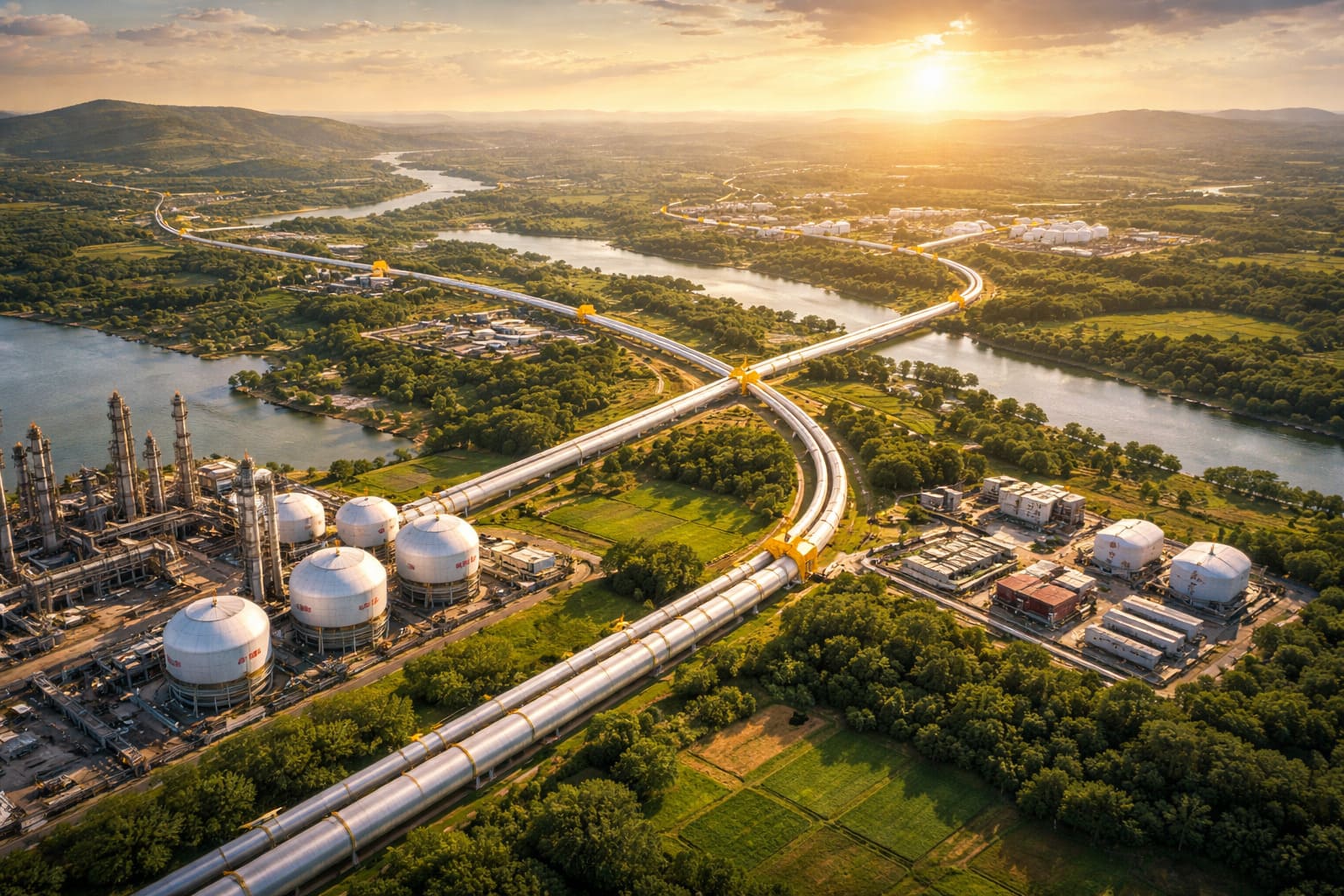
India is taking a major step toward modernizing its fuel distribution network, with the Petroleum and Natural Gas Regulatory Board driving a ₹12,500 crore LPG pipeline expansion plan.
The initiative aims to reduce dependence on road transport, enhance safety, and create a more efficient and reliable LPG supply chain across the country.
What the Expansion Plan Includes
The proposed rollout covers:
- Approximately 2,500 km of LPG pipelines
- 9 identified projects, with 4 currently in the bidding stage
- Connectivity between:
- Refineries
- Import terminals
- LPG bottling plants
Key Pipeline Corridors
- Cherlapally – Nagpur
- Shikrapur – Hubli – Goa
- Paradip – Raipur
- Jhansi – Sitarganj
These routes are strategically aligned with major supply and demand centers to streamline LPG movement.
Why India Is Expanding LPG Pipelines
1. Improved Safety
Transporting LPG via road tankers involves:
- Accident risks
- Leakages
- Fire hazards
Pipeline systems provide:
- Controlled and continuous flow
- Reduced human handling
- Lower accident probability
2. Better Logistics Efficiency
Pipelines enable:
- Continuous transportation instead of batch delivery
- Reduced transit delays
- Lower long-term transportation costs
This marks a shift toward a more stable and predictable energy logistics system.
3. Environmental Benefits
- Reduced tanker traffic on highways
- Lower fuel consumption and emissions
- Cleaner logistics framework
Regulatory Reforms Supporting the Expansion
The Petroleum and Natural Gas Regulatory Board has introduced key measures to accelerate infrastructure rollout:
- Faster approvals through deemed clearances
- Simplified permission processes
- Standardized regulatory mechanisms
- Streamlined coordination across departments
👉 These reforms directly address long-standing delays in infrastructure execution.
Land Access Mechanism for Pipelines
The expansion relies on provisions under the Petroleum and Minerals Pipelines (Acquisition of Right of User in Land) Act, 1962.
- Land is accessed through Right of Use (RoU)
- Ownership remains with the landholder
- Pipelines are laid underground
- Limited restrictions apply on surface usage
👉 This model enables faster project implementation while minimizing the need for full land acquisition.
Economic and Strategic Impact
The ₹12,500 crore investment is expected to:
- Strengthen India’s fuel distribution infrastructure
- Improve supply chain reliability
- Reduce logistics costs over time
- Support the broader goal of a gas-based economy
Implementation Challenges
Despite policy support, execution may face:
- Land-related procedural challenges
- Environmental and statutory clearances
- Coordination across multiple states
- Project timelines and cost management
Conclusion
India’s LPG pipeline expansion represents a significant shift toward infrastructure-led energy distribution.
By reducing reliance on road transport and building a pipeline-based network, the country is improving:
- Safety
- Efficiency
- Environmental sustainability
The success of this initiative will depend on effective implementation and coordination, but it marks a clear move toward a more resilient and modern energy logistics system.